Categories
cobbwebs-news-and-views

John Cobbold’s misplaced claim

In his timesdiary of 13th October last year Patrick Kidd recorded, under the heading “Football Boss’s Sweet FA” that Kenneth Tynan’s claim to be the first person to say the f-word on British television has been debunked by Duncan Hamilton.  In his book about England’s World Cup triumph in 1966, Answered Prayers, Hamilton reveals that John Cobbold [(1927-1983) #575], the eccentric chairman of Ipswich Town during Alf Ramsey’s time as manager, got there three years before Tynan in an interview for local television.  A reporter asked what exactly he did at the club. “F*** all,” Cobbold replied.  Unlike Tynan whose lapse led to four parliamentary motions and Mary Whitehouse writing to the Queen, Cobbold escaped censure.

The following day Patrick recorded that the first use of the f-word was not Kenneth Tynan in 1965, nor, as I wrote yesterday, John Cobbold in 1962.  Mark Mason alerts me to Ulster Television’s magazine show Roundabout in 1959, when a chap whose job was to paint the many railings beside the River Lagan in Belfast was asked how he found it.  ‘F***ing boring’ he said.  There was not a single complaint.

Talking of Alf Ramsey, it is said that he had problems with words.  Hamilton lists some of his malapropisms, such as There is s great harmonium in our dressing room; We are pushing at an open jar and It’s so hot the compensation is running down the walls.  That may explain why he could be terse with journalists.  One asked for a quick word. “Goodbye” Ramsey said, “but I suppose that is not the quick word you were hoping for.”

Anthony Cobbold

Categories
cobbwebs-news-and-views

Airships – An Unlikely Topic

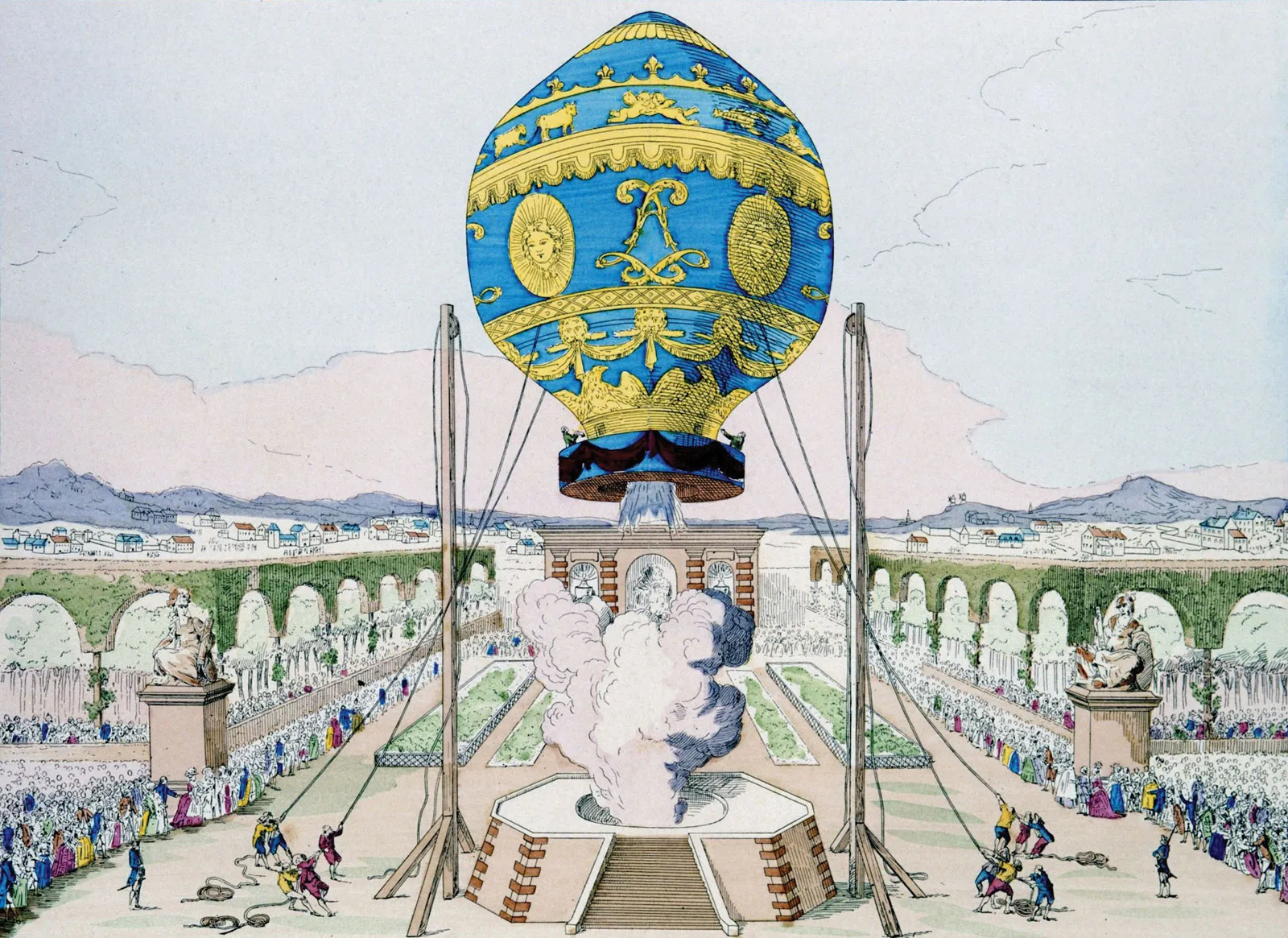
Lighter-than-air (LTA) flying is one of those topics which is never quite mainstream, but which never quite goes away. LTA flying uses the aerostatic principle of buoyancy to stay aloft and was pioneered by the French brothers Montgolfier (1740-1810) & (1745-1799) who flew the first practical hot air balloon over Paris in 1783. Replace the hot air with Hydrogen and add an engine or two and you have an airship.  Interestingly, airships are on the fringes of popularity again in the 21st century for their environmental friendliness.  They use less fuel than cargo ships, are faster and their cost per cargo unit is lower but there are some negatives as well.

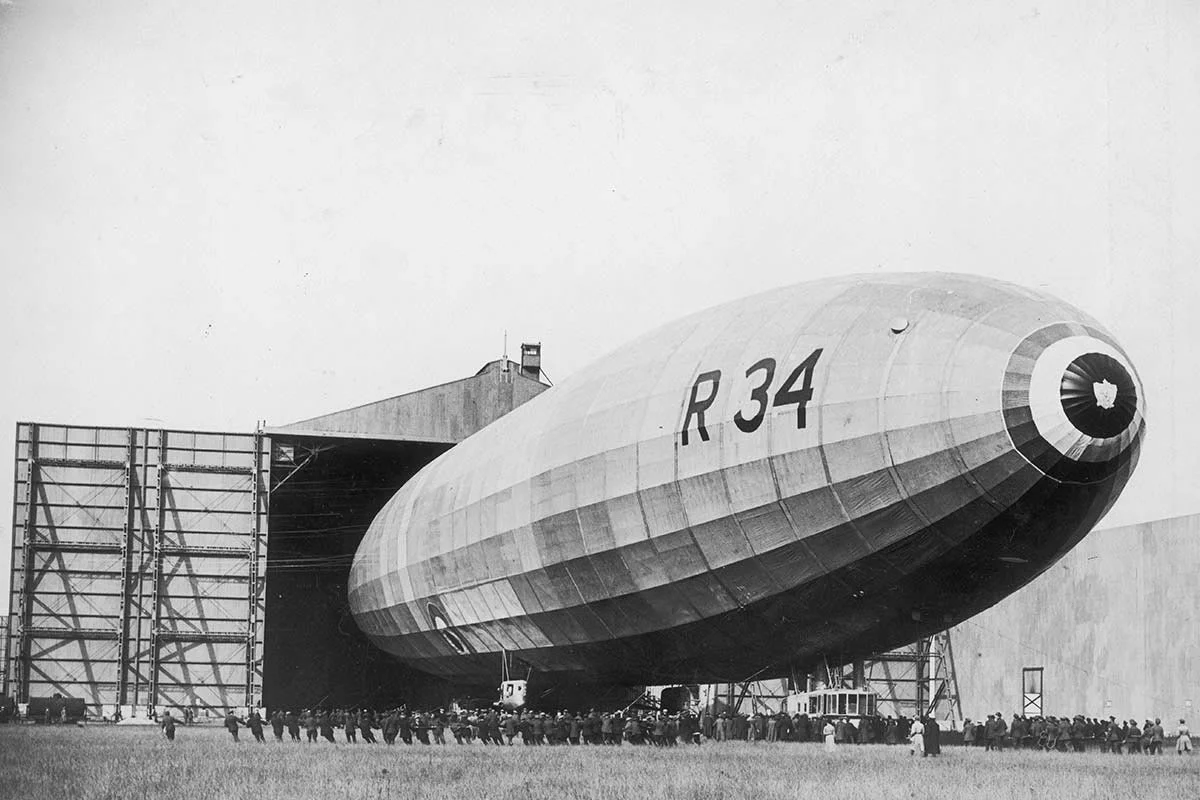
A look back into the early days of airships reveals the extraordinary story of Air-Commodore Edward Maitland (1880-1921) #15196 on the family tree who made the first airship crossing of the Atlantic in H.M.A. R34 in both directions in 1919.  The Royal Navy Air Service had been merged with the Royal Flying Corps to form the Royal Air Force in 1918 so it was very early days.  It would have been the first powered crossing of the ocean by air but for a delay in take-off during which John Alcock (1892-1919) and Arthur Brown (1886-1948) completed their celebrated flight in a Vickers Vimy preceding Edward Maitland by just two weeks.  A full account of R34’s voyage is included in Edward’s biography here

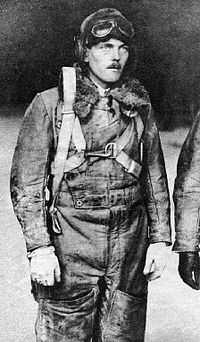
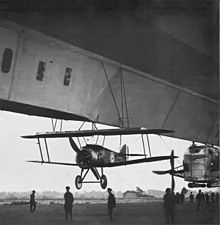
Despite his death when R38 broke up in flight and crashed in the Humber estuary in 1921, (only 5 of the 49 on board survived) the Air Ministry continued to pursue airship development.  The programme aimed at producing an airborne aircraft carrier.  One of the pilots chosen to test the idea was Fl. Lt. Campbell MacKenzie-Richards (1900-1927) #497.  He and Flying Officer (later Air Vice-Marshal) Ragg launched their fighter aircraft from retractable trapezes under R23 at an altitude of 2,500 feet.  They flew free for a while and later reattached to the airship using skyhooks.  Given the rudimentary nature of flying technology in those days the skill and bravery of those two pilots is exemplary.

Sadly, Campbell died in a night flying accident in 1927 but not before he had married Mirabel Cobbold (1904-1985) #496 who bore him a daughter (Gillian (1928-1985) #498) and went on to write five books: Deborah Lee (1930); Sea Tangle (1931); Quakes (1933); Black Sash Movement (1955-56) and When Rivers Meet (1960).  Mirabel’s granddaughter Claire Bell (1962) #11533 who lives in Australia and is also a writer visited the Trust in 2017 and enjoyed a tour round some of the ‘Cobbold’ locations in Suffolk.

Anthony Cobbold   

Categories
cobbwebs-news-and-views

George Albert Cobbold

GEORGE ALBERT COBBOLD (1916-1943) and The Bridge on the River Kwai    

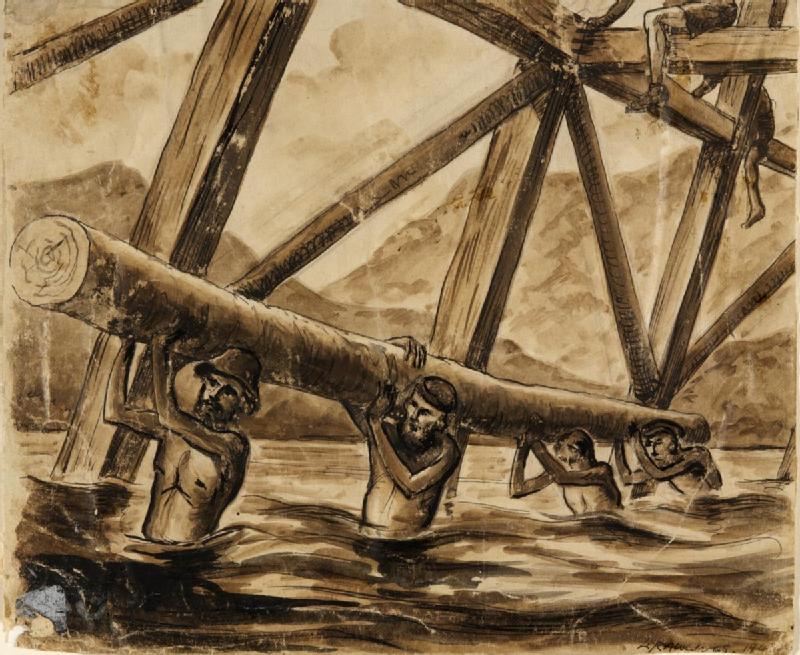
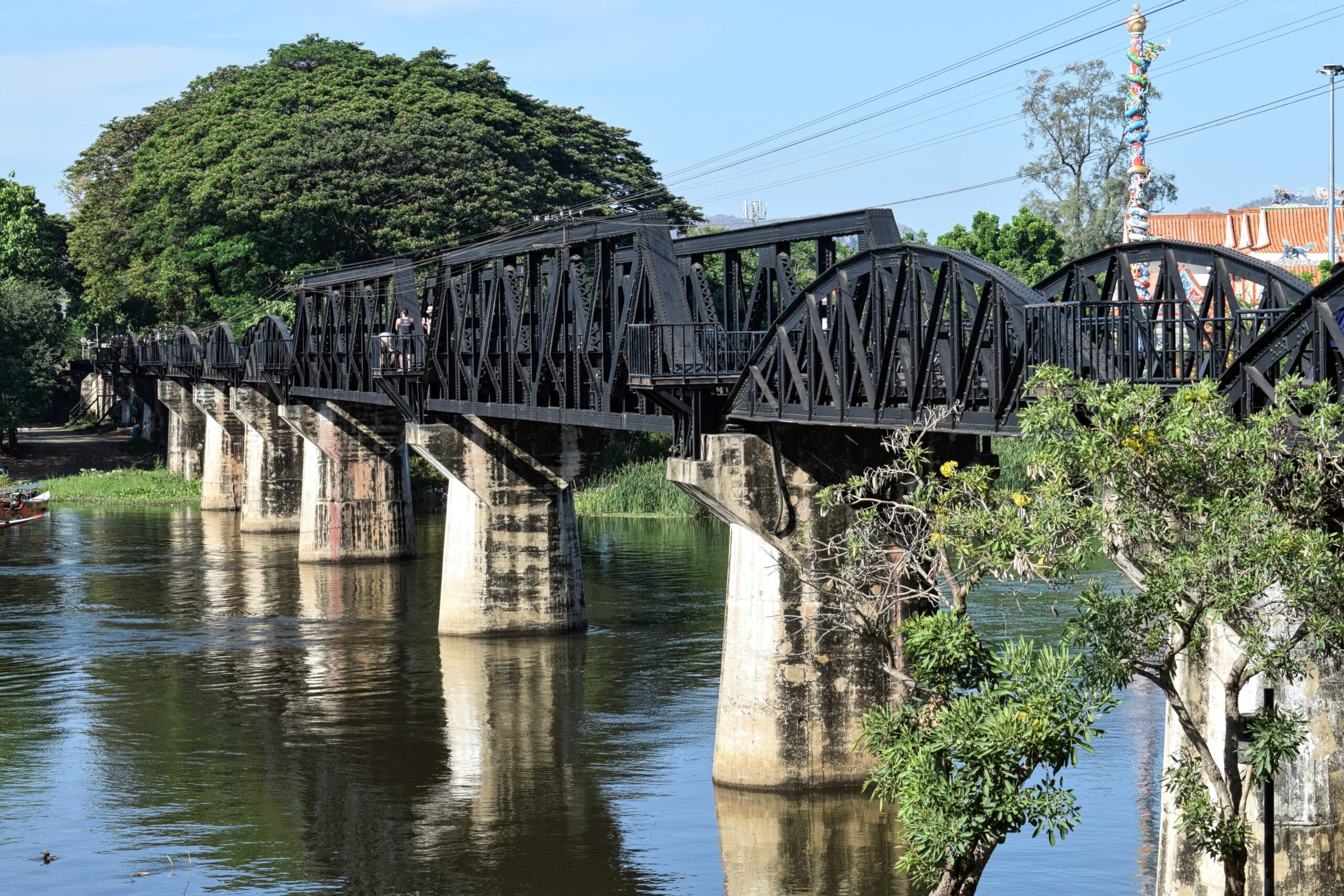
David Lean’s epic 1957 war film staring William Holden, Alec Guinness and Jack Hawkins will be well known to at least our more senior readers.  The bridge was a strategically important point on the Burma Railway which became known as the Death Railway.  415 km in length it ran between Ban Pong in Thailand and Thanbyuzayat in Burma (now Myanmar) being built between 1942 and 1943 by South East Asian civilians forced to work by the Japanese and a smaller group of Allied Prisoners of War.

George Albert Cobbold was one of them.

The son of Herbert A Cobbold and Sarah L Cobbold of Southgate, Middlesex, and a Private in the 5th Battalion the Bedfordshire and Hertfordshire Regiment, George was one of 30 thousand British, Indian and crown colony prisoners who represented about half the Allied soldiers enslaved.  Following their invasion of Burma early in 1942 the Japanese decided to build the railway as a safer supply route than the long sea voyage around the Malay Peninsula.  Building commenced in June that year.  The 3,200 km sea route was vulnerable to Allied submarine attack.

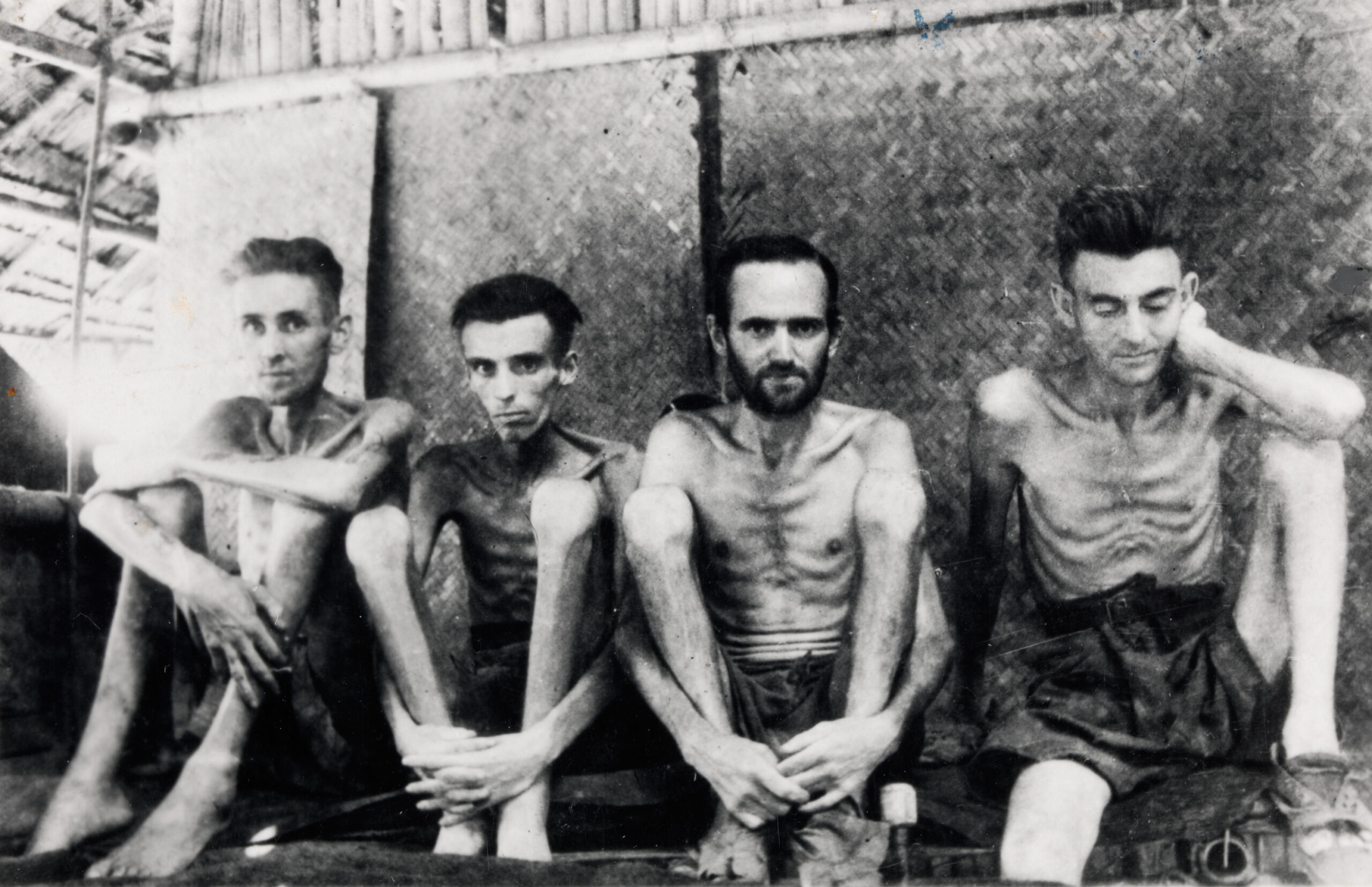
All but 50 km of the rail route was across rugged terrain covered in dense malarial jungle.  Instead of starting at both ends the Japanese set up over 100 camps along the route so that sections could be built simultaneously.  Conditions in the camps were horrendous particularly at the more remote sites where resupply of food, equipment and medical supplies was difficult.  The work itself was gruelling and dangerous.  Apart from building a huge number of bridges it included clearing jungle and constructing embankments and cuttings.

George died of dysentery on 16th July 1943 at the Songkurai no.2 camp and was laid to rest in Cemetery no.2, Block B, Row 1, Grave 5.  Hitherto we have been unable to connect George’s parents to the web family tree.  If anyone can help, we will be delighted.

Anthony Cobbold

Categories
cobbwebs-news-and-views

Lorna Cobbold – World-Class Stage Manager

Whilst enjoying a week with family members following my granddaughter’s glamorous wedding I was invited to the Chichester Festival Theatre for Cameron Mackintosh’s revival of the classic Lionel Bart musical OLIVER.  To a capacity audience it was a fresh and vibrant production directed and choreographed by Matthew Bourne.

Listed for Cameron Mackintosh Ltd as Associate Producer – International Productions was Lorna Cobbold (1971) #668 on the web family tree.  In a charmingly frank and open podcast interview Lorna, who has three decades of world-wide stage management experience (Les Miserable, Lion King, Mary Poppins, Rock Follies etc.), told that she first directed a show at school, largely because ‘at 17 you’ll do anything’ and it won a prize.  Wrestling with what to do next she obtained an English A-level to study Drama at Manchester University.

Her tutor there was Alan Ayckbourn’s designer, Michael Holt who quashed her desire to also become a designer but suggested stage management in its place.  Almost her first job was selling programmes at the Royal Court Theatre where she sought a work placement.  To obtain the necessary Equity Card she joined an outdoor Shakespeare company in Plymouth doing all manner of menial tasks, mostly dictated by traditional west country weather.  On returning to the Royal Court, she received a phone call from the Nuffield Theatre saying we need an Assistant Stage Manager today.  Lorna went and there she claims, she learned her craft.

With colourful examples of things that went wrong, Lorna provides a brilliant layman’s guide to the different responsibilities of the Assistant Stage Manager, the Deputy Stage Manager, the Stage Manager and the Company Manager, a hierarchy through which she ascended enthusiastically.  She describes her move from plays into musical theatre with its vastly increased complexity brought about by sheer size and the increased number of disciplines.

Turning to the present, Lorna is currently involved in two plays in this country and will shortly be working on Cabaret in New York.  Although America is familiar with British Musical Theatre they do things very differently on Broadway.  I have learned that you cannot be taught stage management in class.  Experience is what counts.  You learn it by looking and listening.  Lorna has done both these to perfection.

Anthony Cobbold

Categories
cobbwebs-news-and-views

Francis Edward (F E) Cobbold (1853-1935)

F E, as he is affectionately known, #223 on the web family tree, is one of the least celebrated but most generous members of the entire Cobbold family.  Eschewing the opportunity to work in his family brewing business he struck out on his own, made a small fortune and gave it away.  His story is told in full in The Gifts of Frank Cobbold and in an abridged form in Cobbold & Kin, Life Stories from an East Anglian FamilyHere we give you just a skeleton.

‘He is small and thin but you will find him active’ said a reluctant Arthur Thomas Cobbold (1815-1898) #138 as he apprenticed his fourteen-year-old son to Captain Birnie of the wool clipper, Ann Duthie in 1867.  For young Frank Cobbold the few steps between land and sea marked the beginning of an adventure which would not only see him grow from boy to man but would also determine the course of the rest of his life.  No sooner had the ship docked at Sydney than Frank walked off it and boarded another for Melbourne from where he was lured to Fiji by word of fortunes to be made from cotton.  Despite his youthful energy and will to succeed his entrepreneurial efforts repeatedly foundered and on one occasion he was lucky to escape the cannibals’ pot

Back in Melbourne, whilst taking lessons to become a surveyor he received an invitation to work at Albermarle, one of the largest sheep stations in New South Wales.  Having cut his teeth at Albermarle, he won his spurs all over the bush of New South Wales and Queensland establishing a reputation for integrity, durability and common sense whilst surviving bouts of typhoid and trachoma.  Frank was suddenly in demand and such was his reputation that he was soon managing stations on behalf of owners and shortly thereafter he became a part owner himself.  Through downright hard work, absolute integrity with banks and investors, and the wisdom to provide for a rainy day he became the owner of many profitable and valuable stations.

Aware of the consequences of ‘all work and no play’ Frank and his second wife Bea (1869-1951) #225 went on holiday taking a world tour which included a return to his beloved Suffolk.  On return to Australia he slowly delegated the running of his stations to managers and bought 7 Fulham Avenue in South Yarra as their permanent home.  He indulged his love of horse racing buying a colt, Conquistador who went on to win six of its eight starts and Danilo and Villius who won the Carnival Handicap at Flemington’s Melbourne Cup in consecutive years, 1933-34, the latter at odds of twenty-three to one.

After generous provision for Bea’s future, he left the remainder of his estate to The Royal United Kingdom Beneficient Association (RUKBA) to provide annuities for the needy of his native Suffolk.  In 2004 RUKBA, now Independent Age, valued the F E Cobbold Trust Fund at £9.9 million – the largest bequest it had ever received.

Anthony Cobbold

Categories
cobbwebs-news-and-views

A Commonwealth Journey

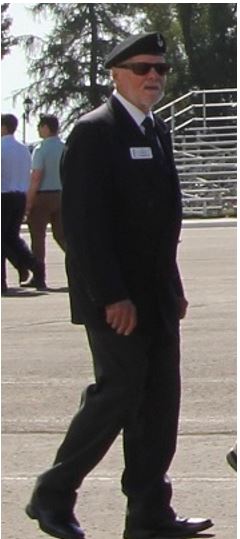
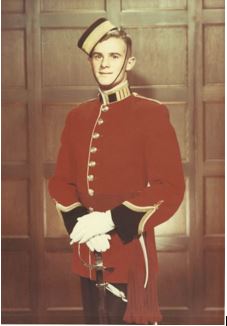
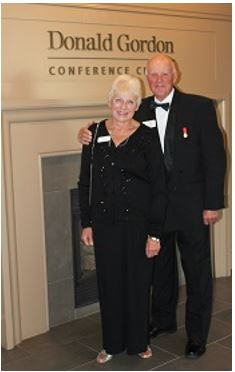
The date?  16th September 2023.  The event?  The Diamond Jubilee of the class of 1960.  The Location?  The Royal Military College of Canada.  Our Participant?  Richard (Dick) Temple Chevallier Cobbold (1939) #622.

Dick has kindly provided the Trust with the story of his life prompted by the 60-year reunion of his class at RMC Canada although it took place three years late because of Covid and his story was further delayed by the Trust for which apologies.  This is an annual parade held at the College.  Dick is the youngest surviving member of the class.  Congratulations!

Grandfather, David Mark Fell (1886-1948) #3964 (Cdr. RN) had a dairy farm in Tauranga, New Zealand, where Dick’s parents met. Grandfather returned to England at the onset of war, pursuing a distinguished career in the Royal Navy, but Dick, his siblings and his parents stayed on until 1945 when mother and four children also returned to England, living in Kensington for a further eight years.

July 1955 saw Dick a landed immigrant in Oakville, Ontario.  He spent five years at two of the military colleges graduating from RMC Kingston, Ontario in 1960 prior to a 12-year career in the Canadian Navy as a fixed-wing aircraft pilot.  Because of the excellent flying conditions on the Prairies, Canada had 10 flight training schools during WWII, one of which was attended by Lord David Cobbold (1937-2022) #625 who earned his wings there.

After a year as a Naval Staff Officer at Royal Roads Military College and a further three3 years assigned to the US Navy Air Development Center at Warminster, Pa, he returned to Canada in 1971.  He had married Jean (Jeannie) Rose Potter (1940) #3088 in 1962 and their first two boys, Mark (1963) #1273 and Christian (1964) #1274 were born.  Objecting, inter alia, to the unification of the Canadian Forces, Dick resigned his commission as a Naval Officer in 1972 and embarked on a 38-year career on ‘civvy street’.

Andrea Clare arrived in 1972 #1275 and John Cameron Andrew in 1976 #1276.  Dick went ‘high tech’ working for a number of companies largely in the field of digital image processing travelling to more than 60 countries world-wide before retirement in 2010.  Few of those visits pleased him and Jeannie as much as their returns to the mother country and the Trust recalls with joy their happy attendance at the Felix Thornley Cobbold (1841-1909) #201 Centenary at Christchurch Mansion in 2009.

Anthony Cobbold

Categories
cobbwebs-news-and-views

GRANMAN

We have just added on Amazon a new book by the founder of the Trust, Anthony Cobbold.  Published by the Trust, it is an autobiography written primarily for his grandchildren (of which he says there seem to be rather a lot!).

It includes a chapter titled ‘You cannot put a price on a family archive,’ quoted from the BBC Antiques Roadshow of May 2010.  This chapter and three appendices describe the early days of the Trust, give it a timeline and provide a listing of some of the extraordinary and influential people on the family tree.  An easy and useful reference.  Of course we recommend it!

Please click here to view the book on Amazon:

Granman – A Life of Luck and Love: Amazon.co.uk: Anthony Cobbold, with Clive Hodges: 9780993211775: Books

Categories
status_update

GRANMAN

We have added on Amazon a new book by Trust founder, Anthony Cobbold.  Published by the Trust, it is an autobiography written primarily for his grandchildren (of which he says there seem to be rather a lot!). It includes a chapter titled ‘You cannot put a price on a family archive,’ quoted from the BBC Antiques Roadshow of May 2010.  This chapter and three appendices describe the early days of the Trust, give it a timeline and provide a listing of some of the extraordinary and influential people on the family tree.  An easy and useful reference.  Of course we recommend it! Granman – A Life of Luck and Love: Amazon.co.uk: Anthony Cobbold, with Clive Hodges: 9780993211775: Books

Categories
cobbwebs-news-and-views

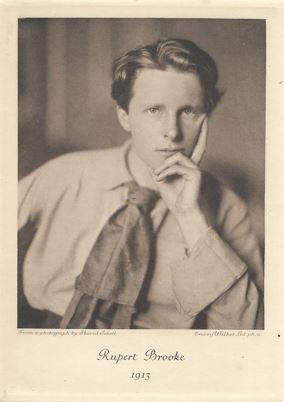
Rupert Brooke

Though not on the Cobbold family tree, Rupert Chawner Brooke (3 Aug 1887- 23 Apr 1915), a poet, is of compelling interest as a colourful example of a middle-class English life at the time of World War I.  The Cobbold family has enjoyed a tangential relationship with him since his all-too-short but well-lived life ended in Greek waters.  Educated at Rugby (known for discipline) and King’s College, Cambridge (known for scholarship) he volunteered as soon as war broke out and was on his way to the front when a mosquito bite turned sceptic and he died of sepsis on a hospital ship.  His most famous legacy is The Soldier written in 1914 and first published in 1915.

The Soldier

If I should die, think only this of me:

That there’s some corner of a foreign field

That is for ever England.  There shall be

In that rich earth a richer dust concealed;

A dust whom England bore, shaped, made aware,

Gave once, her flowers to love, her ways to roam,

A body of England’s, breathing English air,

Washed by the rivers, blest by suns of home.


And think, this heart, all evil shed away,

A pulse in the eternal mind, no less

Gives somewhere back the thoughts by England given;

Her sights and sounds; dreams happy as her day;

And laughter, learnt of friends; and gentleness,

In hearts at peace, under an English heaven.


‘In this rich earth a richer dust concealed that is for ever England’ is the inscription on Maj. Robert Nevill Cobbold’s headstone at Monte Cassino. #470.  He died for his country shortly before D-Day 1944.

On volunteering Rupert Brooke joined the Hood Battalion of the Royal Naval Division.  This unit was like no other in the British Army in that it was manned by members of the Royal Navy Volunteer Reserve who were in effect soldiers, but bound by the rules and practices of the Royal Navy.  This unique body was set up by Winston Churchill #14956 when he was First Lord of the Admiralty and was dubbed ‘Winston’s Little Army’ by then Prime Minister Asquith.  Possibly because of its unusual constitution it attracted a number of high calibre officers, amongst them Oc Asquith (the Prime Minister’s son), Patrick Shaw-Stewart and Bernard Freyberg #3173.  These three were in the sombre funeral party which buried Brooke on the little Greek island of Skyros.  They hastily erected a cross at the head of his grave, a smaller one at the foot being given spontaneously by members of his platoon.

The Hood Battalion was on its way to the Dardanelles when Brooke was taken ill.  The unit went on to engage in some of the fiercest fighting of the war at Gallipoli and on the Western Front at Ancre, Gavrelle and Passchendaele.  Freyberg was awarded the Victoria Cross towards the final stages of the battle of the Somme.

As John Simpson said when his 25-year-old translator was killed by friendly fire in Iraq:

“The one duty I can perform is not to forget”


Anthony Cobbold

Categories
cobbwebs-news-and-views

The Last of the Town’s Great Gardeners

NO!  He wasn’t a Cobbold, and he doesn’t feature on the family tree, but we are keen to tell his story because it is an object lesson for us all in devotion to duty.

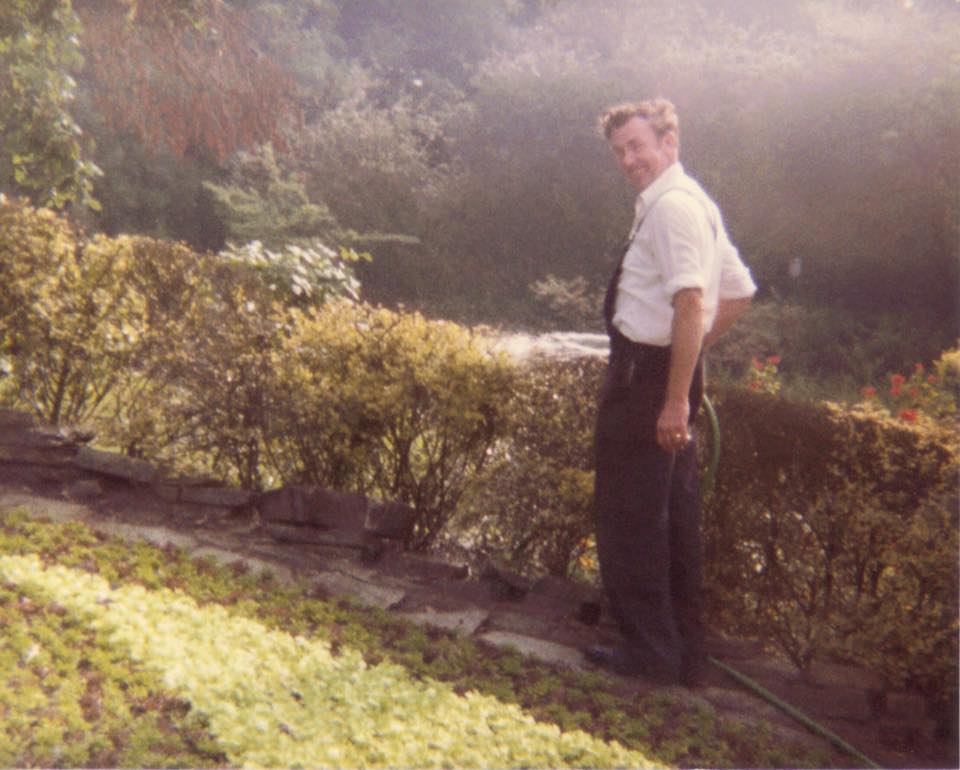
We have recently posted in our Series Gallery, 30 post card pictures of Christchurch Mansion.  They have been kindly provided by David Miller from his collection which is dedicated to his father Anthony George Frederick Miller.  He is today’s subject.

Tony, as he was always known, was Head Gardener of the Upper Arboretum in Ipswich for a quarter of a century, from 1966 until 1991.  In December of the year of his appointment he married and moved into the Arboretum Lodge, off Henley Road opposite Ipswich School.  His second son, David was born there a few years later.  By this stage Tony was already at the top of his game having cut his teeth in the Corporation’s nurseries producing big floral displays for the Suffolk Show and the Ipswich Horticultural Show.  Those were the days when Ipswich employed 75 gardeners!

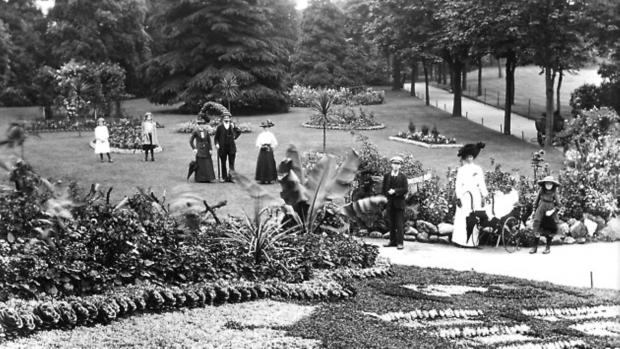
Anything but a fair-weather gardener, Tony rebounded after the Arboretum’s darkest hours – the once-in-200-years storm which hit Britain on the 15th/16th October 1987.  48 of his trees were destroyed that night including almost the entire avenue of Limes and six out of seven of the collection’s Monkey Puzzles.  Unusually, the arboretum had to close while Tony cleared up the mess.  He is probably best remembered for his annual carpet bedding displays; containing 10,000 plants each featuring a different image of commemoration every summer.  To all of this he voluntarily added the provision of copious flowers for St. Margaret’s Church and the maintenance of its churchyard. The graves of Robert Knipe (1731-1801), #783 (Elizabeth Cobbold’s father), his wife and daughter were tended by Tony Miller.

When Tony died, having lived stoically with Parkinson’s and cancer, tributes poured in; they mentioned his dedication, his high standards, his extensive knowledge, and his sheer kindness.  It was Don Hubbard of Chancery Park who said simply that “Tony was the last of the Town’s great Gardeners.”

They don’t make ‘em like that anymore!


Anthony Cobbold

0
    0
    Your Cart
    Your cart is emptyReturn to Shop