Categories
cobbwebs-news-and-views Uncategorised

Daniel Gardner or George Frost?

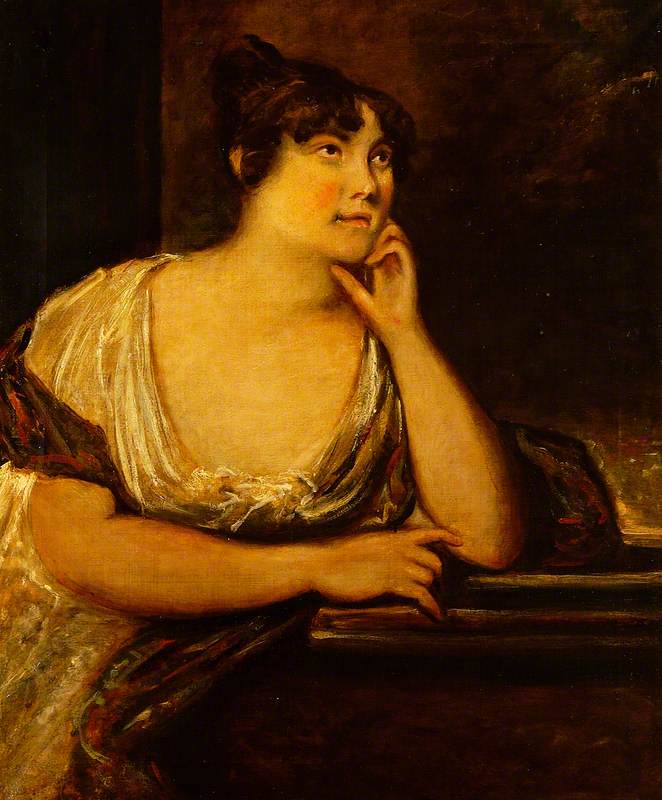
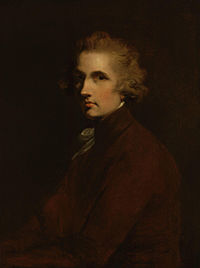
When I first met Lady Blanche (1898-1987) #449 at Glemham Hall in the 1980s she showed me the family portraits which included those of John Cobbold (1745-1835) #56 and Elizabeth Cobbold née Knipe (1765-1824) #58, both painted, probably at about the same time, by Daniel Gardner (1750-1805) and both identified as being his work.

As time went on, I became aware that on many occasions when these portraits were reproduced, they were said to be by George Frost (1754-1821).  As recently as Valentine’s Day this year the Ipswich Star used the image of Elizabeth Cobbold, and quoted it as being by artist George Frost and in the public domain.

A year or two ago I set out to resolve the issue by consulting the admirable Emma Roodhouse, the Art Curator for Ipswich Museums.  She thought that copies may have been made by George Frost. Investigating Frost more closely myself I observed that most of his paintings were of places and I learned that Frost was a keen admirer and copier of Thomas Gainsborough (1727-1788).  I found no specific evidence of Frost being in touch with the Cobbolds.

Two books printed by E. Shalders of Ipswich (Poems by Elizabeth Cobbold and Valentine Verses by Richard Cobbold), both about 1827, contained black & white prints of the portraits clearly identified as ‘Gardiner pinx’ (meaning ‘painted’) and ‘Worthington sculp’ (meaning ‘engraved’).  This lent weight to my belief in Gardner but I noticed that his name had been misspelled!

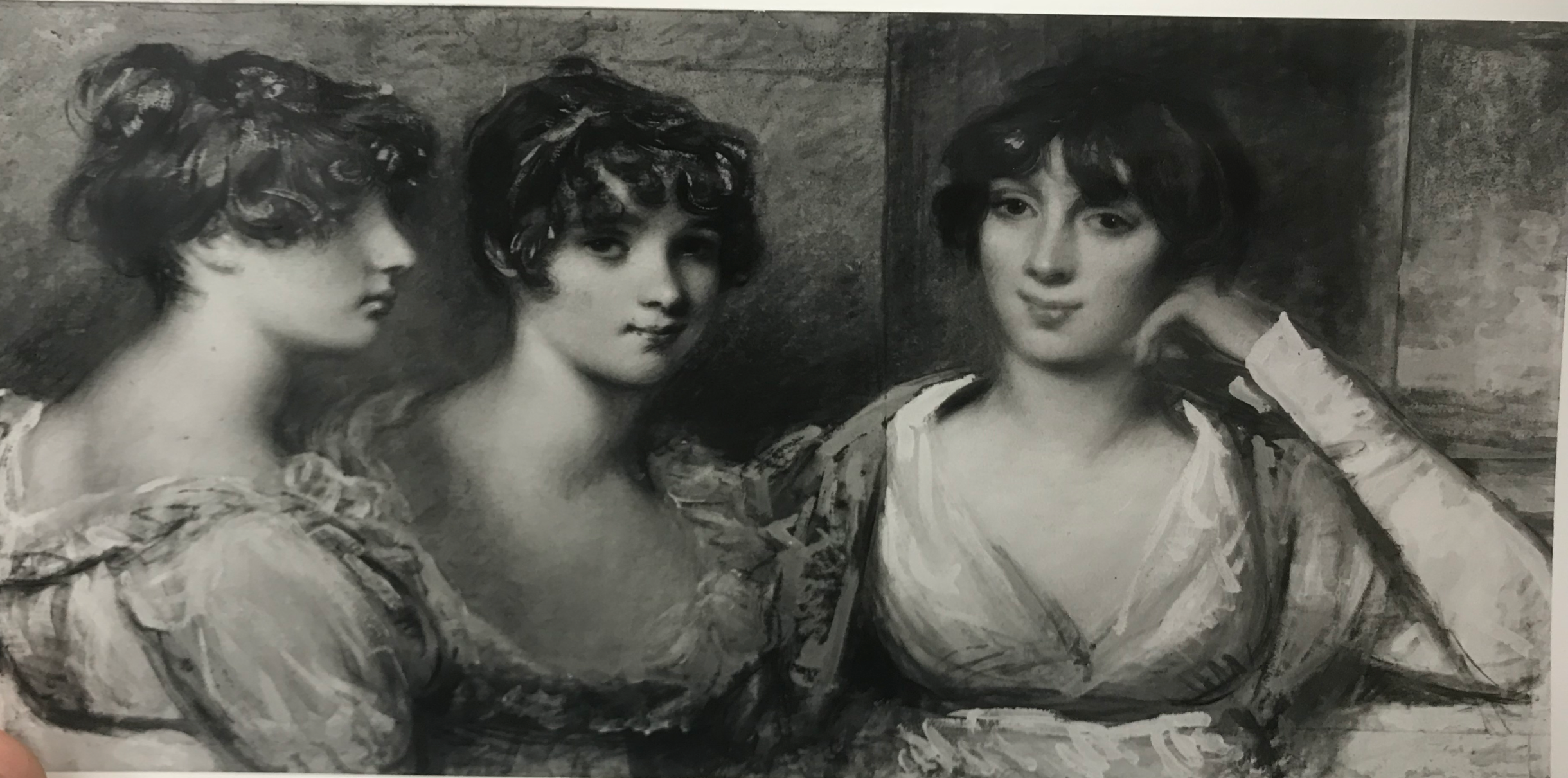
I had known for some time that Daniel Gardner had portrayed ‘The Three Misses Cobbold’, being three of the eight daughters of John Cobbold of Holy Wells [sic], by his first Elizabeth.  It is difficult to know which three daughters they were but my best estimate is that they are Anne (1784-1806) #89, Harriet (1785-1877) #91 and Sophia (1787-1832) #96.

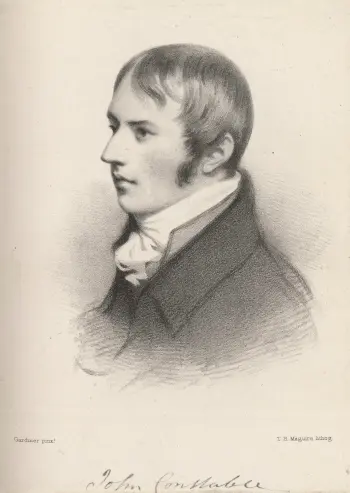
Recently, I was able to purchase a copy of the catalogue for the Daniel Gardner Exhibition staged by the Greater London Council at Kenwood House in 1972 in which The Three Misses Cobbold was displayed.  In her description of the exhibits Helen Kapp, the Curator mentions that May 25th 1793 was the date on which Mrs. Cobbold, Gardner and John Constable (17761837) ‘sat sketching under the lime trees which then fronted the small dwelling house adjoining the more lofty buildings of the brewery.’  ‘A warm friendship grew up between these two – so distant in age – which later became significant to Constable.  Possibly to Gardner too. Certainly, the friendship was close enough for Gardner to have painted Constable’s portrait’ which was also exhibited.

Gardner’s family was well respected in Kendal and his mother was a talented amateur draughtsman and painter in watercolours, all of which supports the widely-held view that Daniel’s family was well known to the Knipes, even from before the time of Elizabeth’s birth.  With so much contact between families I am now convinced that those two all-important portraits were indeed the work of Daniel Gardner.

Anthony Cobbold
Categories
Uncategorised

Knebworth House 2

Before continuing with Mrs Bulwer Lytton’s major alterations at Knebworth we step back to earlier days, as described by Sibylla Jane Flower in her article in Country Life dated January 31st 1985:


Before Mrs Bulwer Lytton (1770-1843) [#9163 on the web family tree], inherited Knebworth, she spent most of her life in a neat terrace house in Marylebone, except for the years 1798 to 1807 when she was married to General Bulwer (1757-1807) [#9162] of Heydon Hall in Norfolk.  Having settled herself once again in London after his death she must have viewed with horror the dilapidated mansion which came to her with very little money when her father died in 1810.

Knebworth had been let to tenants since the death of her great-uncle, John Robinson Lytton in 1762, but Mrs Bulwer Lytton was a woman of courage and determination with a strong sense of pride in her own family – the Lyttons.  She was determined to rescue the house which, alone among all his extensive properties her spendthrift father had been legally unable to sell. She asked the architect John Biagio Rebecca to advise her, and the plans he drew up in 1813 show the gradual scaling down of her ambitions…

The Lytton family connection with Knebworth began in 1492 when Sir Robert Lytton acquired the reversion of the manor from Sir Thomas Bourchier.  By this date the place had a history stretching back at least to the time of Edward the ConfessorWilliam 1 granted the manor and fort [there’s a rather different fort today!] of Knebworth to one of his favourite courtiers, a generous gesture to judge from the description given in the Domesday survey.  Knebworth was in the de Brotherton family until the end of the 14th century when it was acquired by another royal favourite, John Hotoft [who

was keeper of the wardrobe to Henry VI].  It was after the death of Hotoft’s grand-daughter, Lady Bouchier, that Sir Robert Lytton was able to establish himself at Knebworth, about 1500.

Young Robert fought at the Battle of Bosworth and became a firm favourite of Henry VII who rewarded him handsomely for his loyalty.  Until 1705, when the direct line died out seven generations of Lyttons, named Robert, Rowland or William, succeeded one another at Knebworth.

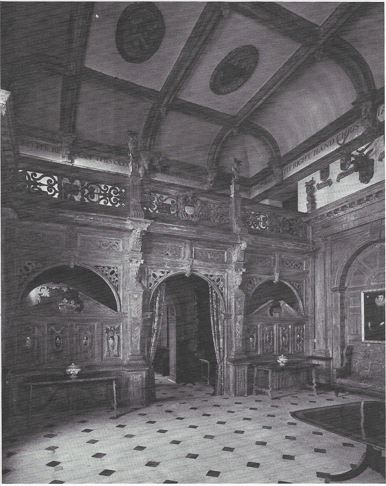
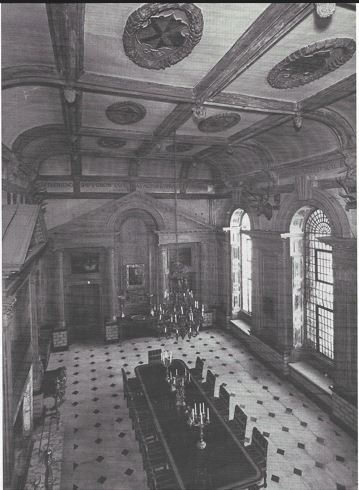
It was during this period that two of Knebworth’s most distinguished architectural features were created.  The great oak screen in the hall is of three bays with semi-circular arched openings, the central one of which is flanked by caryatids [sculpted female figures serving as architectural supports taking the place of columns] on tapering pedestals.  At about the same time, the other great feature, the coved ceiling, was installed in the Great Hall with its moulded oak principles, ribs, cornice, and fantastic brackets of animal heads.


Anthony Cobbold

Images courtesy of Knebworth House (www.knebworthhouse.com).

0
    0
    Your Cart
    Your cart is emptyReturn to Shop