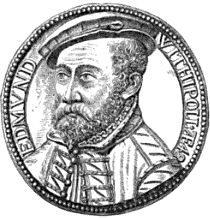
Originally Christchurch Park was the grounds of the 12th century Priory of the Holy Trinity adjacent to the medieval town walls of Ipswich. Following Henry VIII’s Dissolution of the Monasteries the site was bought by Paul Withypoll a Merchant Adventurer. It was his son, Edmund who built the house between 1548 and 1550. His Latin motto, still visible, “Fregalitatem sic servas ut dissipationem non incurras” which roughly translates as “Always behave with frugality and don’t be a spendthrift” seems eerily relevant today!
The house remained in the family until 1645 when it passes to Sir William Withypoll’s daughter, Elizabeth Devereux. Her husband, Leicester Devereux became the 6th Viscount Hereford in 1649 and he carried out many alterations some of which are evident now in the house and gardens. It is thought that the Priory’s original estate was as much as 600 acres but in 1753 when Claude Fonnereau, a wealthy London merchant of Huguenot descent (1675-1740) #7800 purchased the house he bought only 70 acres with it. He opened the park to the public; community events were encouraged and some 25 acres were added.
By 1892 William Neale Fonnereau (1862-1904) #2351 had run out of money and the estate was put up for sale. Although the Trust cannot authenticate the story it believes the sequence of events to be as here described.
The estate was bought by a property syndicate of which Felix Thornley Cobbold (1841-1909) #201 was a member. Hearing that the plan was to knock down the mansion and to replace the park with houses there was an outcry from the people of Ipswich. Reacting, the syndicate offered the property to the Borough of Ipswich at £50,000, whereupon the Borough sought the opinion of the people. They rejected the idea preferring the money to be spent elsewhere.
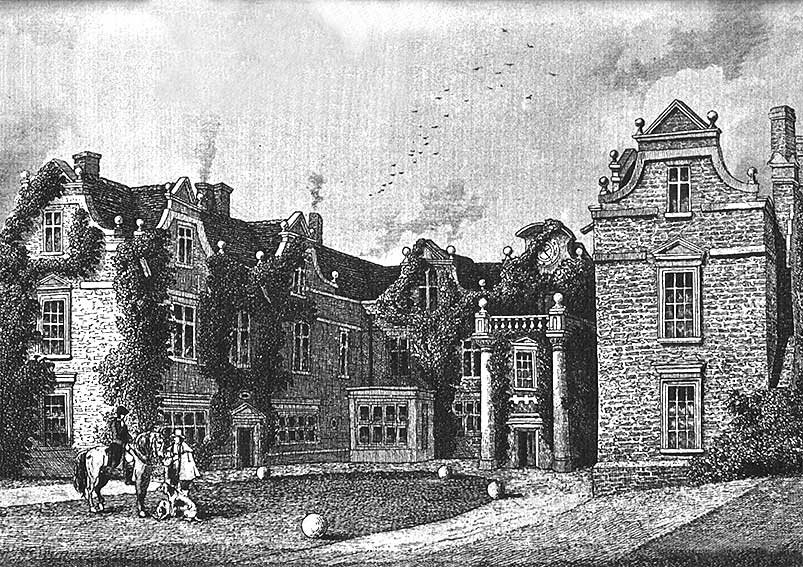
Regretting the possible destruction of a fine dwelling Felix offered to buy the mansion at the asking price of £35,000 and give it to the people of Ipswich if the Borough would buy the park for £15,000 so the whole property would stay intact. A condition he imposed was that it should serve as a museum and art gallery. This time, wisely, the authority did not consult and in 1895 the deal went through.
As an expression of gratitude to Felix he was appointed Mayor of Ipswich for Queen Victoria’s golden jubilee two years later, although strictly he did not meet the criteria. He made other gifts to the people of Suffolk and Ipswich and his generosity to Christchurch was completed with a legacy of £20,000 of stock (equivalent to over £2¼ m today) for the purpose of acquisition of art works after his death in 1909
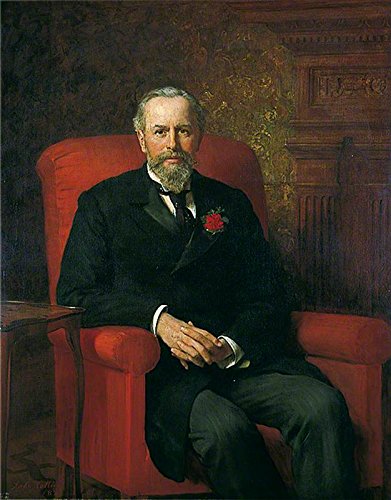
A portrait of Felix by the Hon John Collier, funded by the people of Ipswich, hangs prominently in the great hall at Christchurch and the centenary of his death was marked by a gathering of over 100 guests raising a glass to him at the start of a trail around the mansion identifying over 100 works of art purchased wholly or in part from his legacy.
The mansion is packed with breathtaking artworks but our task here is simply to whet the readers’ appetite and this we propose to do by a brief description of just two Cobbold-related items; the Eldred Overmantel and the Wingfield Room.
The Eldred Overmantel

Originally this 16th century carved oak overmantel was in the house of Thomas Eldred in Fore Street, Ipswich. It celebrates his exploits as navigator to Thomas Cavendish’s voyage around the world 1586-88. We were at war with Spain at the time and the voyage was nothing more than a raid to plunder the Spanish colonies along the west coast of the Americas. Despite numerous vicissitudes the mission was triumphant and on return Cavendish entertained Queen Elizabeth I in a cabin ‘hung with gold and silver.’ As his navigator much of his success was rightly laid at Eldred’s door.
His overmantel comprises three panels depicting his ship the Desire, the Globe, and his own portrait as an old man holding an equinoctial dial dated 1602. After a spell in the dining room at Holywells it was given to Christchurch by John Dupuis Cobbold along with a 16th century wall painting.
The Wingfield Room
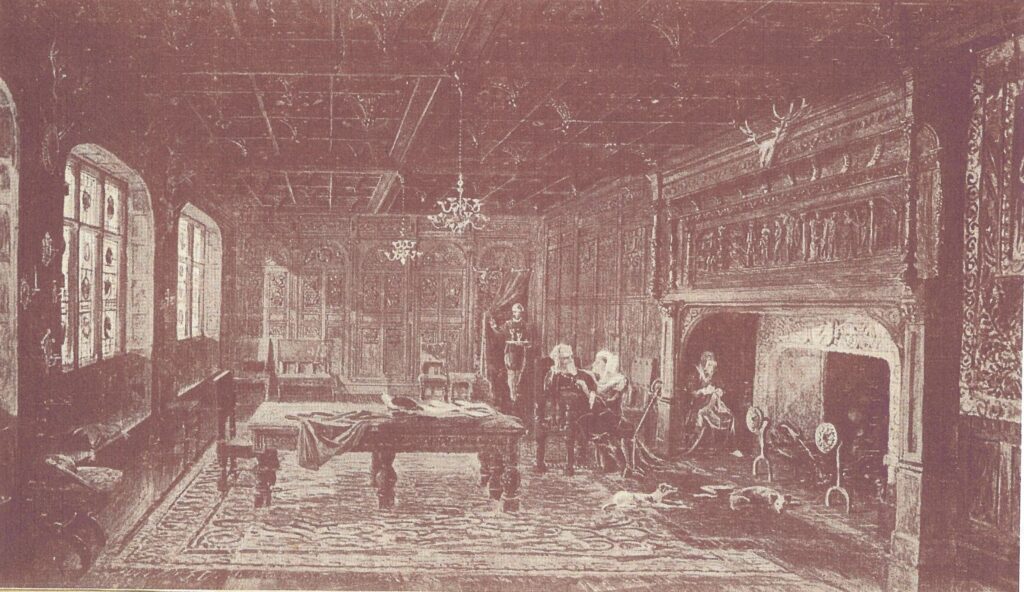
Remarkable carved panelling was installed in Sir Humphrey Wingfield’s house in Tacket Street, Ipswich in celebration of his marriage to Anne Wiseman in 1509, which also brought him Brantham Hall. Sir Humphrey (c1481-1545) was a Gray’s Inn trained lawyer who held numerous high offices including Speaker of the House of Commons (1533-1536) and who was much trusted by Cardinal Wolsey.
He seems to have favoured his house in Tacket Street expanding it by purchases from the Dominicans and others. Queen Mary (1516-1558) stayed there on 31st July 1553 on her way from Framlingham to London for her coronation. It contained a splendid ground-floor parlour which he decorated with the coats of arms of the king, of Dukes of Norfolk and Suffolk and of members of his family. The room had a particularly elaborate ceiling.
After a spell as the study at Holywells the room was given to Christchurch, again by John Dupuis Cobbold.