Categories
cobbwebs-news-and-views

Cliff Brewery Redevelopment

Plans for redevelopment of the Cliff brewery building in Ipswich have recently gone out for consultation.  The Trust has been in touch with the developer for some time so it is not surprising that we have been asked to comment.

The Trust has a problem in such circumstances in that it represents the views of the family, past and present, by default rather than by democratic process.  Given that there is no known body better suited to the task we, the trustees, try to be guided in our actions by good old fashioned common sense, bearing in mind the needs of the community as well as the family.

Accordingly, we are happy to show below our submission:


Submission in support of the Tolly Cobbold Redevelopment

We, the trustees of The Cobbold Family History Trust write in favour of the proposed redevelopment.  The purpose of the Trust (Charity No. 1144757) is to research, record and preserve family and local history with particular reference to the Cobbold and related families.  Accordingly, we represent (as far as this is possible) the 9 generations of Cobbolds who have brewed in East Anglia for 266 years of which 243 were at the Cliff in Ipswich.  The family built the brewery in 1746 and saw it through two major rebuilds at the end of the 19th century and again early in the 20th century.  We feel this record qualifies us to present this submission.

You have asked 5 questions:

  1. Do we want to see the site redeveloped? YES
  2. Do we support a sustainable Restaurant/Community facility? YES
  3. Open a museum? YES
  4. Retirement Community? Our personal views are probably YES but we feel this is a question for the local community rather than us.
  5. Will it improve the area? YES


Cobbold family members have been generous philanthropists to Ipswich in the past, demonstrating much concern for the town.  If alive now, they would unquestionably be horrified at the present state of the brewery building and hence be strongly in favour of sustainable redevelopment.

Our Trust has amassed a sizeable collection of brewery-related items in its archive and, subject to an agreement on terms, would gladly make many of these items available to the museum.

In our view (but we are not property experts) the site of the brewery at one end of the all-important Waterfront is critical and there will be considerable benefit to Ipswich from its satisfactory redevelopment.


Executive Summary:  Strongly in Favour


Trustees: Anthony Cobbold, Henry Cobbold & Jeremy Cobbold.

Categories
cobbwebs-news-and-views

Rugby World Cup 2023

It was a wretched build-up for England with injuries and suspensions adding disruption, but there was a crumb of comfort for fans in an ‘easy’ draw in Pool D.  Indeed, some fans felt that success would be surviving the pool games.  It was said that the fans would travel to France in hope rather than expectation.

In the event to reach the Bronze Final and win it 26-23, albeit in a scrappy game, topped many predictions.  Well played England!

How good it was for Ben Youngs’ final game after 127 caps to be a victory.

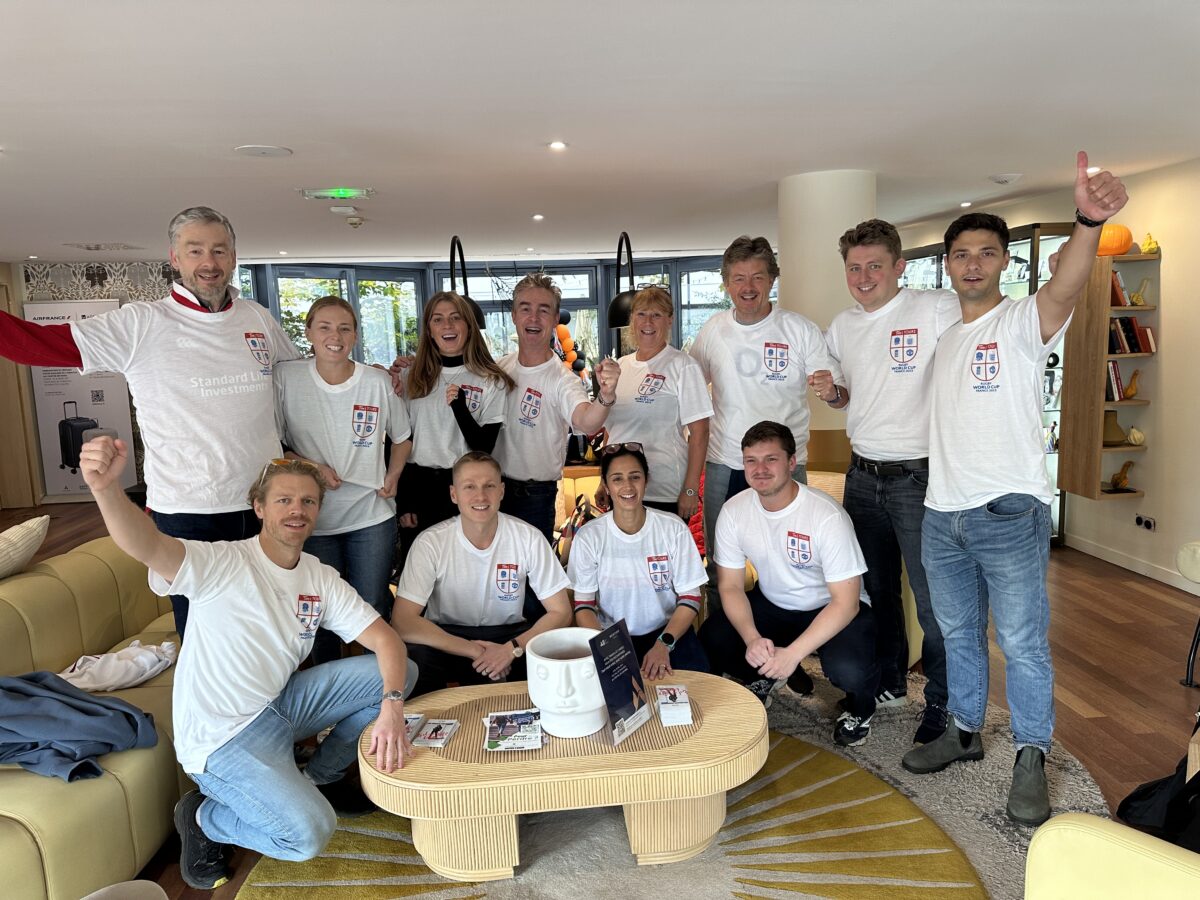
Our picture shows a Cobbold & Kin party of 12 England supporters before the Bronze Final in Paris.  Some had supported every game across the 7-week tournament.

At the time of writing the outcome of the final is unknown.A group of 12 people of different ages wearing white T shirts. There are 8 men and 12 women of different ages in two rows. The back row of 8 are all standing up and the front row of 4 are squatting down.

Categories
cobbwebs-news-and-views

Friends of Christchurch Park

Over the years there have been hundreds of dedicated volunteers in the Friends of Christchurch Park (FoCP) who have done much to protect and enhance the Park particularly that part of it occupied by the Ipswich ArboretumThe Ipswich Society has commented that “It has long been accepted that Ipswich is blessed with outstanding parks.  The Arboretum in Christchurch Park is arguably the most special of them all.  The Upper Arboretum, created as a public park in 1853, is also the oldest.”  Christchurch Park came into public ownership in 1895 in part due to the generosity of Felix Thornley Cobbold (1841-1909) #201.  Ipswich Arboretum: a History and Celebration is the authoritative account written by David Miller whose father was Head Gardener and who was born in Arboretum Lodge.

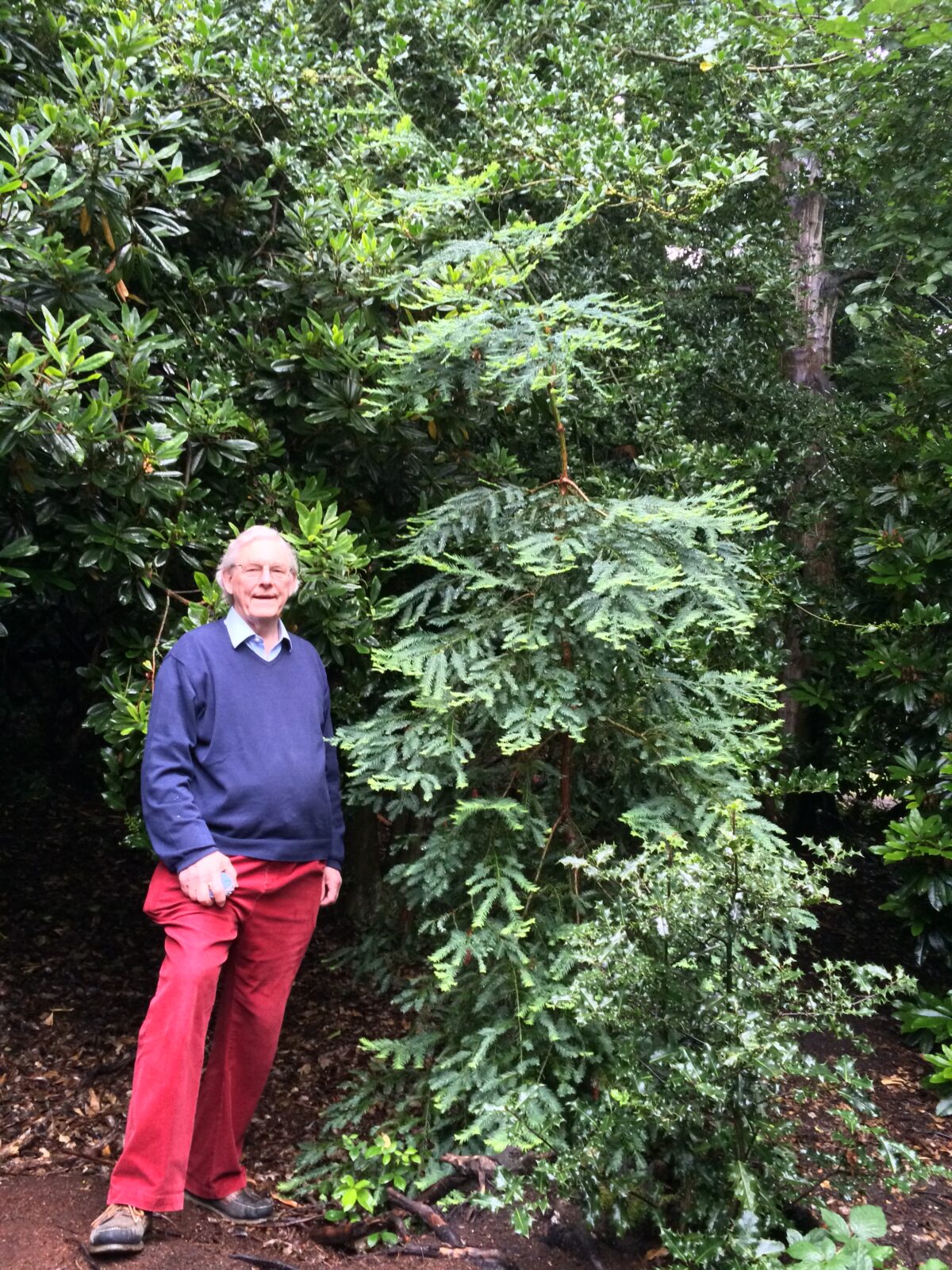
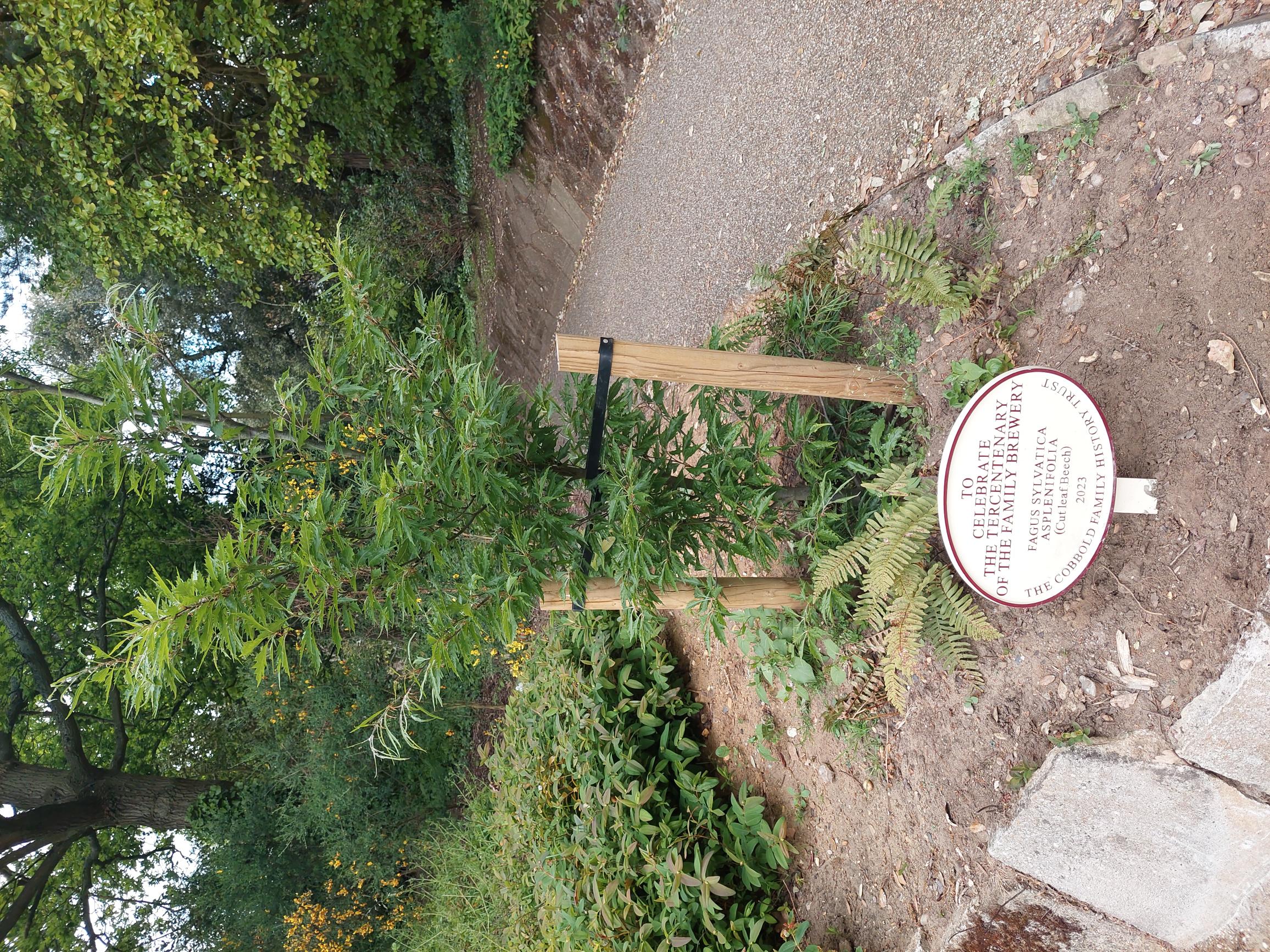
Back in 2015, in response to an appeal following severe wind damage The Cobbold Family History Trust donated a Coast Redwood to the Arboretum and earlier this year we planted a Cut Leaf Beech to mark the tercentenary of the foundation of the brewery.  The FoCP newsletter will soon carry the following article written by one of our most supportive friends, Rowell Bell.


“The Cobbold Family Tree in the Upper Arboretum

The Cobbold Family goes back far beyond 1723, as, let’s face it, so do our families too or we wouldn’t be here. But this cut leaf beech tree planted in 2023 celebrates the 300-year period from when Thomas Cobbold (1680-1752) founded the brewery in Kings Quay Street at the Essex port of Harwich in 1723, up to now, when many Ipswich folk and visitors enjoy the benefits of Thomas’ descendants’ prosperity and their generosity, as attested by the many Public Parks and other amenities. Our railways, improvements to agriculture, endowments to the Arts, Agriculture and so forth.

Not only that, we are all born to die, but it is that bit in between that the Cobbolds and their kin made their mark, and it is rewarding just reading the many challenges and achievements, misfortunes and courage and determination to overcome and make positive change to the status quo made while on this mortal coil. I would recommend Cobbold & Kin as an interesting and inspirational read on a winter’s night but   Cobbold Ales and Tales by Mary Attwood covers these 300 years since Cobbold started brewing. Both books available on the website www.cobboldfht.com

Closer to home, fortunately for Ipswich, the water in Harwich was brackish because of the salt from the adjacent sea so in 1741 Thomas began renting land in an area that later became known as Holywells, which had been in the Cobbold family since 1689, took the water back in special wooden sailing vessels with tanks and large manual pumps for emptying them. Transport costs were expensive so in 1742 Thomas moved the brewery close to Holywells Ipswich. Thus began a long-lasting relationship between the brewery, the Cobbolds, the town and its people.

The Cobbolds had donated an earlier tree in 2015, which had been planted atop the hill by the flagpole, but it fell victim to the drought, so its replacement was planted at the bottom of the hill, two years after the first one failed, which coincided with the tercentenary of the brewery, hence the plaque.

Anthony Cobbold has retired as the Keeper of the Cobbold Family Trust, and the nine generations of Cobbolds, their artifacts and documents, are now at Knebworth.  The Trust started from a little family tree drawn on the back of a menu at Anthony’s father’s 50th birthday party. So, from a tree to a tree.

Rowell”

Categories
status_update

Cobbold Ales & Tales

Cobbold Ales & Tales by Mary Attwood is now available from our online shop: https://cobboldfht.com/books-for-sale/. Published this year to mark the tercentenary of the Cobbold brewery, the book outlines the history of 300 years of Cobbold brewing. Have you got your copy yet?

Categories
cobbwebs-news-and-views

The Master Brewer 2023-2024

Being a brewing family, you might expect the Master Brewer 2023-2024 to be a Cobbold.  Well, he’s not, but he is on the family tree.  Those of you who remember our Cobbweb of March 2020 will recall James Staughton OBE DL (1959) #1358 retiring as CEO of Cornwall’s famous family brewery in St. Austell.  In addition to growing a most successful business through challenging economic conditions James’ enterprise won two awards and he was appointed OBE and became a Deputy Lieutenant.

Now, having been delayed by Covid, he has been appointed Master Brewer and as such heads up the Worshipful Company of Brewers, more generally known as the Brewers’ Company, one of 110 Livery Companies that have grown up as an integral and influential component of the City of London.  The Brewers Company operates via a Master and Wardens through a Court and Members established in the 13th century.

Apart from the many functions he attends in his capacity as Master, James is a champion of the Cornish Ambassador Scheme, chair of the Cornwall Place Board and a trustee of the Children’s Sailing Trust.  Busy, busy!

Categories
cobbwebs-news-and-views

Elizabeth Fry

When writing, and indeed thinking, about our ancestors it is easy to inadvertently ignore what was happening around them.  The most pivotal ‘Big John’ Cobbold (1746-1835) #56 on the web family tree and his second wife, Elizabeth Knipe (1765-1824) #58 enjoyed their first Christmas at Holywells in 1814.  The following year the country celebrated victory at Waterloo.  James Humphreys (1775-1833) #10378 wrote his Letters from Waterloo (see ‘Books for Sale’) and Elizabeth wrote her Ode to Waterloo.

June Rose in Elizabeth Fry, A Biography says ‘Victory over Napoleon had brought in an era of distress and discontent.  Half a million soldiers and sailors, discharged from the services, came home to compete for jobs with pauper children and civilians who had been engaged in war work.  By 1818, 107,000 persons were committed to the gaols of the United Kingdom, a number supposed to be greater than that of all the other kingdoms of Europe put together.’

‘Scenes of horror, filth and cruelty which would have disgraced even the interior of a slave ship met visitors who ventured inside London’s prisons in Regency England.  Throughout the country prison conditions for women were even worse.  Herded into small, dark rooms, where they cooked by day and slept on straw at night, women prisoners served ‘often as a mere brothel for the turnkey.’  At Newgate, half naked, drunken women clawed through the iron railings with wooden spoons tied to sticks to beg the public for pennies or for ‘garnish money’ to be paid to their fellow prisoners to buy them sight of the fire.  Shrieking curses, bawling, spitting, and tearing each other’s hair, they aroused an almost superstitious horror in spectators.’

243 years ago, was born one of the most influential and enigmatic women in English history.  Elizabeth (Betsy) Fry née Gurney (1780-1845) #15031, mother of eleven children and a Quaker minister drew the world’s attention to the plight of women in prison.  She instituted an order of nursing sisters and became the figurehead of much of the philanthropic endeavour in the first half of the nineteenth century.  At the height of her fame and popularity, to see Mrs Fry reading to the prisoners of Newgate was considered ‘one of the sights of London.’

Like the Cobbolds, the Gurney family was a banking family but probably somewhat more prosperous.  Their interests were based in Norwich and finally ended up as part of Barclays.  Whilst celebrating John Cobbold’s Holywells we should not ignore the plight of others elsewhere.

Categories
cobbwebs-news-and-views

Cover Story

The Trust experienced its 15 seconds of fame as the cover story on the autumn edition of Last Orders, the magazine of Suffolk & North Essex branches of Camra.

The Campaign for Real Ale in Suffolk was celebrating its 50th anniversary and the magazine’s editor, Nigel came to visit the Trust at Holywells in June as we launched our new book Cobbold Ales & Tales to celebrate the family brewery’s 300th birthday.  He wrote:

“I was very pleased to spend a hot afternoon in Holywells Park in late June.  The friends of the park had organised an open day to help celebrate the 300th anniversary of the Cobbold family getting involved with brewing.  As recently published in this magazine, nine generations of this local family were eventually involved with the running of their brewery in Cliff Lane, and five generations lived at Holywells Park close to where the friends meet to hold the celebrations.  Cobbold brewery was first located in Harwich from 1723 before being relocated to Ipswich in 1746.  I was subsequently very pleased to meet up with several of the Cobbold family’s current living members  including Anthony Cobbold, the current keeper of The Cobbold Family History Trust together with Henry Lytton-Cobbold (the 3rd Baron Cobbold) and his son Edward, Anthony’s son, Jeremy, and Mary Attwood, a book writer who was recently engaged by the family to write a new updated history of the family and their extensive involvement in beer and brewing, malting and banking both in Suffolk and NE Essex.  Copies of her excellent book are now available from the family trust at www.cobboldfht.com for £10 [plus postage].”


Note:  Anthony founded The Cobbold Family History Trust but is no longer the Keeper.  Henry, Anthony and Jeremy are the Trust’s 3 trustees.

Categories
cobbwebs-news-and-views

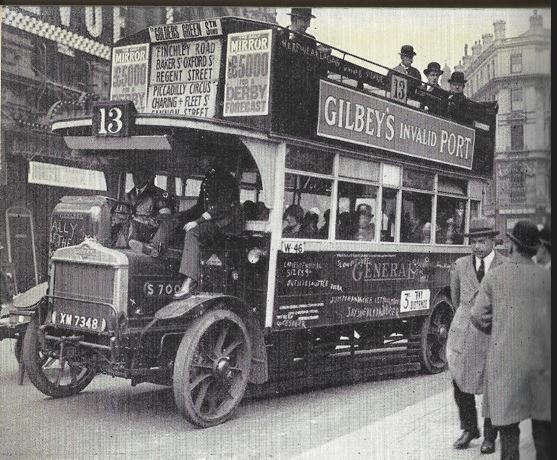
The General Strike of 1926

With widespread strikes complicating life today it may be a good moment to record a little tale about the General Strike nearly 100 years ago.

With warning of strike action, the Government of the day made a series of plans to cover various industries.  For instance, volunteers drove London buses but with a police escort.

At several London power stations naval ratings, many of them stokers, were ready to move in as trade unionists moved out.  They provided only a skeleton staff, supplemented in most cases by technicians who did not come out.  A Cambridge undergraduate was taken to Islington Power Station, with several companions, in a police convoy.  He wrote to his mother and father:

“We arrived safely at the power station, where the gates opened and closed behind us like a prison.  In all there were about 50 of us up there, 20 volunteers, 20 of the permanent staff and 10 or 12 seamen who helped with the stoking.”

This boy worked on the main steam turbine for a day or two, reading gauges and meters, and then shifted to the coaling gang:

“This new game was the goods as far as work was concerned, and although very dirty was very enjoyable.  We had to climb into the grate of one of the boilers, and remove soot from the side and from the masses of water tubes which formed the ‘roof’.  It was just like going up a chimney which hasn’t been swept for years. However, it was an experience, and had to be done, and we all did it in good spirits, laughing about the ‘soot pudding’ with which it filled our mouths. 

That undergraduate was my father (Rowland Hope Cobbold 1905-1986 #407).

Looking through some of his papers I found his 10-page letter to his mum and dad but surprisingly I also found a letter, dated 1956, from Julian Symons thanking my father for responding to his letter in The Times.  He explained that descriptive letters of the kind my father had sent were just the sort of thing he was hoping to obtain for the book he was writing.

I was easily able to buy a copy of Julian Symons book The General Strike 1957 and in which I found the piece quoted above.  I don’t think my father ever knew of his moment in print.


Anthony Cobbold

Categories
cobbwebs-news-and-views

Black Poplars

The Local Wildlife News, May/August 2023 issue, carried a story headed “The Cobbold Connection” written by Yvonne and Andy, stalwart members of the Friends of Holywells Park.

The text read: “The Cobbold family have had a major influence on Ipswich for 300 years.  From brewing beer, to the football club, they have left their mark on the town.  Holywells Park owes its existence to the Cobbolds – they initially took water for brewing beer from the Holywells Springs and then later built their family home there.  About 150 years ago, along the canal path, the Cobbolds planted an avenue of Black Poplar trees.  These are now reaching the end of their life, sadly some have already fallen.  Working with the Park’s conservation team we have been planting replacement Black Poplars to ensure this majestic feature will be there for future generations to enjoy.

Black Poplars are a declining species in the UK, it is becoming increasingly rare.  It grows best in boggy conditions near ditches and floodplains.  It is the food plant for the caterpillars of many moths, including the hornet, wood leopard, poplar hawk and figure of eight.  The catkins provide an early source of pollen and nectar for bees and other insects, and the seeds are eaten by birds.  In folklore it is said that the fallen red male catkins are Devil’s Fingers and will bring bad luck if picked up!”

Congratulations and thanks to Yvonne, Andy and the Conservation Team headed by Nick Wilcox.

Categories
cobbwebs-news-and-views

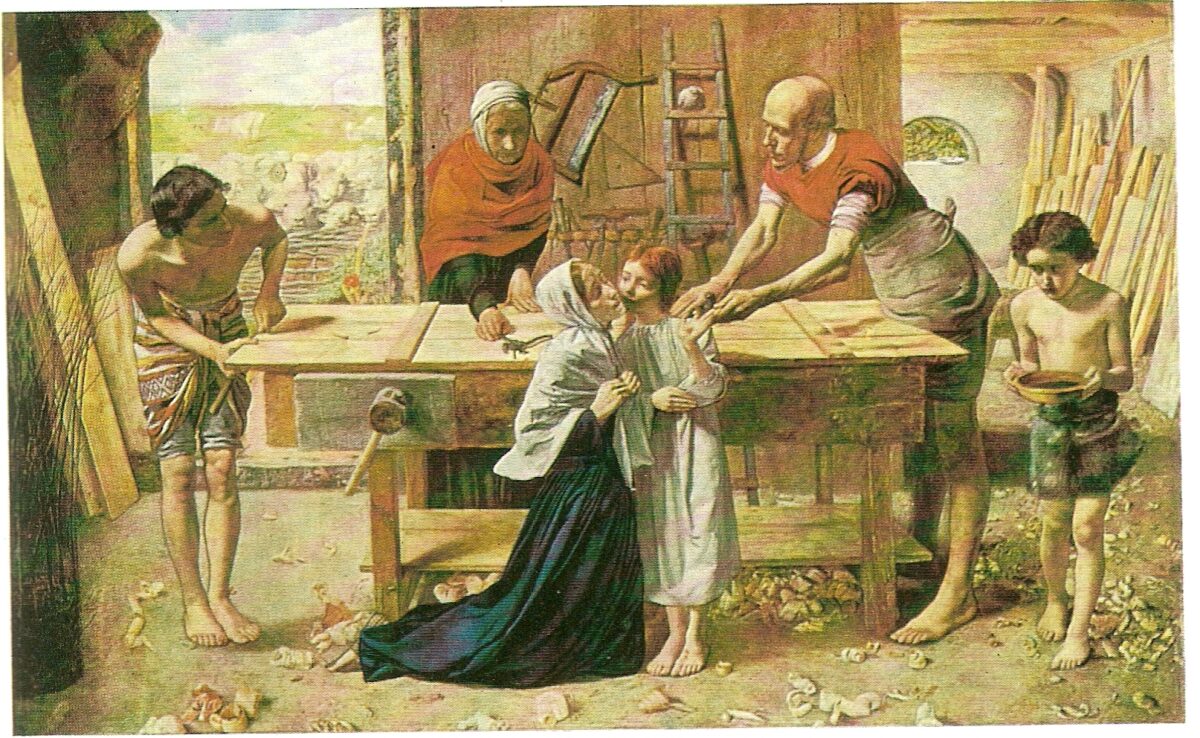
The Carpenter’s Shop

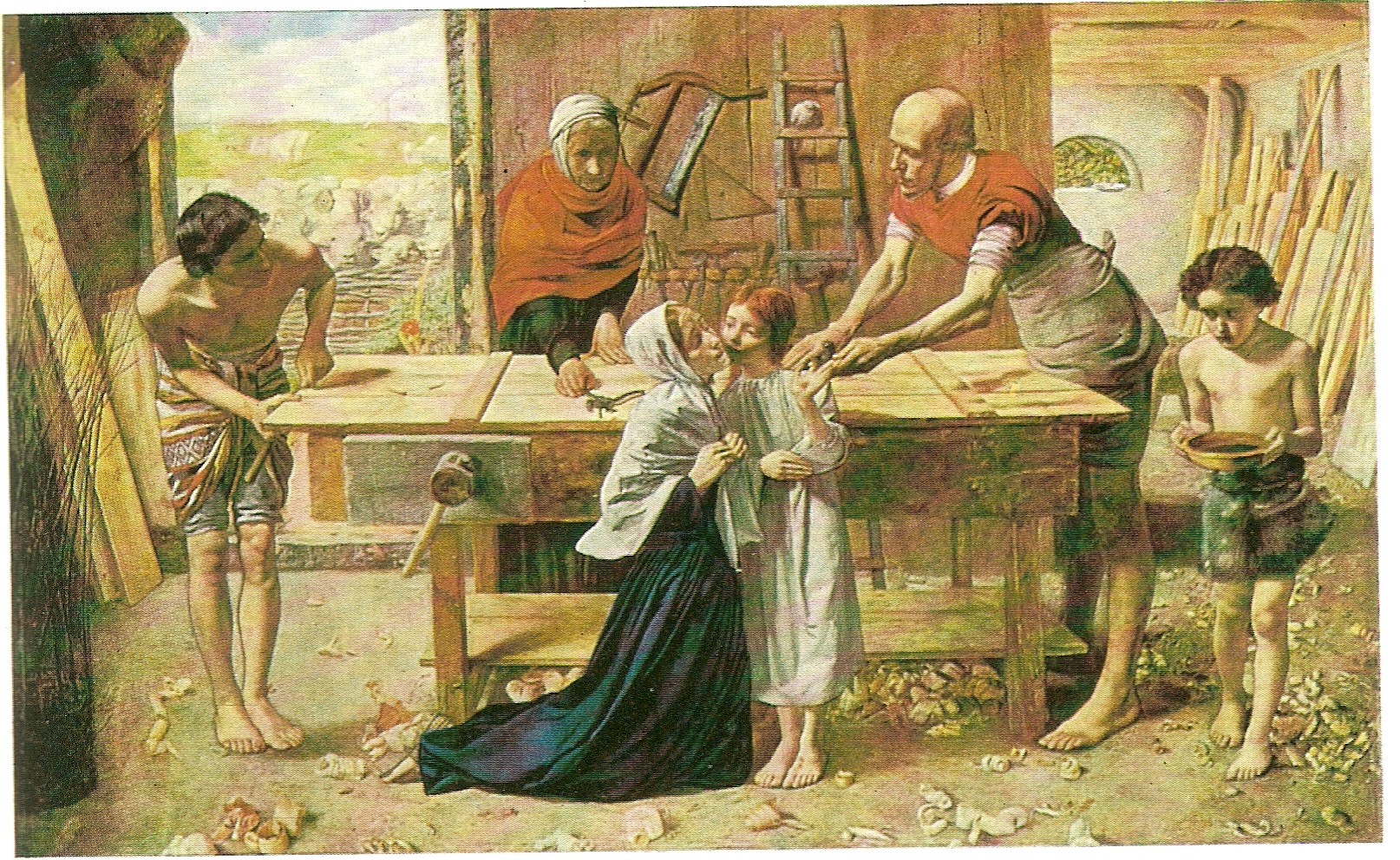
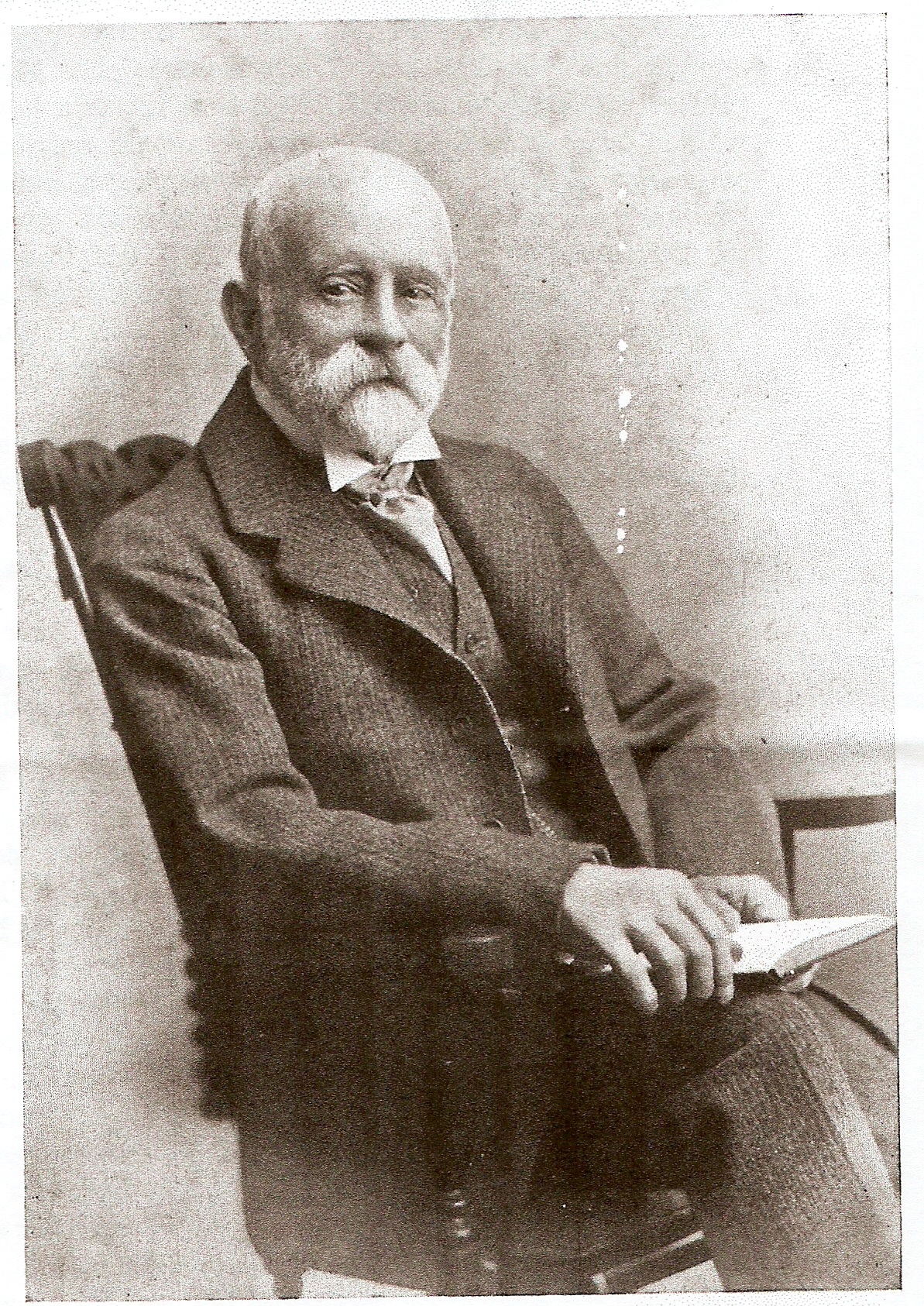
This famous painting, also known as ‘Christ in the House of his Parents’ by Sir John Everett Millais, Bt. showing a scene from the boyhood of Christ who has cut his hand, is packed with symbolism, and caused outrage when first exhibited in 1850 as it sought to show the Holy Family engaged in a working-class occupation.  The carpenter’s triangle above the Christ child’s head symbolises the Holy Trinity; the wood and nails prefigure the crucifixion; the young St John fetching a bowl of water to bathe the wound identifies him as John the Baptist.  In pursuit of the Pre-Raphaelite credo of truth and accuracy the carpenter’s shop is based on a real one in Oxford Street and the sheep in the background represent the Christian flock.  Joseph’s head is a portrait of Millais’ own father, the body being based on an actual carpenter; the Virgin Mary was his sister-in-law, Mary Hodgkinson and Christ is Noel Algernon Humphreys (1837-1923) #301 on our family tree.

Sir John was a very successful artist and became quite rich.  There must have been some confusion by a journalist with Jean-Francoise Millet in 1939 (who painted mainly peasant folk), because a print of The Carpenter’s Shop still in the possession of the Humphreys family has pasted on its back the following note from The New Statesman and Nation of 21st January 1939:

“To confuse Jean-Francoise Millet

With our John Millais is silly;

Millet was French and has money troubles,

Quite unlike the painter of ‘Bubbles’”

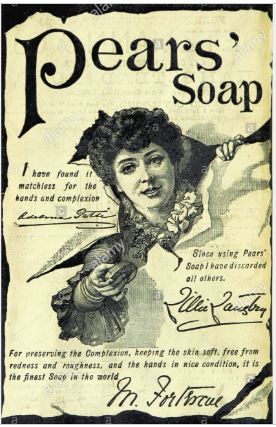
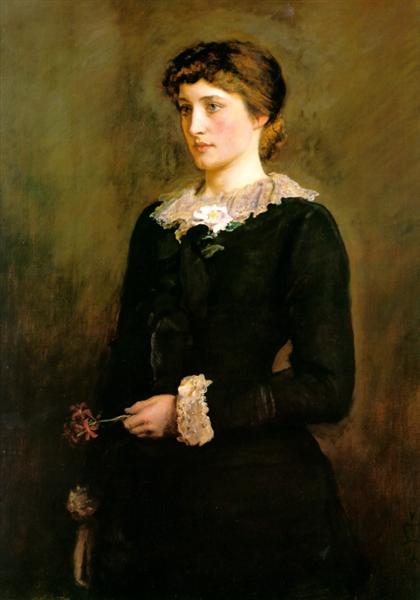
‘Bubbles’ of course was another of Millais’ paintings which caused outrage as it was adopted as the visual in an advertisement for Pears Soap and the press accused him of prostrating his art to achieve sales of soap.  Another Pears Soap advertisement featured Lillie Langtry (1853-1929) #1243 who achieved considerable fame as a mistress of King Edward VII when he was Prince of Wales.  She too was painted by John Millais; her portrait being titled The Jersey Lily when the flower she holds is in fact a Guernsey Lily.

As the late great Dr John Blatchly intimated in his foreword to Cobbold & Kin, it is fascinating how many great men and women have Cobbold connections.

0
    0
    Your Cart
    Your cart is emptyReturn to Shop