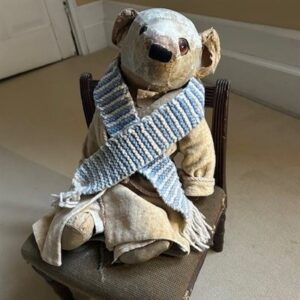
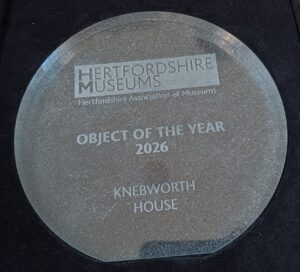
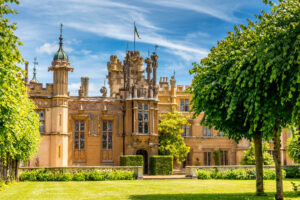
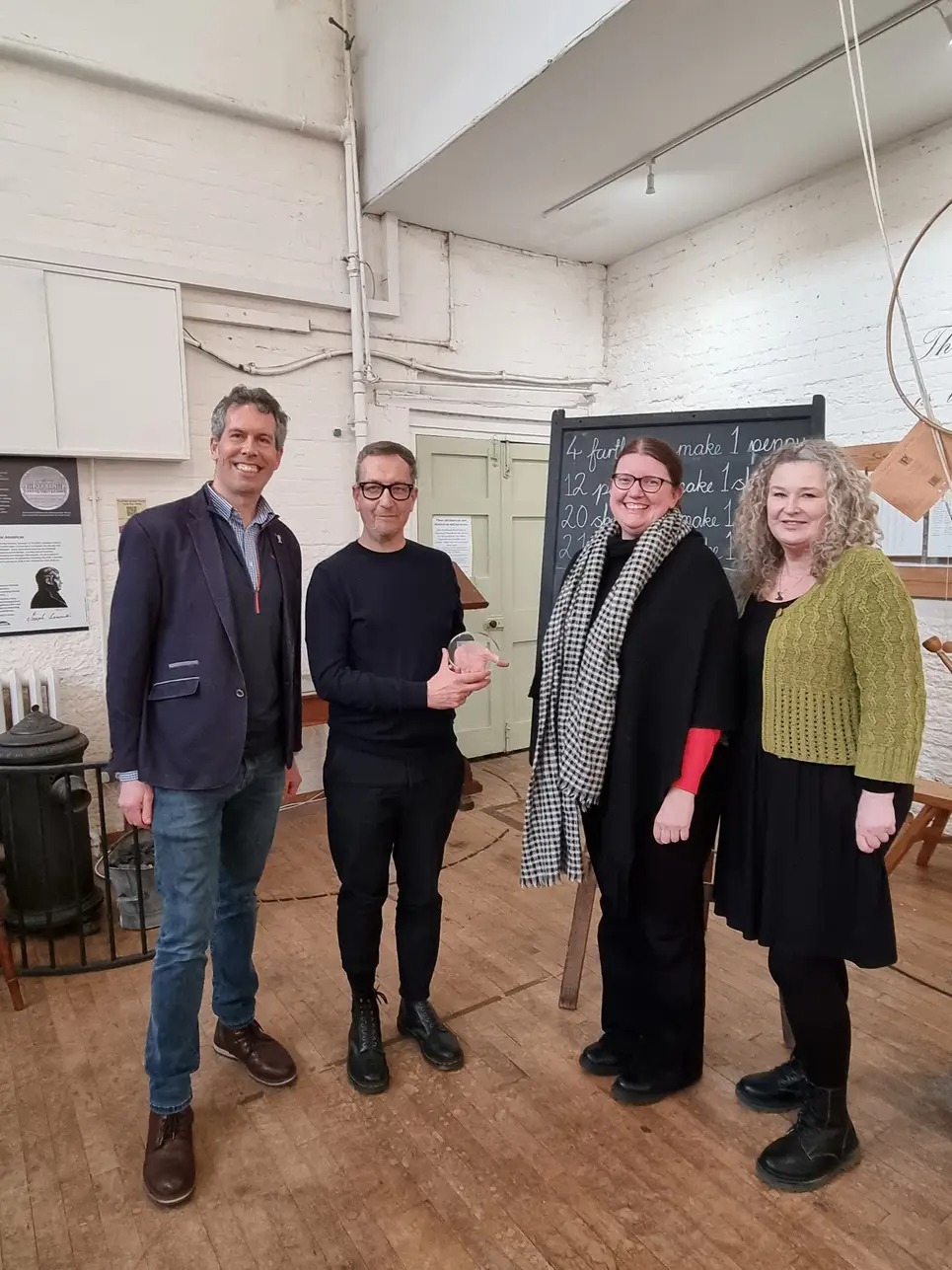
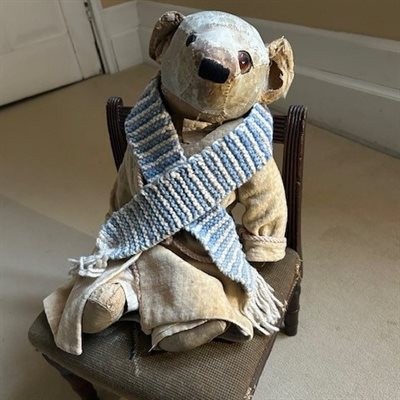
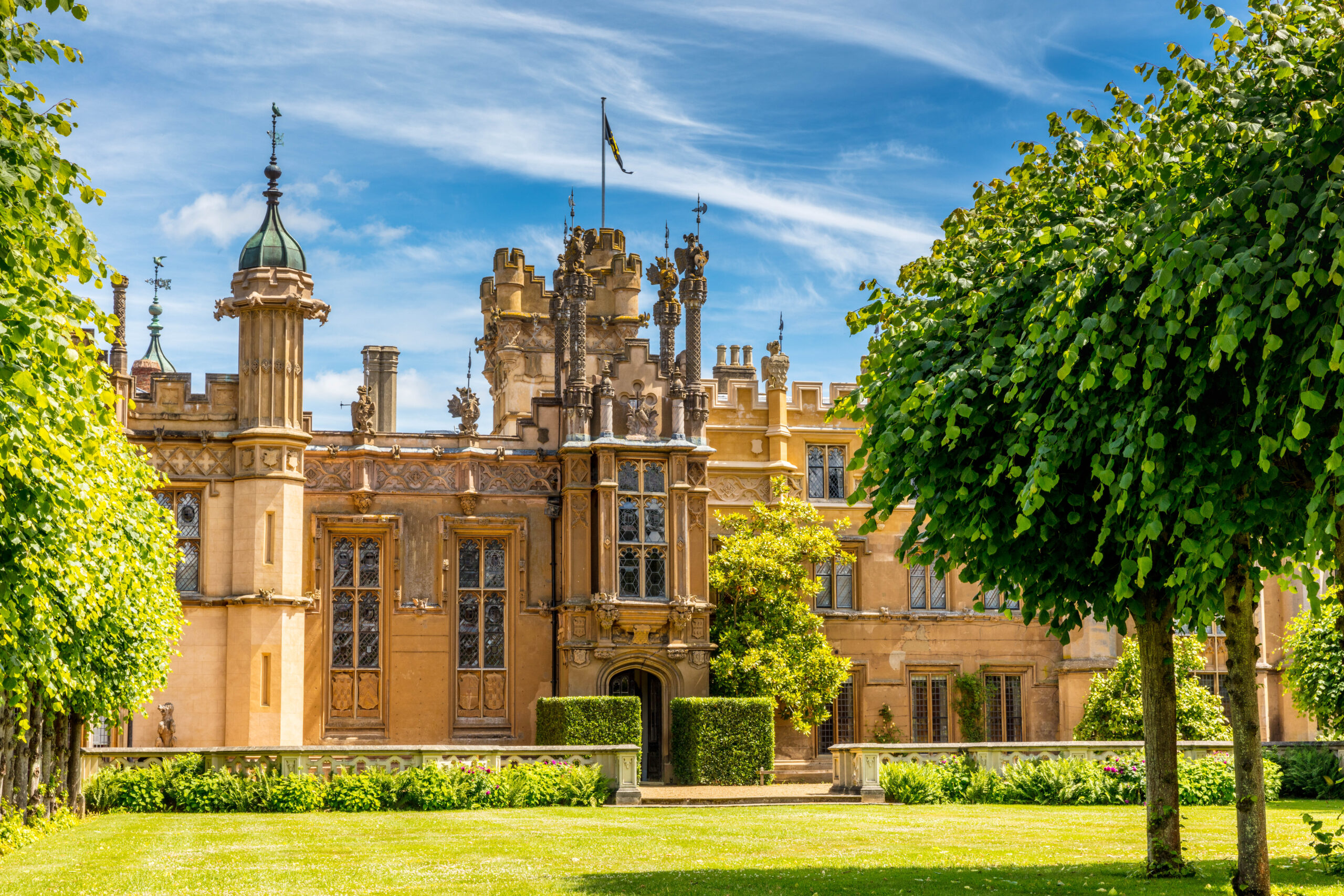
A small teddy bear belonging to a member of the Cobbold family has been named as the Object of the Year for 2026 by the Hertfordshire Association of Museums. The award was presented on 4th March, recognising the historical and emotional significance of the bear, known simply as “Teddy”, which is now on display at Knebworth House.
Teddy the TeddyThe presentation of the award
Teddy belonged to Cameron Cobbold (1904-1987) #490, the grandfather of Knebworth House’s current custodian and Cobbold Family History Trust trustee, Henry Lytton Cobbold. Cameron’s biography may be viewed on the family tree here. Cameron’s favourite childhood companion was this small bear, which stayed with him through his life and distinguished career as Governor of the Bank of England (1949-1961) and Lord Chamberlain to Queen Elizabeth II (1963-1971).
Cameron, 1st Baron Cobbold
After Cameron’s death in 1987, Teddy, wrapped up in his small dressing gown and scarf, was packed away in the Knebworth House attic. The bear remained hidden for decades until, in 2025, he was discovered by archivists inside a box containing Cameron Cobbold’s most personal possessions. The friendly-looking teddy bear looked so pleased to be out of his box.
Following examination by conservation experts, Teddy was placed on display at Knebworth House. He now sits on his own chair in the Hampden Room, where thousands of visitors have already enjoyed seeing him and hearing the story behind the small bear with a long history.
The Hertfordshire Association of Museums’ Object of the Year award celebrates artefacts that tell compelling stories about the county’s heritage. Teddy’s journey from childhood toy to a witness of an extraordinary life captured the public’s imagination.
The Object of the Year Award
Henry Lytton Cobbold said, “Throughout his distinguished public career, my grandfather was happiest in the company of his family and loved ones, of whom Teddy was the longest standing. Teddy remained a beloved companion from childhood cot to death bed. We are so delighted that this very personal object has been recognised by the Hertfordshire Association of Museums.”
Visitors to Knebworth House can see Teddy in the Hampden Room as part of the house tour.
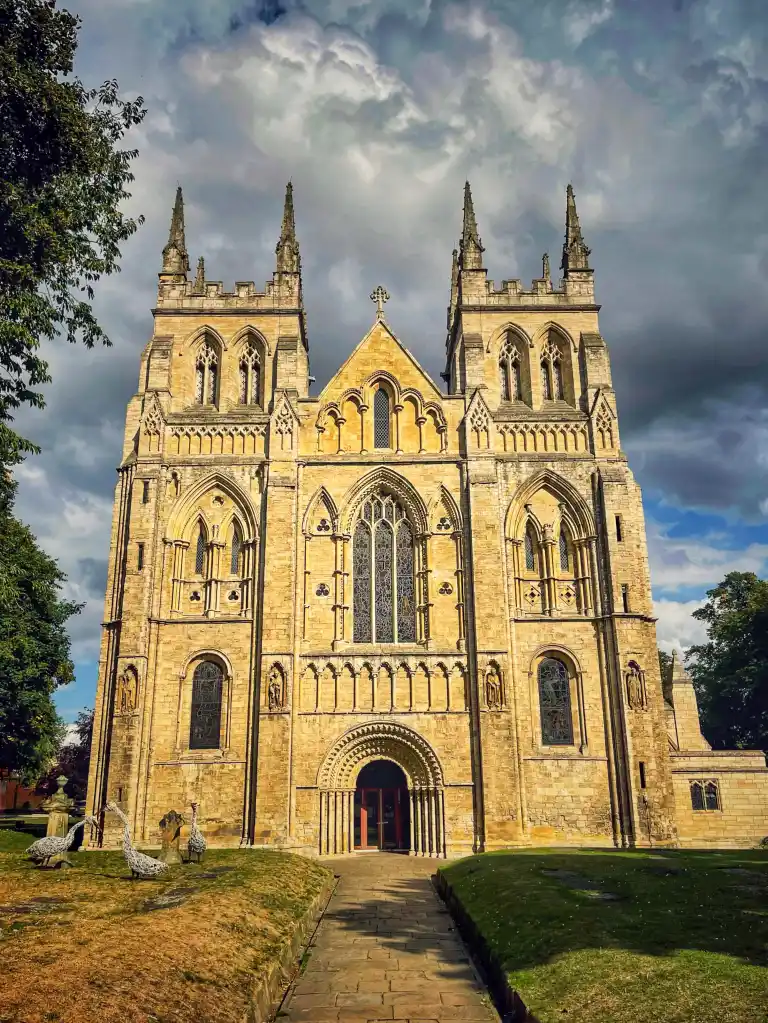
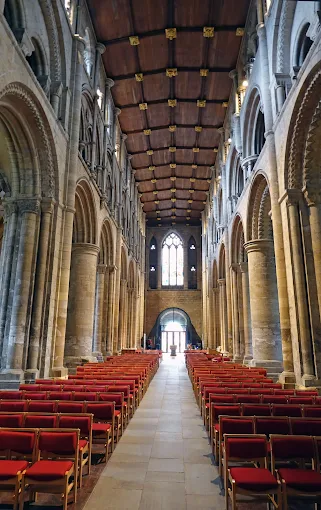
At the dawn of the twelfth century, England’s religious houses were so few they could be counted on one hand. By the century’s end, more than 300 abbeys and monasteries were scattered across the land — a testament to the spiritual fervour of medieval England. Among them rose Selby Abbey, built on raised ground above the low-lying banks of the River Ouse.
Selby Abbey
Founded around 1070 by Abbot Benedict as a modest wooden structure dedicated to St Maryand St Germain, it was his successor Hugh who began the great stone building that largely survives today. Romanesque in character and formidable in presence, the abbey endured the upheaval of the Reformation — though its Benedictine monastic buildings did not. As a “Mitered Abbey,” its abbot once enjoyed the rare papal privilege of sitting in the House of Lords.
Time, however, has never been gentle. The central tower collapsed in 1690. Victorian restorers later stepped in: first the eminent architect George Gilbert Scott in the 1870s, followed by his son John Oldrid Scott in the 1880s. Each generation left its mark.
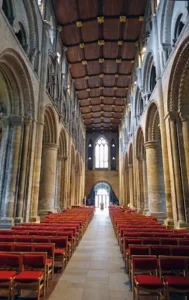
The Nave
But nothing would test the abbey’s resilience — or its leadership — like the fire of 1906.
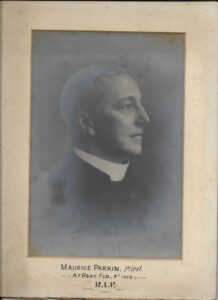
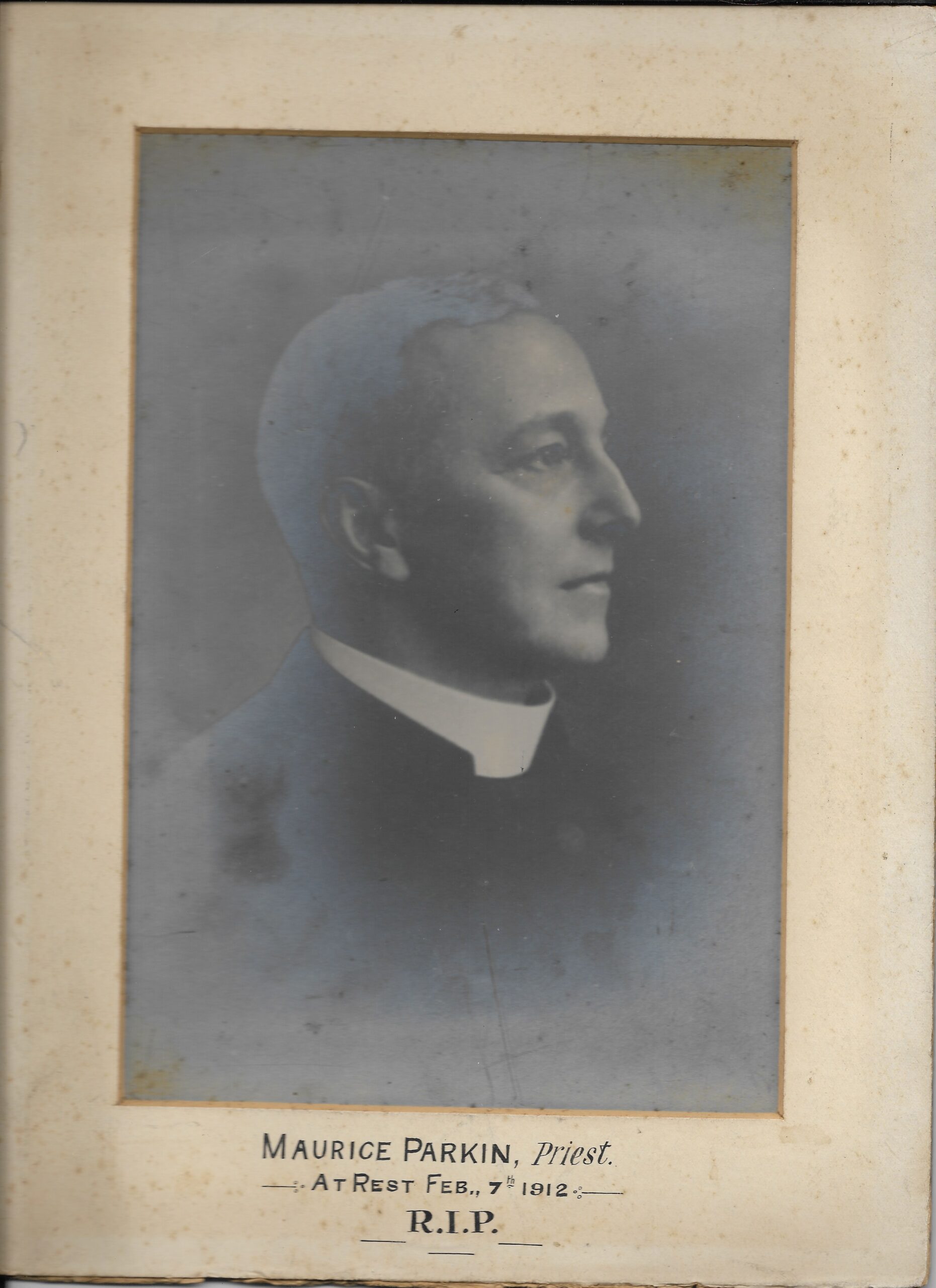
On 19 October 1906, flames tore through the nave and choir during the vicariate of MauriceParkin (1895–1912) # 550. The destruction was devastating. For many communities, such a catastrophe might have signalled decline.
Rev. Maurice Parkin
For Parkin, it was a call to action.
Contemporary reports speak of his “optimism and zeal.” Those words barely capture the scale of what followed. Within a year — remarkably — the restored nave was re-dedicated on 19 October 1907. Two years later, on the same date in 1909, the choir too was restored and reopened. The speed of recovery was extraordinary for its time, and it was driven by Parkin’s energy, determination, and refusal to let Selby’s great church slip into ruin.
He did not simply oversee repairs; he galvanised a community. Under his stewardship, Selby Abbey was not merely rebuilt — it was reborn.
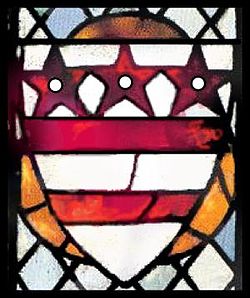
Amid fire, collapse and restoration, one treasure endured: the 15th-century WashingtonWindow.
The Washington Window
This remarkable glass commemorates John Wessington, Prior of Durham from 1416 to 1446, whose benefaction brought welcome funds to Selby. Wessington was an ancestor of George Washington, first President of the USA and his heraldic arms — stars and stripes — are widely believed to have influenced the design of the American flag.
Today, visitors from the United States flock to this quiet corner of North Yorkshire. The abbey forms part of American heritage trails, linking medieval England to the founding of a nation across the Atlantic.
Last week, on 8th March, the world celebrated International Women’s Day using the theme “When we give, we gain.” It is part of the continuing struggle for rights and justice for all women.
There was no greater struggle than that of Women’s Suffrage, so it is timely for us to recall the contribution made by three family members:
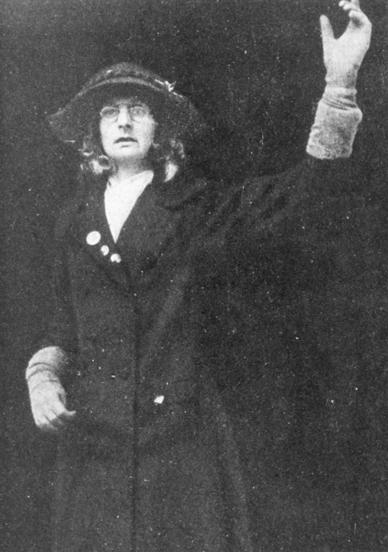
Lady Constance as Jane Warton
Lady Constance Lytton (1869-1923) #3712 who had a brother in the House of Lords was so angry about the disparity in the sentences received by upper- and lower-class militants that she disguised herself as Jane Warton. On hunger strike she was savagely treated and her health was so permanently damaged that she died prematurely aged only 54. Click here for a full account.
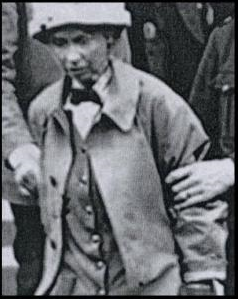
Frances Parker (1875-1924) #5776 was a prominent member of the Women’s Social and Political Union in Scotland. She was imprisoned many times and whilst on hunger strike in 1912 and 1914 she was subjected to acts of physical abuse and indecent assault. Click here for more information.
Frances Parker OBE
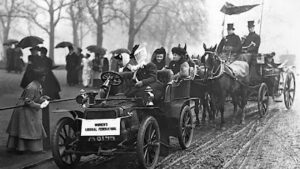
Aileen Preston (1889-1974) #2094 was lady chauffeuse to Emmeline Pankhurst. Our picture shows her driving as a member of the Women’s Liberal Federation, an umbrella organisation comprised of some 613 affiliated bodies of which the Women’s Social and Political Union was one. Although not abused, her task as one of the first women drivers in the country was not straightforward as she was required to be a frequently needed (and frequently blamed) mechanic. Click here for more information.
Aileen driving Emmeline Pankhurst in 1911
Our pages are full of ‘ahead-of-their-time women’ who have, to use modern parlance made a difference. There are too many to mention. We saluteyou all.
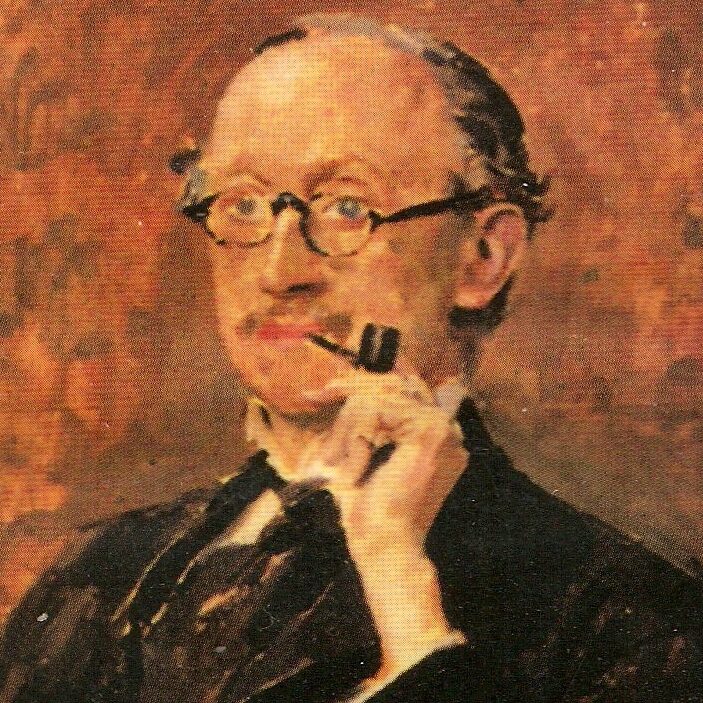
Last month reports emerged that India’s Prime Minister, Narendra Modi, had ordered the removal of a bust of Sir Edwin Lutyens (1869–1944) #3716 from the former Viceroy’s House — today known as Rashtrapati Bhavan — in Delhi.
Sir Edwin Lutyens
Lutyens’ work in India is sometimes less widely recognised than his British commissions, including the Cenotaph in Whitehall, the vast Thiepval Memorial in France, and the many country houses he designed across Britain.
Following the 1911 announcement that the capital of India would move from Calcutta to Delhi, Lutyens was appointed principal architect for the new imperial city. Working alongside Herbert Baker, a masterplan was approved and construction began in 1913. The Viceroy’s House was completed in 1930, and on 13 February 1931 New Delhi was formally inaugurated as the capital.
The inscription beneath the bust read simply: “Edwin Lutyens, Architect of this House.”
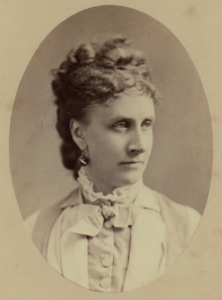
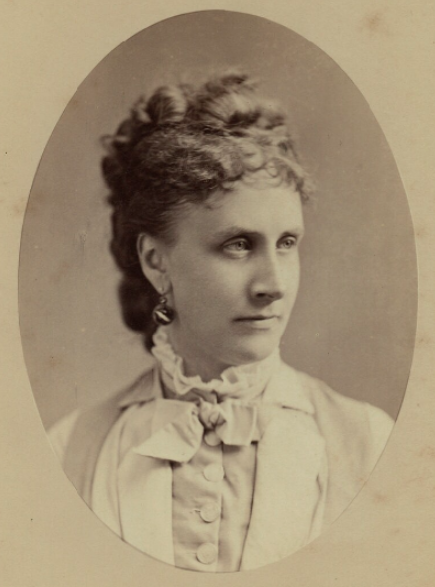
Lutyens already had a strong familial connection with India. In 1897 he married Lady Emily Lytton (1874–1964) #3713, daughter of Edward Robert Bulwer/Lytton (1831–1891) #3147, Viceroy of India between 1876 and 1880, and Edith Villiers (1841–1936) #3148, who bore seven children, though two died in infancy.
Edith, Countess of Lytton 1876, Vicereine of India
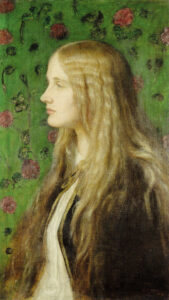
In 1862, aged just 21, Edith sat for George Frederic Watts (1817–1904), a pioneer of the Symbolist movement. Her portrait is widely regarded as one of the finest associated with the Pre-Raphaelite movement.
Edith Villiers 1862 by George Frederic Watts
Her sister Elizabeth (Betty) Edith Lytton (1867–1942) #3711 married Gerald William Balfour (1853–1945) #3715, 2nd Earl of Balfour and younger brother of Prime Minister Arthur Balfour.
Among her brothers were Neville Stephen Lytton OBE (1879–1951) #3710, 3rd Earl of Lytton, and Victor Alexander George Robert Lytton KG PC GCSI GCIE (1876–1947) #2298, great-grandfather of the present Lord Cobbold (1962) #662.
Lord Cobbold
The Cobbold Family History Trust — reinforced by the stewardship of the Knebworth House Education and Preservation Trust — remains loyal to its commitment to telling history as it was lived and recorded.
Anthony Cobbold and Carolyn Cobbold
Sir Edwin Lutyens
Edith, Countess of Lytton 1876, Vicereine of India
In 1867, when women’s horizons were narrowly drawn and adventure was rarely considered a feminine pursuit, one remarkable woman quietly made history on the slopes of Mount Fuji.
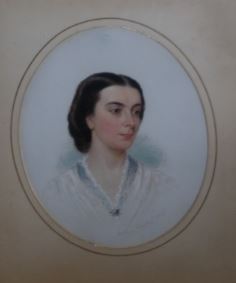
Fanny Hannah Parkes #850
Lady Fanny Parkes (1831–1879), wife of Sir Harry Parkes, Britain’s principal diplomat in China and Japan, became the first non-Japanese woman known to have climbed Japan’s most sacred mountain. Her ascent was all the more extraordinary given that women were officially forbidden from setting foot on Mount Fuji at the time.
Mount Fuji
Rising more than 12,000 feet above the island of Honshu, Mount Fuji is an active stratovolcano and one of Japan’s Three Holy Mountains. For centuries it has been a powerful cultural symbol, celebrated in art and poetry and revered as a site of pilgrimage. In June 2013, it was recognised internationally with inclusion on the UNESCO World Heritage list.
Yet in the mid-19th century, Fuji was still legally closed to women. That ban was not formally lifted until 1872, when a Grand Council of State edict declared that “any remaining practices of female exclusion on shrine and temple lands shall be immediately abolished, and mountain climbing for worship shall be permitted.” Lady Parkes’ ascent came five years earlier — clear evidence that reality was already outrunning regulation. She was not alone in defying convention: the first recorded Japanese woman climber, Tatsu Takayama, had reached the summit as early as 1832.
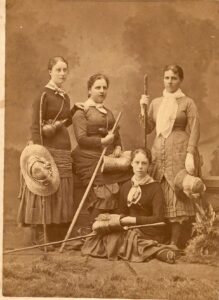
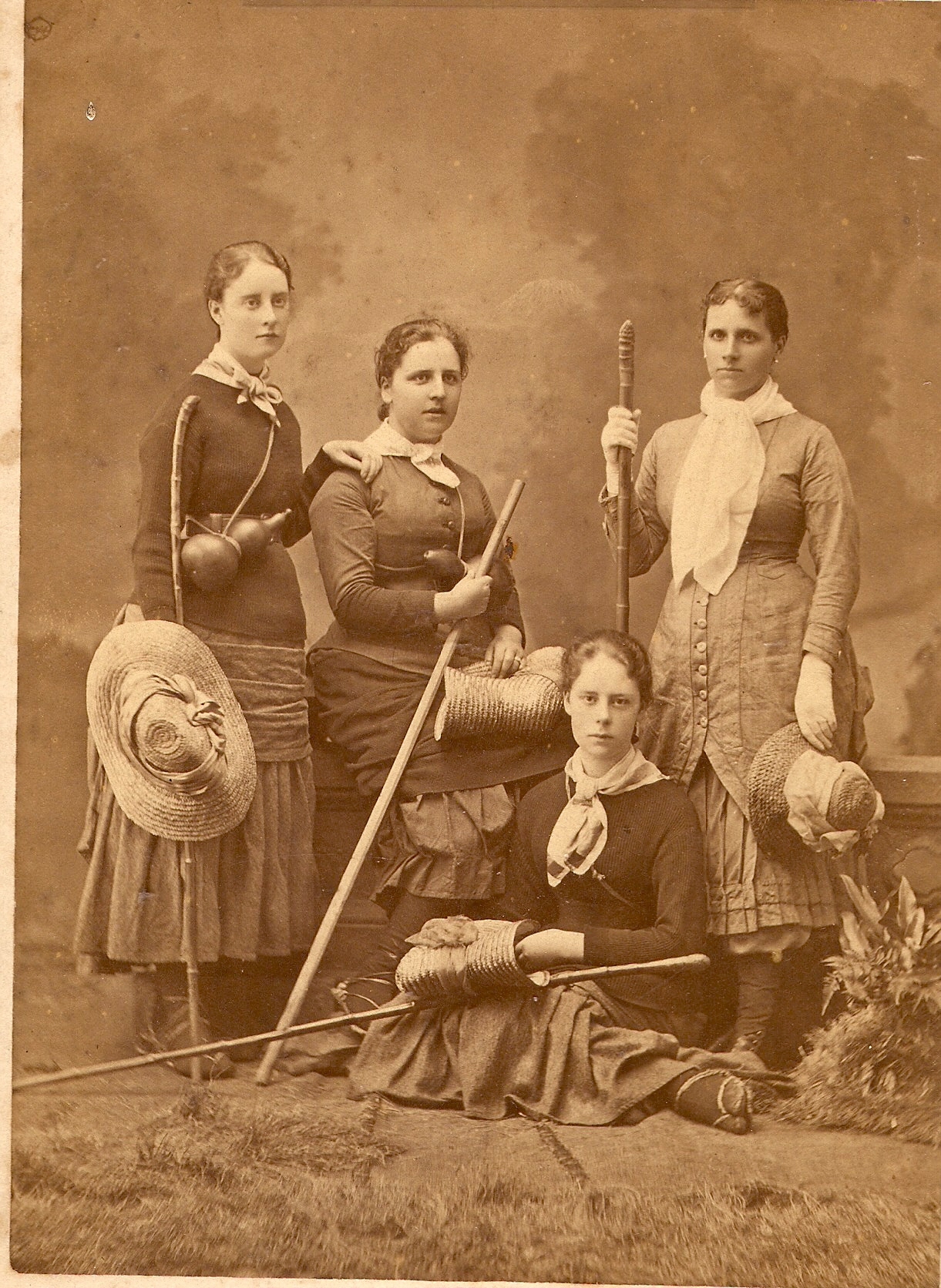
Her party for the ascent
The significance of Lady Parkes’ climb was remembered decades later by her daughter, Lillian Cobbold (née Parkes), who wrote to The Times in August 1932 under the heading “An Ascent of Fusiyama.” Reflecting on a contemporary Alpine climb, she recalled her mother’s achievement:
“Though Fusiyama is some 600 ft. lower than the Eiger and would not be called difficult today, yet its ascent by a woman so long ago elicited the admiration of her companions and kindled the amazement of the Japanese in their pre-westernized days.”
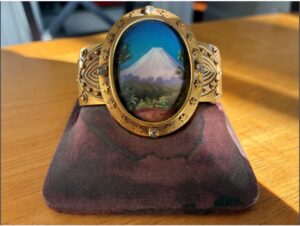
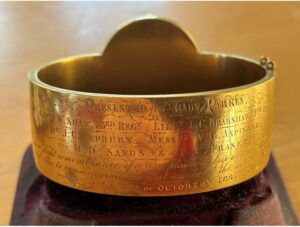
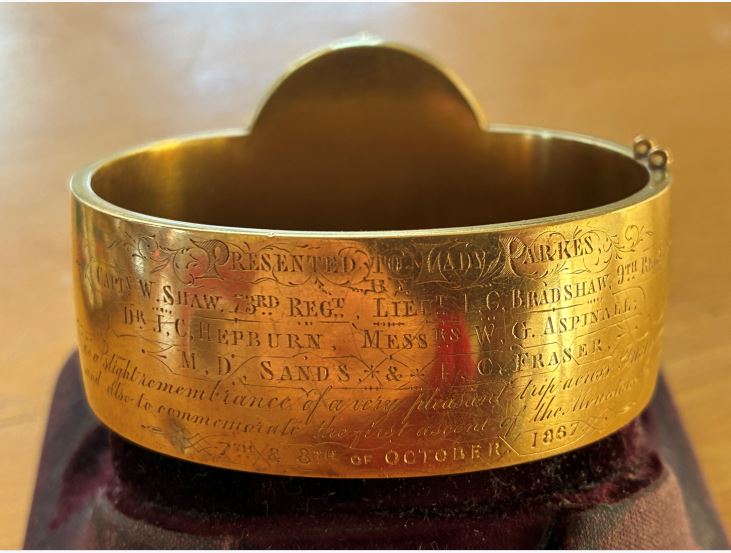
Lillian went on to describe a personal keepsake that testified to the moment: a gold bracelet inscribed with the names of Lady Parkes’ companions and commemorating “the first ascent of the mountain by a lady, 7th and 8th Oct. 1867.”
The braceletThe inscription
Among those companions was Dr James Curtis Hepburn, an American physician, educator, and medical missionary living in Yokohama. Hepburn and his wife Clara founded the Hepburn School, which later became Meiji Gakuin University, and his legacy is still honoured in Japan today. In 1867 — the very year of Lady Parkes’ climb — he published a Japanese-English dictionary that would become the standard reference work for generations.
Lady Parkes’ ascent of Mount Fuji was more than a physical feat. It was a quiet act of defiance, curiosity, and courage — a reminder that history’s boundaries have often been crossed long before they were officially erased.
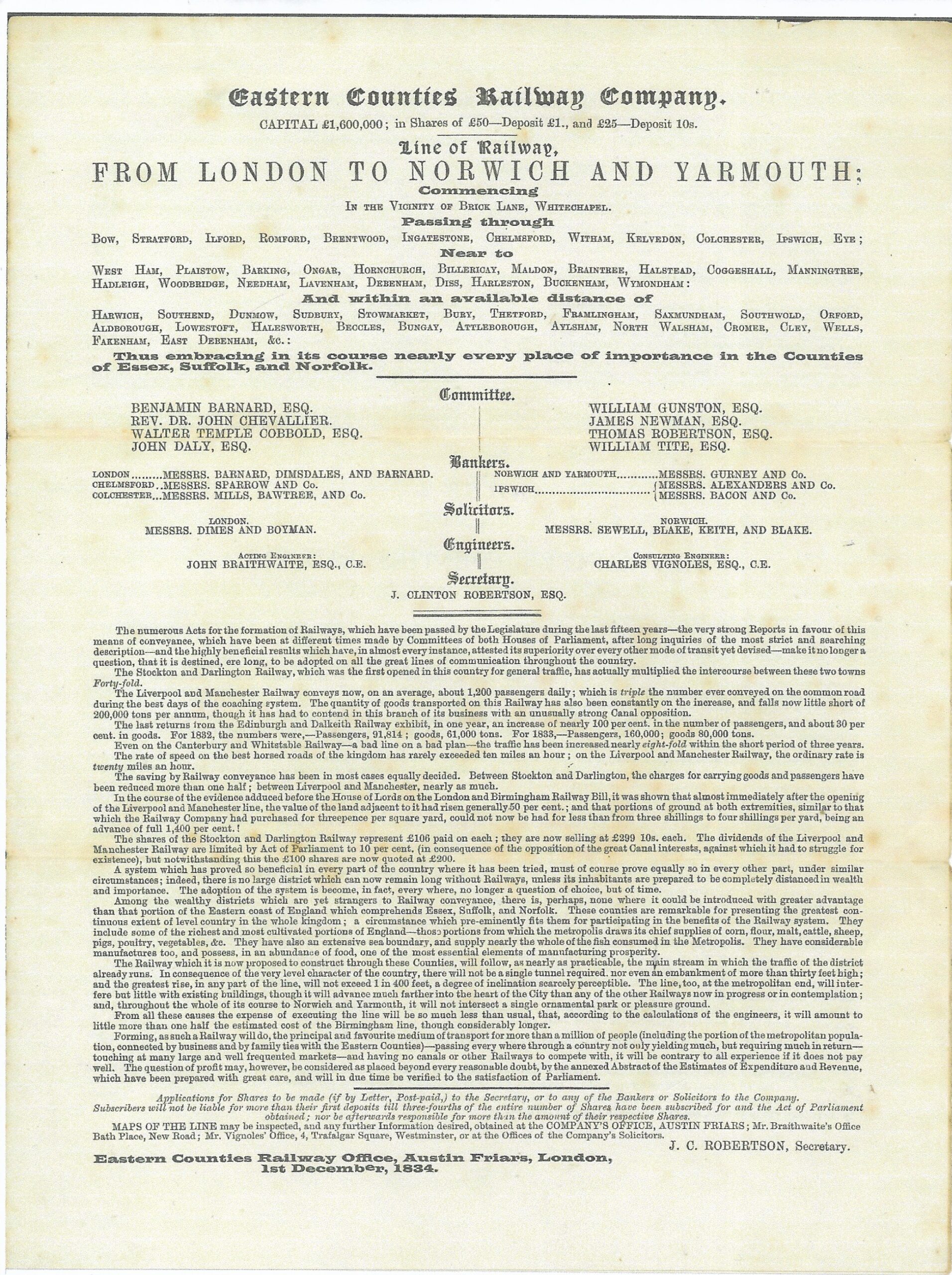
Last year saw the 200th anniversary of the railways in Britain. It was also the year in which the Trust acquired a copy of the 1834 Prospectus of the Eastern Counties Railway Company.
ECR Prospectus 1834
The document, written in intensively persuasive terms, sought to raise £1.6m for a rail route from ‘Brick Lane, within less than a mile of the Royal Exchange – being the only one of the Great Railways which will advance into the heart of the Metropolis……crossing the river Yare near Trowse…into Norwich.’
Chelmsford, Colchester, Ipswich, and Eye were all on the route ‘thus embracing in its course nearly every place of importance in the counties of Essex, Suffolk, and Norfolk.’
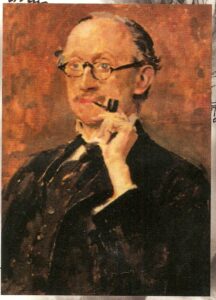
The promoting committee included Walter Temple Cobbold (1801-1850) #118 and that extraordinary master of all activities, Rev. Dr. John Chevallier (1774-1846) #729, first a medical doctor, then a cleric and finally a pioneering agriculturist best known for propagating and commercializing Chevallier Barley, a two-row malting variety that revolutionized British brewing in the 19th century by becoming the dominant crop for ale production world-wide for over 50 years.
Rev Dr John (Barley) Chevallier
Potential investors were encouraged by being advised that ‘The Stockton and Darlington Railway, which was the first opened in this country for general traffic, has actually multiplied the intercourse between these two towns FORTY-FOLD. The Liverpool and Manchester Railway conveys now on an average, about 1,200 passengers daily, which is TRIPLE the number ever conveyed on the common road during the best days of the coaching system.
‘The shares of the Stockton and Darlington Railway represent £106 paid on each; they are now selling at £299 10s each. Among the wealthy districts which are yet strangers to Railway conveyance, there is, perhaps none where it could be introduced with greater advantage than that portion of the Eastern Coast of England which comprehends Essex, Suffolk, and Norfolk.’
The Abstract of Estimates advises investors that if only two-thirds of present traffic was won (from canals) a dividend of 18% would be earned. However, if the increase in traffic matched that of the Stockton and Darlington Railway, investors should expect 20%.
Messrs Gurney & Co were the bankers in Norwich, Yarmouth, Diss, Harlestone, and Framlingham (see John Gurney (1749-1809) #7269) and John Chevallier Cobbold (1797-1882) #114 was the Agent in Ipswich.
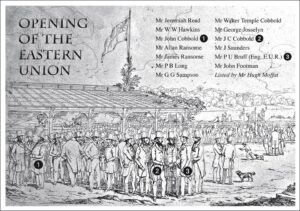
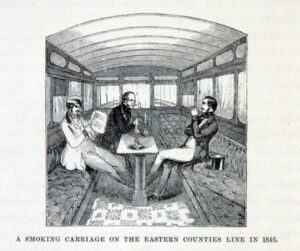
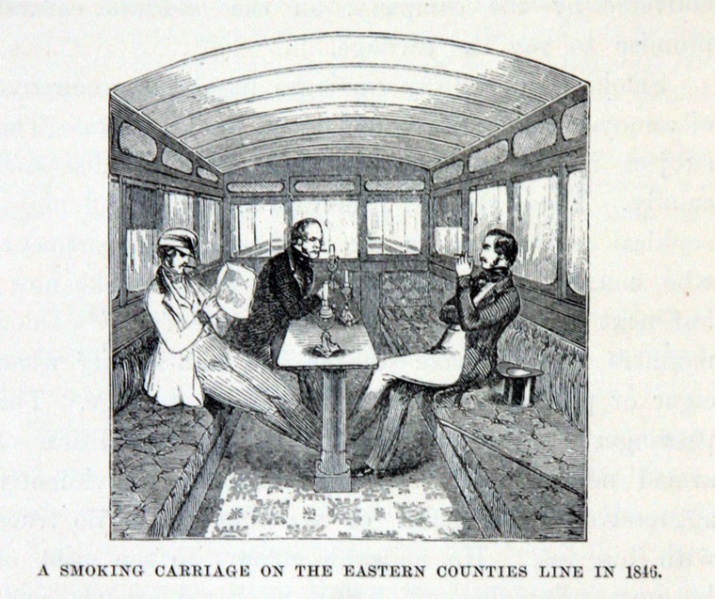
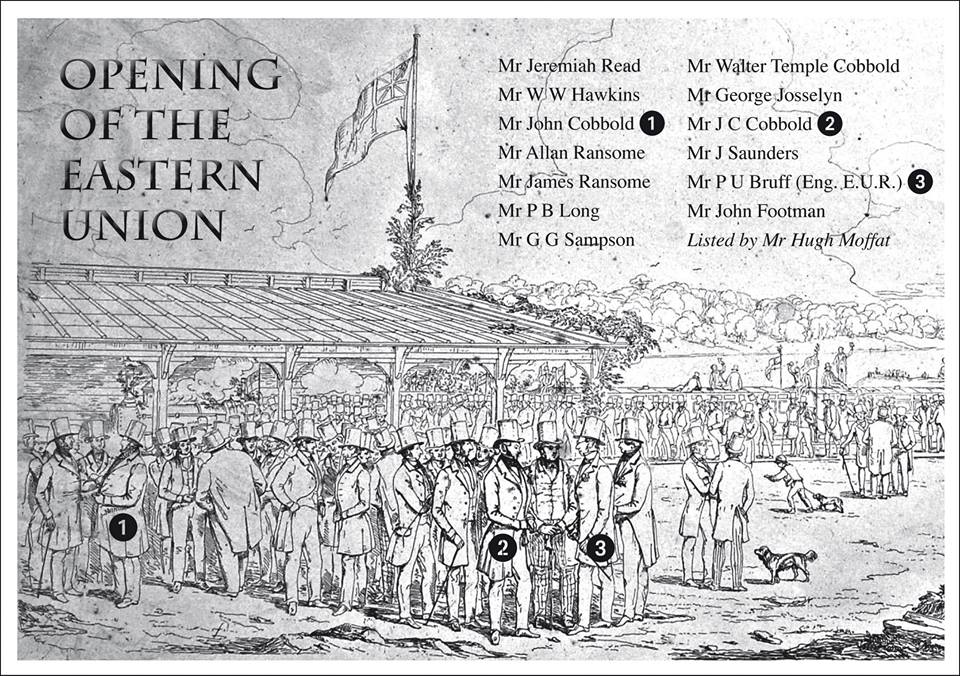
The company was sanctioned in 1836 and started carrying traffic on 20th June 1839 on a gauge of 5 ft, completing the line between Shoreditch and Brentwood the following year with a lavish opening party. By 1843 it had reached Chelmsford, and in 1844 it adopted the now universal gauge of 4 ft 8.5 in, being granted an extension to Cambridge in 1845. All was not well, however, and that year ‘railway king’ George Hudson (1800-1871) was appointed Chairman to restore integrity. 1846 saw the Eastern Union Railway (of which John Chevallier Cobbold was the principal protagonist) complete its line between Colchester and Norwich, bringing the railway to Ipswich on 15th June.
Ipswich Station 15th June 1846Smoking Carriage ECR 1846
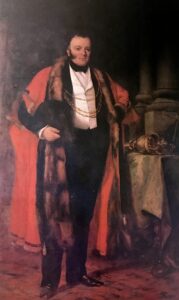
Meanwhile George Hudson, who had inherited handsomely and made himself even richer on the North Midland Railway, was found to have further enriched himself at the expense of the company, for which he was rightly fired. The three-times Lord Mayor of York was imprisoned in the castle and died there a broken man.
Discredited George Hudson
In 1853 the Eastern Counties Railway took over the Eastern Union and just 10 years later found itself incorporated into the Great Eastern Railway.
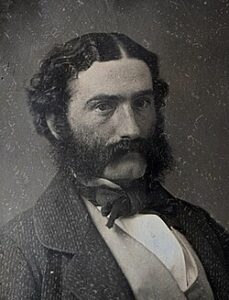
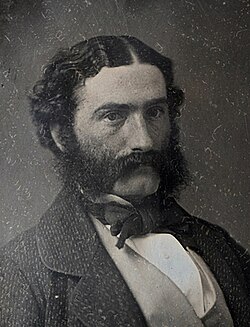
Even then the family’s interest was not over. Following the departure of Chairman David Waddington (who had been Hudson’s deputy) and Horatio Love the seat fell to JamesGoodson MP (1818 – 1895) whose deputy was Col. Henry Jervis-White-Jervis RA MP (1825-1881) #183, who had married John Chevallier Cobbold’s daughter, Lucy (1828-1916) #182.
Col. Henry Jervis-White-Jervis RA MP
In 1865, Col. Jervis-White-Jervis expressed concern about the management of the company. At a board meeting, from which he was absent, he was replaced. The investigating committee found that his concerns, which included borrowing more money than was authorised, were wholly justified and the board was replaced, largely by members of the investigating committee! The company was overhauled and one of the measures introduced was the conversion of its London terminus at Shoreditch into a coal depot and the construction of a brand new station in 1874, Liverpool Street.
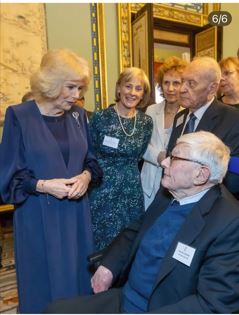
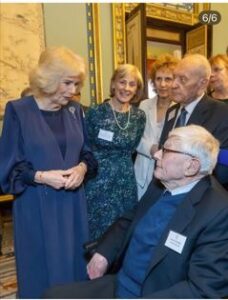
Max Snijders (1929) #15407 on the family tree met Their Majesties the King and Queen at Buckingham Palace on 27th January 2026.
The Queen greets Max
King Charles III and Queen Camilla lit candles of remembrance to mark the anniversary of the liberation of Auschwitz-Birkenau in 1945.
Max, one of a decreasing number of Holocaust survivors, hid in several locations as a child to avoid the Nazi persecution. 1.6 million children were not so fortunate.
The King, who last year became the first British head of state to visit Auschwitz, told 100-year-old survivor Anita Lasker-Wallfisch that it was “wonderful” to have her join the reception.
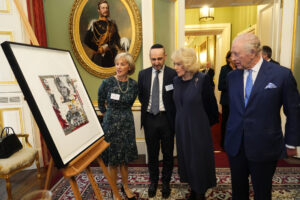
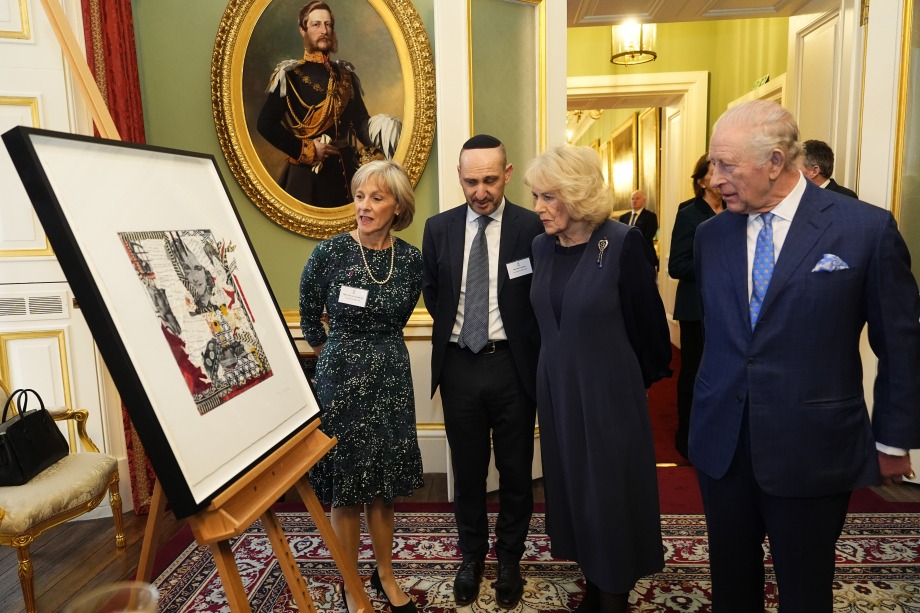
On display was a painting featuring excerpts from Anne Frank’s diary by Peter Sacks, which is to be auctioned in aid of the Anne Frank Trust.
The King & Queen view Peter Sacks’ picture. Nicola Cobbold #910 (Chair of the Anne Frank Trust) in background.
The Trust, which challenges prejudice and discrimination, runs a programme of on-line learning for secondary schools. As a part of this programme Max shares his powerful story which can be accessed via the following link:
We are interested in Benjamin William Page (1765-1845) #15136 for more than one reason.
Admiral Page
Apart from his intense naval career his nephew Rev Luke Flood Page (1805-1863) #113 married Susannah Elizabeth Cobbold (1803-1869) #112, granddaughter of Rev ThomasCobbold (1742-1831) #51 who should have taken on the brewery but chose the Church instead. Their son, Lt. Spencer Cobbold Page (1833-1857) #3319 who died accidentally in Belize is the subject of another poignant story to be recorded later.
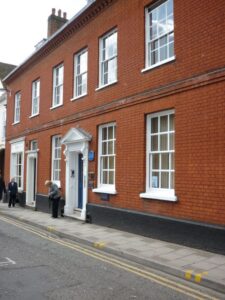
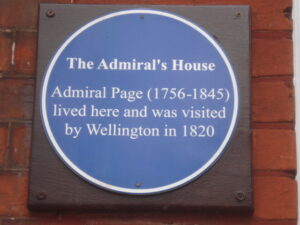
Page lived and died in retirement at 13 Tower Street, Ipswich, now occupied by the Ipswich Institute, a near neighbour of the Cobbolds at number 19, where he was visited by the Duke of Wellington just 5 years after his victory at Waterloo. The Trust published Letters from Waterloo in July 2016.
13 Tower Street, IpswichHis Blue Plaque
For an account of his naval life, we can do no better than to quote his entry in the Dictionary of National Biography:
PAGE, BENJAMIN WILLIAM (1765–1845), admiral, born at Ipswich on 7 Feb. 1765, entered the navy in November 1778, under the patronage of Sir Edward Hughes with whom he went out to the East Indies in the Superb, and in her was present in the first four actions with Suffren. In December 1782 he was appointed acting lieutenant of the Exeter, and in her took part in the fifth action, on 20 June 1783. In August he was moved into the Worcester; in the following February to the Lizard sloop; and in September to the Eurydice frigate, in which he returned to England in July 1785. His commission as lieutenant was then confirmed, dating from 20 Nov. 1784. From 1786 to 1790 he was on the Jamaica station in the Astræa frigate, commanded by Captain Peter Rainier, whom he followed to the Monarch in the Channel for a few months during the Spanish armament. In December 1790 he was appointed to the Minerva, in which he went out to the East Indies; in August he was transferred to the Crown, and in her returned to England in July 1792. In January 1793 he was appointed to the Suffolk, again with Rainier, and in the spring of 1794 went out in her to the East Indies. In September Rainier promoted him to command the Hobart sloop, a promotion afterwards confirmed, but only to date from 12 April 1796.
HMS Exeter, 21st June 1783
In consequence of Page’s long acquaintance with eastern seas, he was ordered, in January 1796, to pilot the squadron through the intricate passages leading to the Moluccas, which were taken possession of without resistance, and proved a very rich prize, each of the captains present receiving, it was said, 15,000l. Unfortunately for Page, some important despatches were found on board a Dutch brig which was taken on the way, and the Hobart was sent with them to Calcutta. Page was thus absent when Amboyna was captured, and did not share in the prize money (James, Nav. Hist. i. 415). In December 1796 he convoyed the China trade from Penang to Bombay with a care and success for which he was specially thanked by the government, and by the merchants presented with five hundred guineas. In February 1797 he was appointed acting captain of the Orpheus frigate, but a few months later he received his post rank from the admiralty, dated 22 Dec. 1796, and was ordered to return to England. In January 1800 he was appointed to the Inflexible, which, without her lower-deck guns, was employed during the next two years on transport service in the Mediterranean. She was paid off in March 1802, and in November Page commissioned the Caroline frigate, in which in the following summer he went to the East Indies, where he captured several of the enemy’s privateers, and especially two in the Bay of Bengal, for which service the merchants of Bombay and of Madras severally voted him a present of five hundred guineas. In February 1805 he was transferred to the Trident, as flag-captain to Vice-admiral Rainier, with whom he returned to England in October. In 1809–10 Page commanded the sea-fencibles of the Harwich district, and from 1812 to 1815 the Puissant guardship at Spithead. He had no further service afloat, but became, in course of seniority, rear-admiral on 12 Aug. 1819, vice-admiral 22 July 1830, admiral 23 Aug. 1841. During his retirement he resided principally at Ipswich, and there he died on 3 Oct. 1845. He had married Elizabeth, only child of John Herbert of Totness in Devonshire; she died without issue in 1834.
With bidding starting at £70,000 a life-size bronze statue of Her Late Majesty QueenElizabeth II riding Burmese is to be auctioned. Who knows what the hammer price will be?
Burmese and Her Majesty in bronze
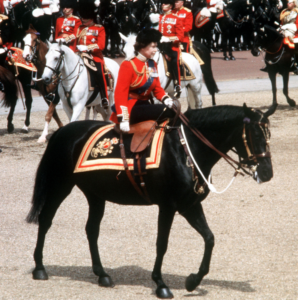
The bronze, by renowned equine artist Caroline Wallace is of Her Majesty at the Trooping ofthe Colour parade in 1984. Offered for sale is the second casting of only two, the mould having been destroyed, the first being commissioned by the Royal Military Academy, Sandhurst.
Her Majesty at the Trooping of the Colour 1984
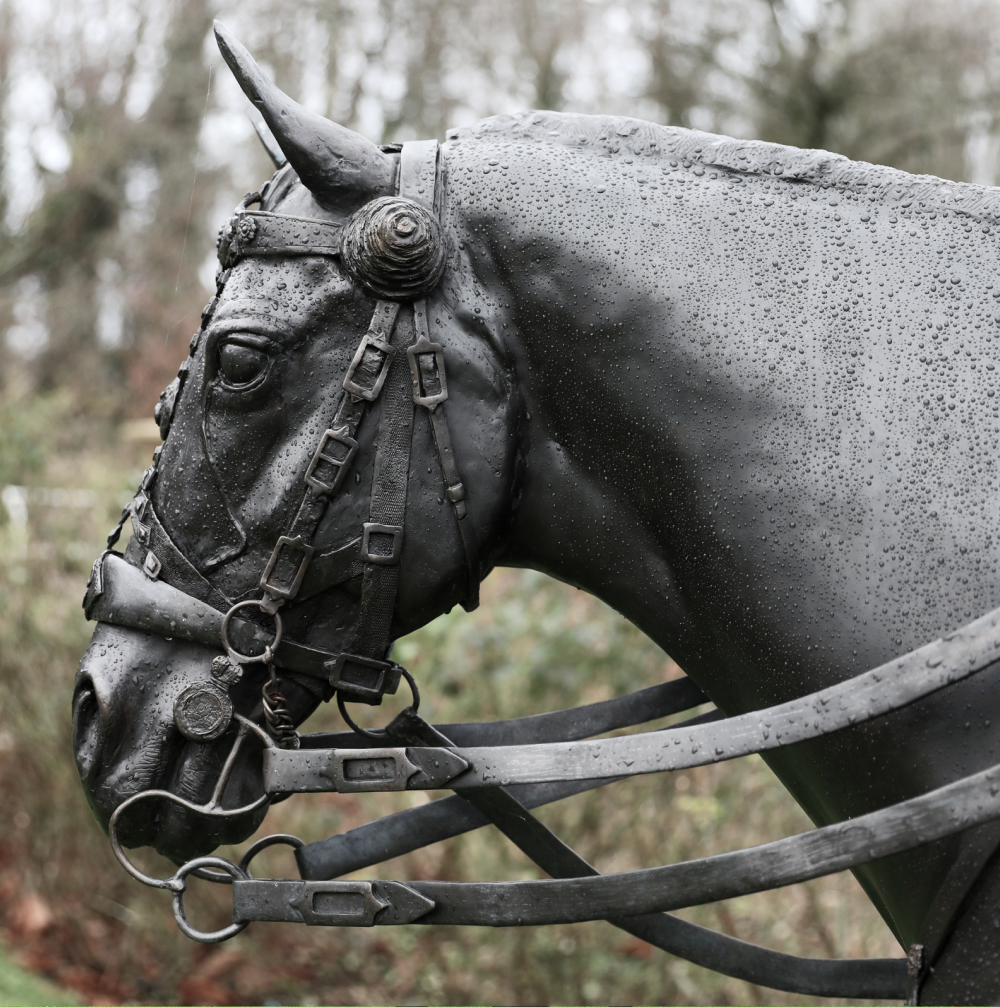
Burmese was given to Her Majesty by the Royal Canadian Mounted Police in 1969 and carried her on 18 consecutive Trooping of the Colour parades. The partnership became a defining symbol of grace, loyalty, and trust. Wallace captures that relationship with extraordinary anatomical precision and emotional clarity.
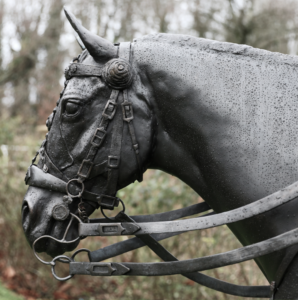
Head detail
This work represents a unique convergence of royal history, artistic mastery, and British heritage. We look forward to discovering its new home in 2026.
Last year I identified four cards which met the criteria for ‘most famous’, ‘most humorous’, most ‘unusual’ and most ‘poignant.’
Observing the galloping commercialisation of Christmas I was wondering what would catch my eye this year.
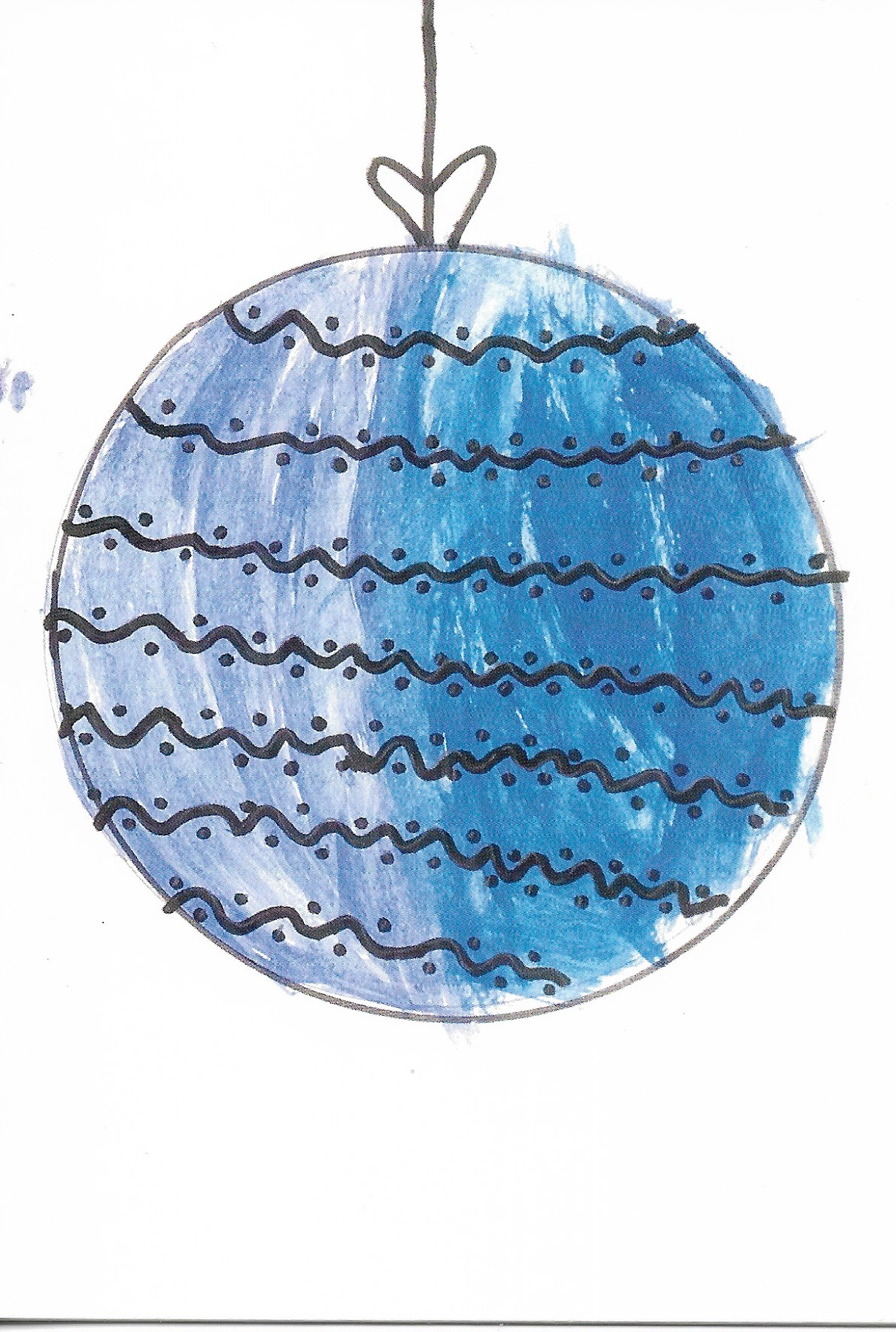
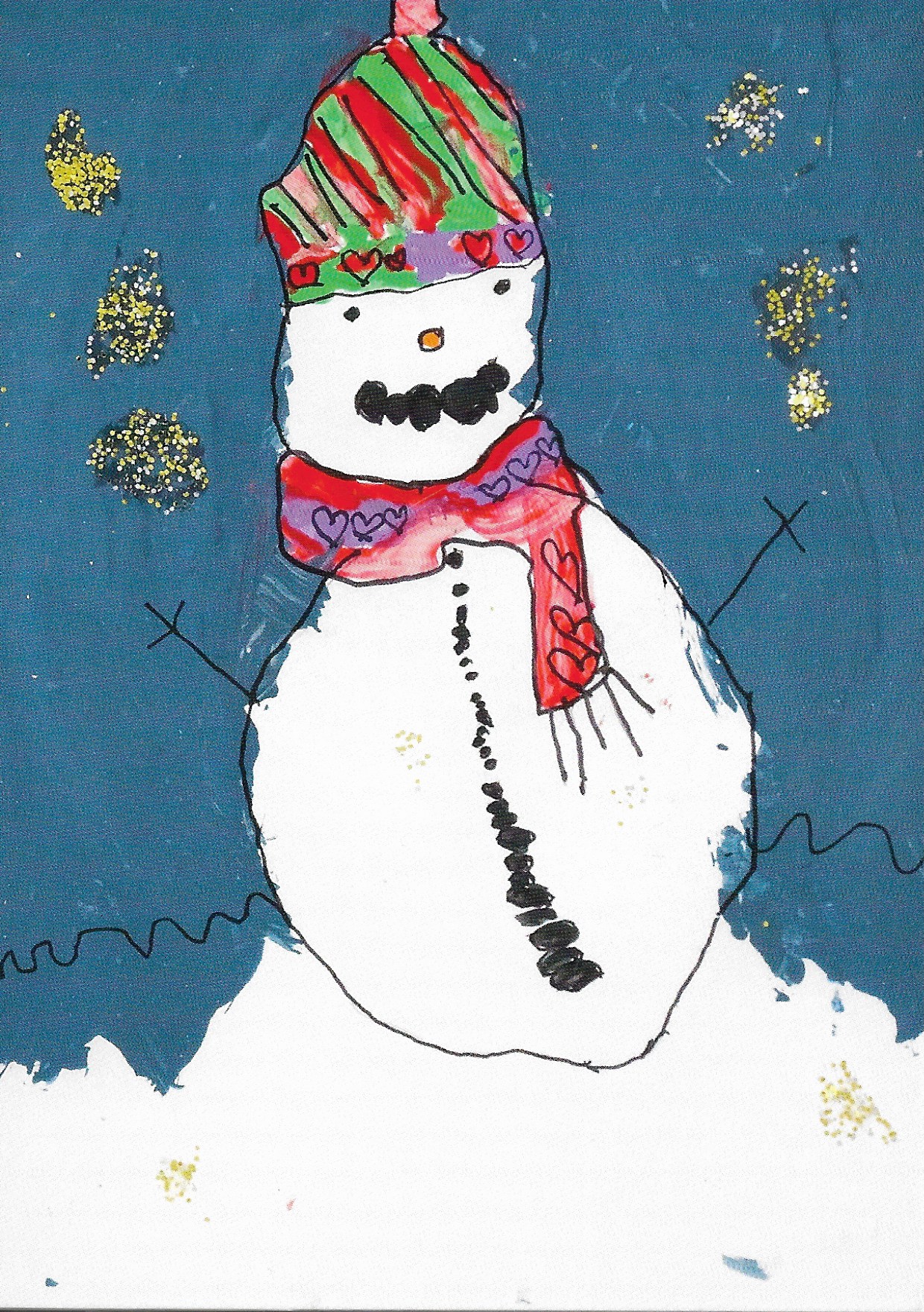
Suddenly my neighbour’s three children brought me their cards in which they had written beautiful greetings to supplement their own designs.
Etta-May, age 7
Full marks to the children for creativity, but just as importantly ten out of ten to Ugborough Primary School, set in a little Devon village south of Dartmoor, for getting them named and printed.
Seb (twin), age 5
I hope this early teaching and the children’s pride at the outcome will ensure the long-term survival of the Christmas card despite the internet.