Categories
cobbwebs-news-and-views

What better way to celebrate being 90 than joining your boyhood heroes in a Spitfire?!

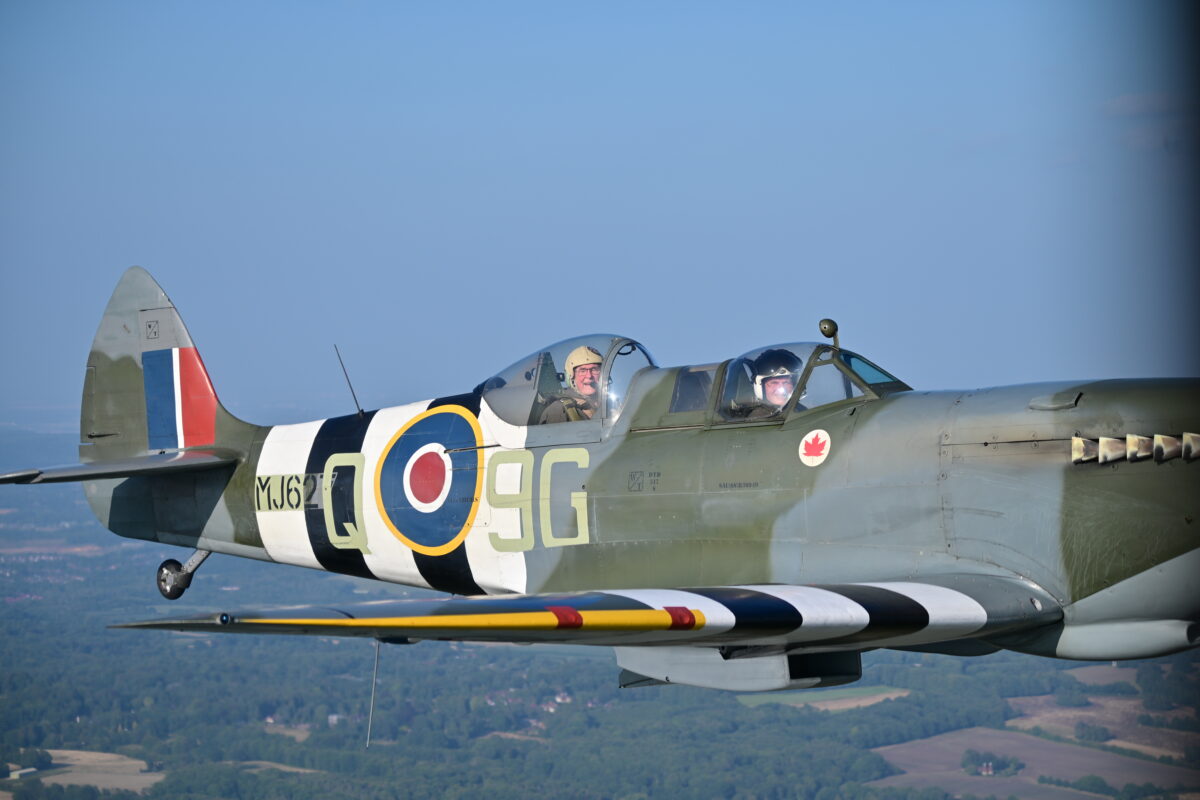
In March this year my father, Anthony Cobbold (#539) – the driving force behind the Cobbold Family History Trust, turned the ripe old age of 90. My brothers, Tim, Jeremy, and I decided that, rather than give him some old bit of tit-tat, we would offer him the chance to take a ride in a Spitfire with https://flyaspitfire.com/. After all, he had always talked about his early years being the war years and how he especially held the RAF and those who fought the Battle of Britain in the highest regard. And those who frequent the pages of Cobbwebs and the CFHT website will already know how keenly he wants us to remember all those – especially family members – who served in the military and the World Wars.

To his credit, he embraced the idea whole heartedly not least because my lovely neighbour, Richard Verrall, who happens to be one of the most experienced Spitfire pilots in the country, convinced him that he was 90 years young – and would love the flight! On a spectacular afternoon on August 10th Richard flew Dad from Biggin Hill to Beachy Head – Spitfire Alley as it was known in the war – completing a couple of barrel rolls along the way.  Not a bad effort for 90!  He loved it for the sheer enjoyment. But it brought back vivid memories of the days when he would see Spitfires in the sky across Southern Britain when he was very young, and it clearly gave him cause to reflect, quite deeply, on what was happening 85 years ago.
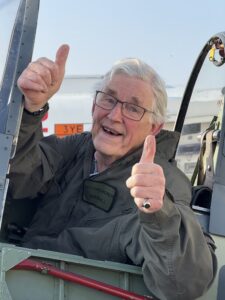
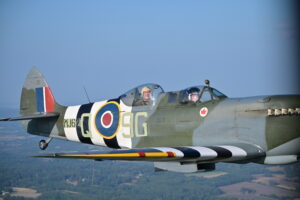
Thumbs up!
Fly by


Battle of Britain Day this year – September 15th – will mark the 85th anniversary of the day a few young men (those to whom “never has so much been owed”) stood up and were counted in the most extraordinary way to save our country.

Anthony was a young lad aged 5 in Bristol on that day in 1940 and remembers the sense and feeling of that time in life – if not the exact day – very well. As he recalls, “Of course I didn’t really understand the detail, but I do remember that we passed the first few years of the war in a perpetual state of concern that our freedom might be taken away from us.”

As he related to me further, “It is far too easy for us to forget what a truly perilous state Great Britain and indeed all of Europe was in as 1940 unfurled as a year. Only Britain stood still free less than a year after the war had started.”  During 1940, rationing was started in the UK, Hitler was rampaging across Europe – Norway and Denmark fell, France was invaded in May, and Holland, Belgium and Luxembourg were occupied shortly thereafter.  Allied, British and French forces withdrew, backs against the wall, to Dunkirk …. And we all know what happened there as a flotilla of small boats evacuated hundreds of thousands of bedraggled troops.  We were, truly, up the proverbial creek without a paddle in sight: Dad recalls that his parents (my grandparents) knew it. Hitler was coming for us – Great Britain – next and we had better be prepared for the worst.

In early June that year, Churchill secured his own immortality and laid the foundation for a renewed sense of national identity as he exhorted us to “fight on the beaches … and on the landing grounds … and [presciently] with growing confidence in the air …”. These were then, and remain today, extraordinary, brave and iconic words. But they were just words. Deep down Churchill had a strong sense of foreboding, and this can only have deepened through the Summar as Hitler ploughed his way across the continent and massed his war machine on the other side of the channel.

It was during August and September 1940, that the German Luftwaffe waged an intensifying war in the skies over Britain. Hitler’s objective was simple, clear and chilling: to secure supremacy in the air rapidly and unequivocally, and thereby lay the foundations for the full invasion of Great Britain – Operation Sea Lion.  By doing so, he would, within 15 months, have conquered the whole of Europe. The odds were hugely in his favour: Germany had a total of over 4,000 aircraft vs the RAF having less than 2,000. The RAF had 903 fighters to defend our country against 1,800 bombers and 1,450 fighters.

This Battle of – and for – Britain reached its peak and its defining moment on September 15th 1940.  On that day, the Luftwaffe launched what today might be called a “Shock & Awe” attack: a show of overwhelming scale and force that was designed to break the RAF and break Britain. In short, the full weight of the mightiest fighting force on the planet was trained on Britain – that “jewelled isle in a silver sea”. How could it possibly resist? Hitler thought victory was certain.

But he had failed to reckon with the belligerent brilliance and sheer courage of the Spitfire and Hurricane flying young men of the RAF – brave young British men but also hundreds from Canada, Australia, New Zealand, South Africa and Poland. In that one day they flew 1000s of aircraft sorties in Spitfires and Hurricanes with some pilots double or even triple shifting during a 24-hour period like none other. They fought dogfight after dogfight; they rained down on and disrupted formation-flying German bomber squadrons destined London; they flew out of the sun and through the cloud base, cannily to catch the enemy unawares; they were unstinting and unyielding in their efforts to defend our freedom. Many paid the ultimate price for being so dedicated to the task.

By the end of the day the invaders had been battered and repelled, and the RAF was bruised but ultimately victorious. It was an extraordinary day; it was a turning point in the air battle for Europe; and it was the first defeat inflicted on the Nazi war machine. After the horrors of Dunkirk and the first half of 1940 more broadly, it provided a new foundation for the morale and resolution of Great Britain. And, of course, it was Churchill who captured the moment by reminding us for eternity that, “Never in the field of human conflict was so much owed by so many to so few”.

As my father said after his flight, “up in that Spitfire with Richard I had an extraordinary, exhilarating, and fun experience. It was great and truly life affirming for me in my advancing years.  But more importantly I had time to reflect and be even more inspired as I flew in that amazing Spitfire by the extraordinary courage and bravery of those young men who fought to save our freedom. When they were doing their service they literally saved the life that I and millions of others have had the good fortune to lead over the last 85 years. I will never forget them. None of us should.”
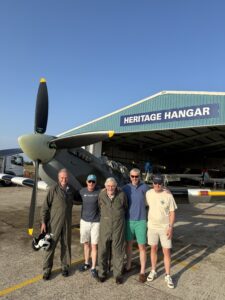
After the Flight: (L to R) Pilot Richard Verrall, Humphrey Cobbold, Anthony Cobbold, Jeremy Cobbold & Tim Cobbold

Humphrey Cobbold

15th September 2025
Categories
cobbwebs-news-and-views

VJ 80 DAY, 15th August 2025

Whilst VE Day in June 1945 was a day of celebration it also carried a tone of sobriety.  The war in the Pacific was far from over.  The refusal of the Japanese to accept the Potsdam Declaration was followed on 6th and 9th August by the dropping of atomic bombs on Hiroshima and Nagasaki.  The surrender was broadcast by the emperor on 15th although the formal declaration was not completed until 2nd September.

Three years previously Peter Charles Victor Cobbold (1898-26.08.1942) #7595 on the web family tree had been brutally murdered.

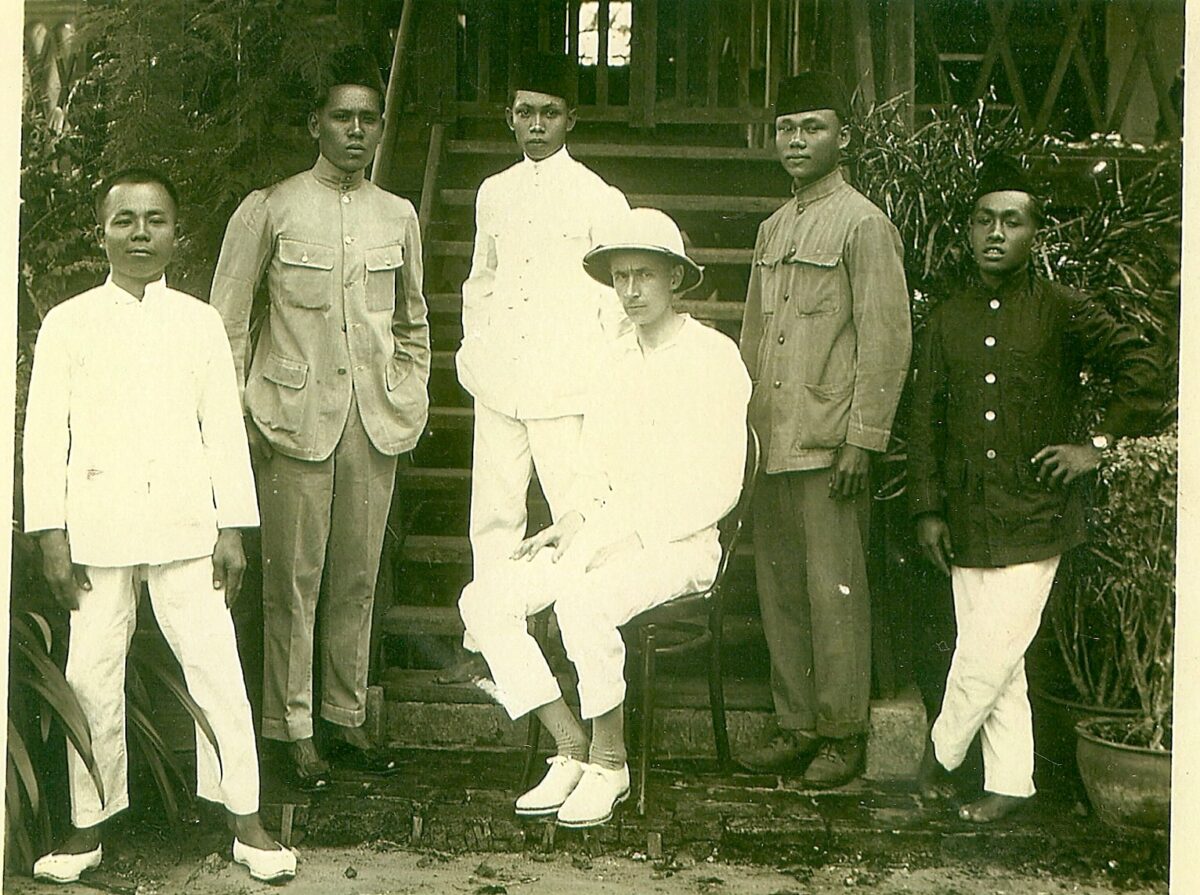
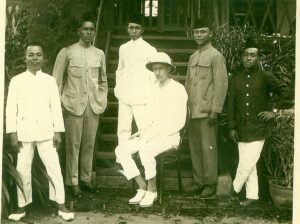
Peter Cobbold (centre) with some of his staff

When Japan entered the Second World War with its spectacular assault on Pearl Harbor on 7th December 1941, the imperial interests of Britain and its allies in South East Asia became sitting ducks.  Within a week the Japanese Imperial Army had landed at Miri on the coast of Sarawak.  The population, predominantly British faced a stark choice: to surrender or to flee.  At Sibu, Peter Cobbold was among twenty-six westerners who decided to take the latter course.

When news reached Sibu of the Japanese landings at Miri, Peter and the other westerners had to decide whether to remain in post or try to escape.  Stories of Japanese atrocities in China and elsewhere convinced the majority that fleeing into the jungle was the best of their unenviable options.  Led by the senior resident, Andrew MacPherson a party of about twenty-eight fled up river to the ferocious Pelagus Rapids where they disembarked to proceed on foot.

One boat which included their supply of benzine, food and Peter’s personal possessions was lost but they carried on despite atrocious conditions, and twenty-eight days after leaving Sibu the beleaguered party reached Long Nawang, a Dutch military post just over the border from Sarawak.  They were in a sorry state but had the opportunity for modest recovery.  The most viable route for escape was a daunting trek across the mountains and through almost impenetrable jungle, a journey that would take at least a fortnight.  An advance party battled with near impossible conditions but made it to Jakarta where they sought to persuade the Dutch to send seaplanes to Nawang to mount a rescue.  Sadly, the fall of Java precluded any such mission.

A detachment of seventy-two Japanese Marines led by Captain Mora Shima set off for Long Nawang.  As the refugees had failed to surrender when the Japanese originally invaded Borneo, Mora’s orders were to treat them as enemy fugitives and this probably explains their treatment.  The women and children were removed across the river.  The men were led to a hill behind the barracks where mass graves had been prepared.  There, they were shot, bayoneted, and thrown into graves.  Peter was among the victims.  The six women and four children who for the time being had been spared were to face an even worse fate.  For a month they were repeatedly molested by Japanese soldiers until eventually they were mutilated and murdered by bayonet.

Not a single refugee survived.  A report prepared in 1945 cited Mora and others as perpetrators but despite the assertion that ‘no effort should be spared’ to trace them, none faced trial.  After the war crosses were placed on the graves and a priest consecrated the ground.

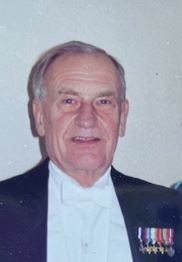
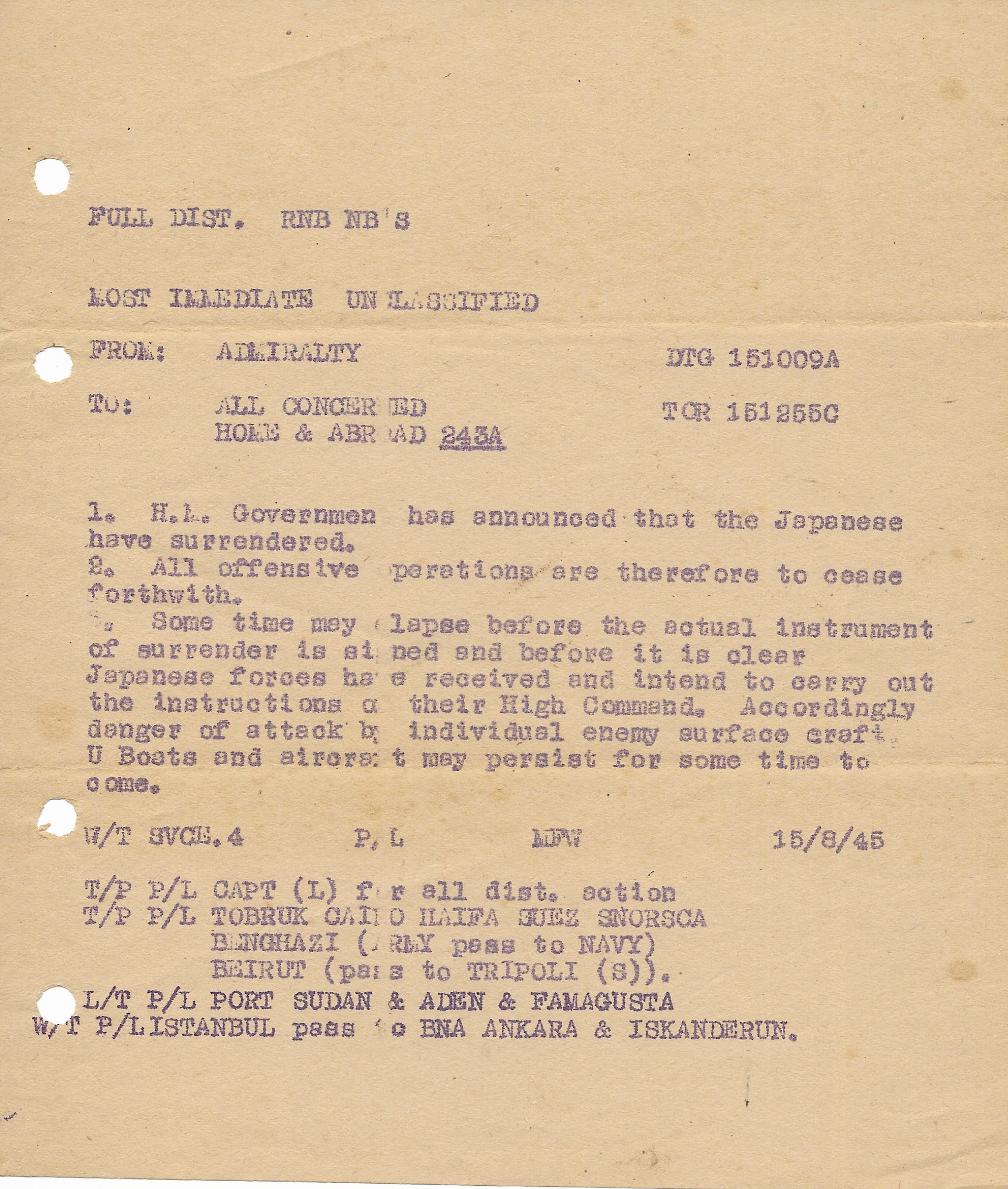
John Dawson Cooper DSC (1921-2014) #13676 was stationed at the RN Repair Base in Sydney NSW in charge of repairs to aircraft carriers, destroyers, and cruisers when, on 15th August 1945 he received the most

John Dawson Cooper DSC

important signal of his life.

THE WAR IN THE PACIFIC WAS OVER

We reproduce below the signal received by John and many others but it is difficult to comprehend the feelings of relief and freedom experienced by the ‘forgotten army’ 80 years ago today. 

Anthony Cobbold

The Admiralty signal announcing the end of the war in the Pacific.
Categories
cobbwebs-news-and-views

Moving the Archive

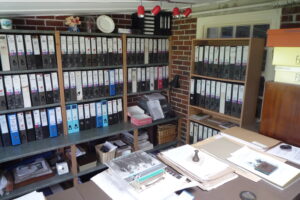
In the summer of 2021 The Cobbold Family History Trust Archive moved from its original home at Anthony Cobbold’s home in Ivybridge, Devon, to Knebworth House in Hertfordshire.

Ivybridge

This unique collection of family history and memorabilia was packed into the modern plastic equivalent of tea trunks and transported to its new home on the borders of East Anglia, where the Cobbold family put down roots back in medieval times.

“I was concerned there wouldn’t be anything left in Anthony’s house”, says Henry Cobbold, 3rd Baron Cobbold, current resident of Knebworth House, who has taken on the challenge of hosting and managing the charity and its precious collection. “Every room was lined with shelves, filing cabinets, pictures, paintings, objects of ephemera, every possible keepsake associated with the Cobbold family.  It was an Aladdin’s Cave of family history treasures.  The collection surrounded us and I barely got the sense of any everyday household items.
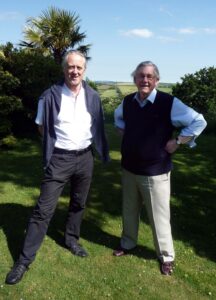
Henry & Anthony

There must have been a kitchen sink that didn’t come to Knebworth, as I recall Jill, the Knebworth House Archivist, and I were treated to a very warm welcome lunch after our long drive from Hertfordshire.  We were bowled over by the collection and felt privileged to be becoming its new custodians.”

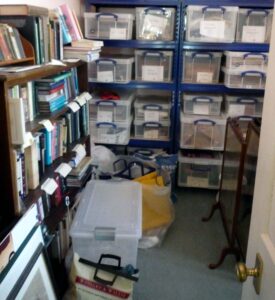
The collection arrived at Knebworth in two deliveries: the first lorry load consisting of 9 filing cabinets and about 90 box files; and the second bringing another 6 filing cabinets, 85 box files, 30 plastic trunks, approximately 600 books and a collection of exhibition equipment. Every item had been diligently labelled with who it related to, and a reference to that person’s family tree number.

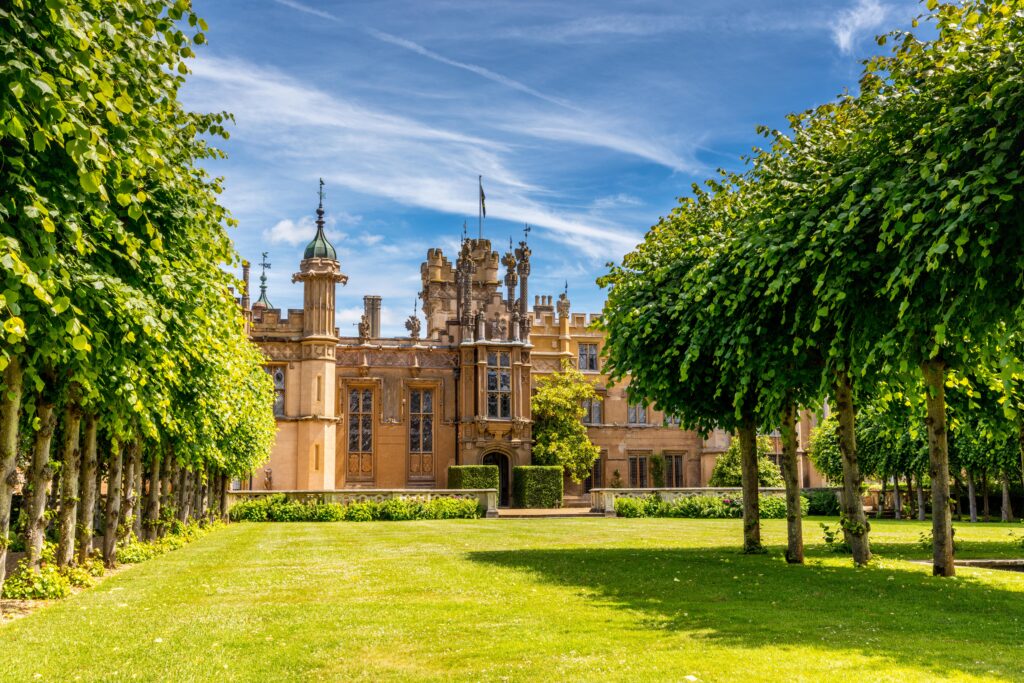
Knebworth House

Kevin, the Trust’s first Knebworth Keeper, supervised and carried out much of the unloading, up a steep set of stairs into a mezzanine above a former squash/racquets court, that is home to various Knebworth House exhibitions. This tall, open, hipped-roof space has become the home of the Cobbold Family History Trust and its collection.  There was not room for the collection in the Knebworth House Archive itself, as this currently remains lodged in a tight office space pending a new purpose-built facility that is planned for the future.

The new Cobbold Archive at Knebworth House

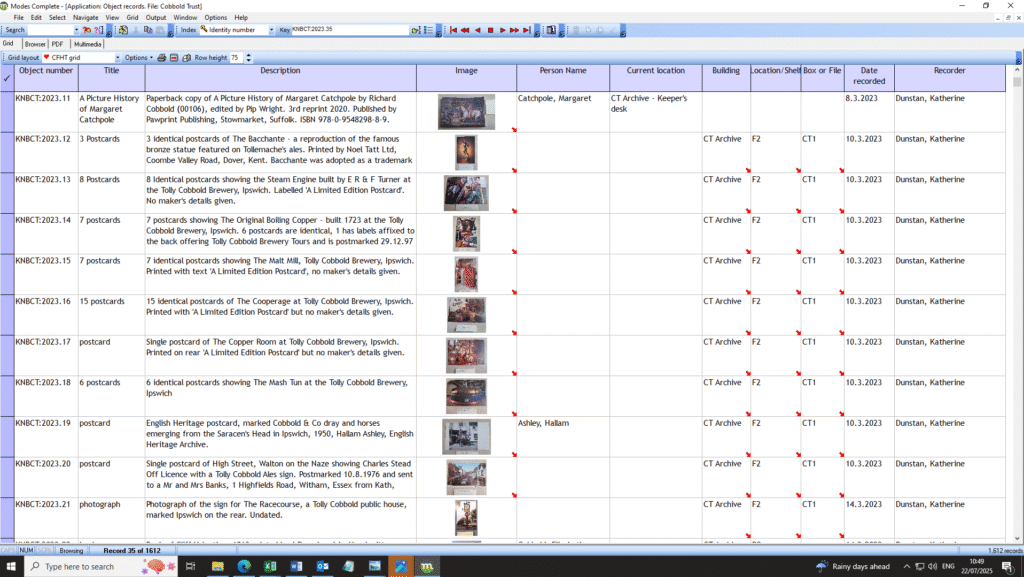
The Knebworth House Archive did, however, provide a new cataloguing system – MODES – into which over 1600 items in the CFHT collection have since been fully catalogued, with many more listed.

MODES catalogue


A digitisation project is also underway to scan the papers in the collection.  Kevin has been joined in the team by Knebworth House’s Education Officer, Katherine – who has taken over as Keeper – and local volunteer Lorna.  They meet in the Cobbold Archive every Tuesday to further catalogue, interpret, and grow this remarkable resource, and to answer your enquiries.

All hail the vision of Anthony Cobbold in creating the Trust, and great thanks to the Trust’s supporters who made this move to a permanent home possible.

Categories
cobbwebs-news-and-views

An Introduction to the Cobbold Archive

The Cobbold Family Tree, a genealogical project with more than 15,000 entries, stands out for the meticulous study and care that has gone into its compilation over 20 years.

Anthony Cobbold

Anthony Cobbold, in a labour of love, has created a unique and invaluable resource for researching family history, alongside a proactive charity to further its study.  For every Cobbold on the Cobbold Family Tree, there is a spouse from another family, and so the Tree details the history of countless families alongside the Cobbolds.  At the Tree’s roots are the Cobbolds of Suffolk, but the Tree’s blossoms now spread to cover every corner of the globe.

There are Cobbolds in significant numbers in Australia, New Zealand, the USA and Canada; there are Cobbolds in South Africa, Zimbabwe, the Seychelles, India; Cobbolds continue to spill out into Ireland and France and in all directions…  Cobbolds are everywhere!

Cameron Cobbold, 1st Baron Cobbold

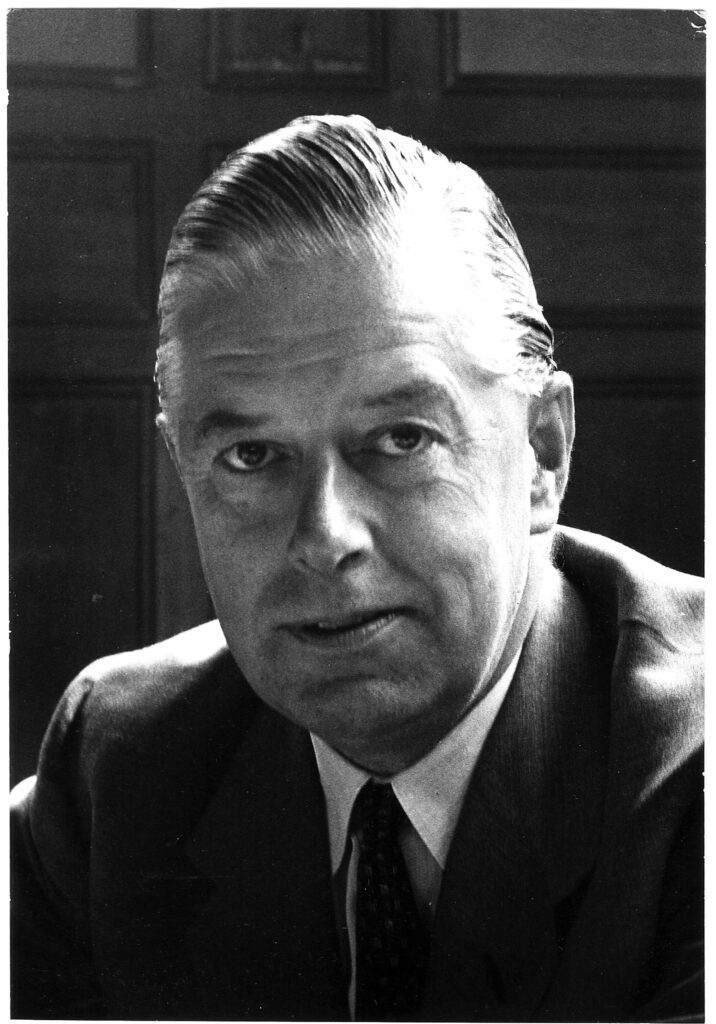
But the family’s traceable roots begin in East Anglia and so it is fitting that Cobbold Family History Trust is now resident in the borders of East Anglia, in Hertfordshire, at the home of the family of Cameron Cobbold (1904-1987), 1st Baron Cobbold.

The earliest Cobbold in the family tree is currently Robert Cobbold (1529–1603), #1 in the Archive’s numbering, and our acorn, so to speak.  That’s as far back as our original researcher, the diligent Felix Thornley Cobbold (1841-1909), chose to go.  However, we do hold inherited records for the Chevallier family that trace all the way back to the reign of Edward I (1272-1307) – a remarkable heritage indeed!

Cobbold Family History Trust Website

The Cobbold Family History Trust website welcomes about 20 visitors a day – that’s 1,800 visitors in the last 90 days.  The website does well from Google searches and it appears many visitors land on the site searching for their own names.  Our mission is to turn these searches into a wider fascination for – and understanding of – the family, its history and its times.  To encourage this, the Trust has launched this quarterly newsletter to spread news of all Cobbolds and Kin, and gradually to introduce you to every fascinating forgotten story and every intriguing new discovery made by our Archives team and by our readers. Please spread the word.


Anniversary Publication by the Cobbold Family History Trust

Unlike other online genealogy sites, the Cobbold Family History Trust website is a free resource.  Our priority going forward is to welcome all interested readers and researchers, and to learn and grow from you and from your stories.  So please share your family tales and photos with us.  Help us grow this remarkable and colourful fruit-bearing Tree for the benefit of this and future generations.  Send us all and any Cobbold and Kin news.  We appreciate your interest and your support.  As this article is written, a special thank you to Juliet Felton, whose donation has enabled us to add 15 new photographs to the website.  Every contribution makes this beautiful Tree and its precious archive stronger and more splendid!

Categories
cobbwebs-news-and-views

The Worshipful Company of Brewers

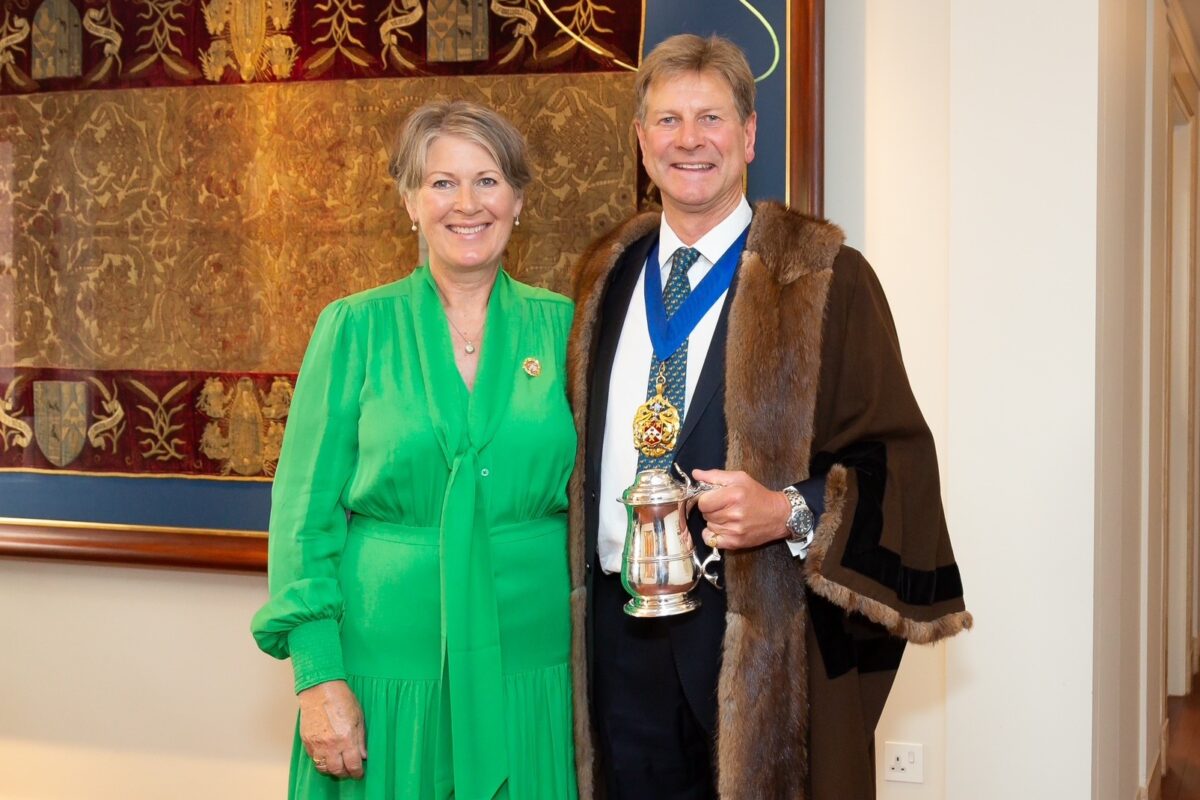
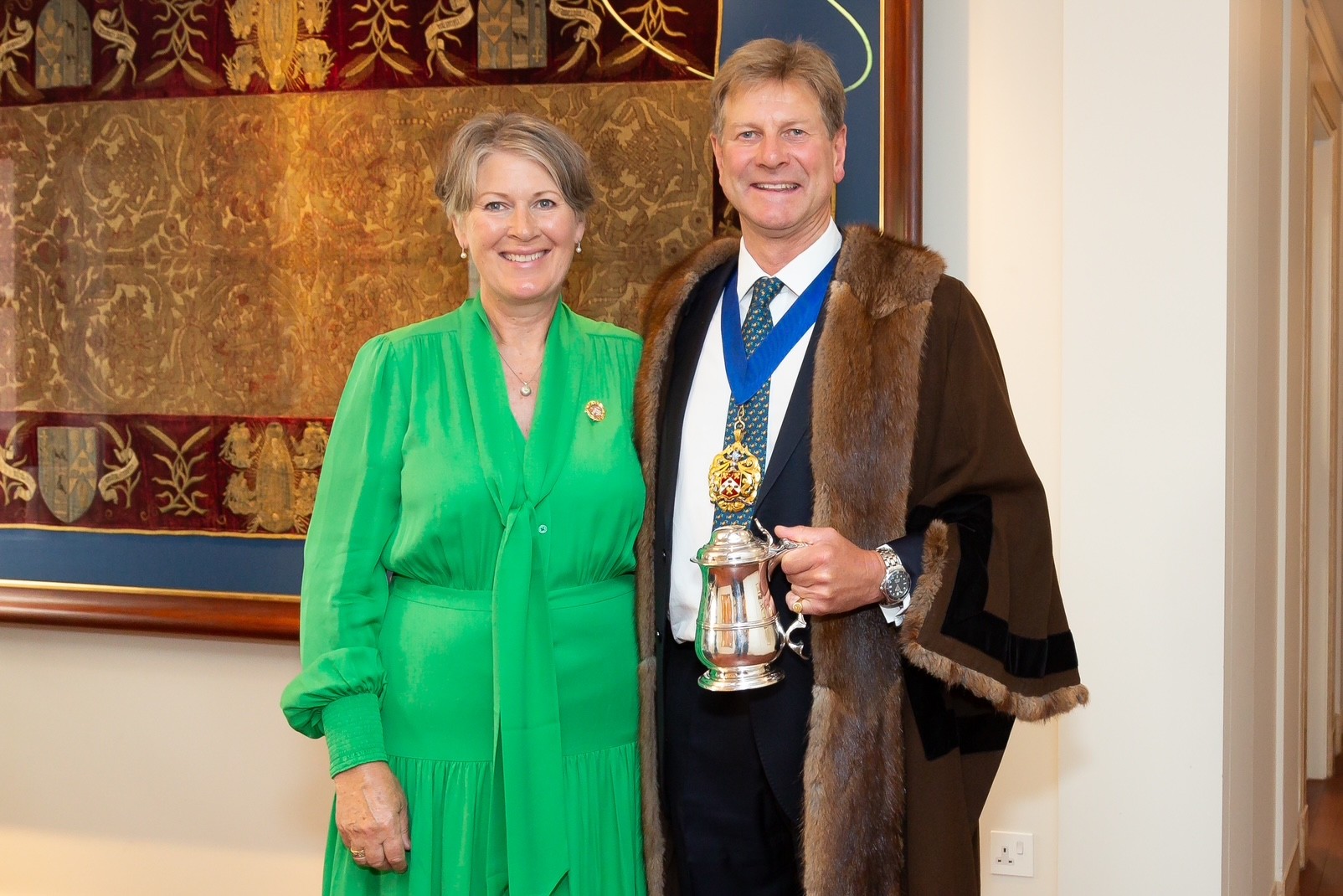
In March 5 years ago, we reported that James Staughton OBE DL (1959) #1358 on the web family tree was retiring as CEO of St. Austell Brewery but would take on the role of Renter Warden (2nd in command) of the Worshipful Company of Brewers with a plan to become Master of the Company in 2022.  Covid delayed his appointment and he assumed his new leadership role for the 2023/24 year, ably supported by his consort and wife, Emma née Minter-Kemp (1960) #802.

Suspecting that the general public’s view of Livery Companies was that they were a self-interested anachronistic left-over from a bygone age we asked James if he would tell us about the activities of Livery Companies today and follow that with a brief description of his year in office.  He kindly agreed and here is what he wrote:


Background to the City Livery Companies

There are 113 Livery Companies and the Brewers’ Company is number 14 in the order of precedence having received our Royal Charter in 1438. A Livery Company is a type of Guild or professional association that originated in mediaeval times in London. The Livery Committee of the City of London has released the Livery Impact Report 2025 which presents data obtained from a Survey of Philanthropic Giving by Livery Companies undertaken in 2024.

The report shows that the aggregate giving by the 113 Livery Companies of the City of London was £81 million. The Brewers’ Company was delighted to be able to contribute to this total with an annual distribution of £2.5 million to its schools and charities. Across the Livery the major area of support was for education with £33.9 million distributed. Other key areas of support included arts and culture, housing, young people, and older people. In addition to direct financial contributions, between them the Livery Companies provided 76,100 hours of volunteer and professional pro-bono support. This included, among much else, the roles played by more than 1,000 School Governors and Trustees appointed by Livery Companies to external charities, as well as the voluntary effort of Liverymen in support of the Livery Companies’ own charities.

The full report highlights many more aspects of Livery philanthropic activities, including a number of inter-Livery initiatives, and can be viewed on-line at https://liverycommittee.org/impact-report/


MASTER BREWER – July 2023 to July 2024

I was hugely honoured to be invited to be Master of the Worshipful Company of Brewers. The role of Master includes:

  • Providing leadership to the Brewers’ Company and providing advice and counsel to the Court and the Clerk
  • Acting as Chairman of the Court in order to manage the Brewers’ Company, its assets, its charitable legacies, and its membership
  • Representing the Brewers’ Company in the City and at other Livery events, to its schools and charities and to the wider brewing world
  • Promoting a positive and relevant image of the Brewers’ Company to current and potential membership
  • Hosting guests at Brewers’ Hall.

In representing the Company I was fortunate enough to enjoy the hospitality of many Livery Companies and visited a number of spectacular Halls situated in the City of London. The highlights of my year included attending two white tie dinners at The Mansion House. The first was in the presence of the King and Queen at the City of London Corporation Dinner to celebrate the King’s Coronation. The second was the Lord Mayor’s Dinner for all the Masters and Prime Wardens together with their Consorts. That was followed the next day by the United Guilds’ Service at St. Paul’s Cathedral. It was a spectacular and colourful event with all the Masters and Prime Wardens fully robed and badged for the occasion.

During my year we:

  • Administered the distribution of £2.5 million through our charities
  • Hosted 14 social events attended by 900 liverymen and guests
  • Provided 11 governors for its 4 schools
  • Acted as a trustee to 11 charities
  • Raised over £13,000 for the Lord Mayor’s Appeal
  • Attended 30 external events and functions.

The Brewers’ Company is proud to be part of the Livery movement which has endured for hundreds of years and yet remains relevant to modern society, retaining philanthropy at its core. For more information, please find the link below to our website. Cheers!

www.brewershall.co.uk


Categories
cobbwebs-news-and-views

1620 and all that

I have an account with Family Search which is offered by The Church of Jesus Christ of the Latter-day Saints. This Mormon organisation, homed in Salt Lake City, founded by Joseph Smith in the 1820s, is constructing a family tree of the entire world population.  I was much impressed when I visited, not only by the Salt Lake itself, but even more by their courtesy, generosity, litter-and-drug-free streets, and of course the majestic tabernacle.

They advised me recently that I had two ancestors buried in the Coles Hill Burial Ground in Plymouth, Massachusetts.

Intriguing to say the least!

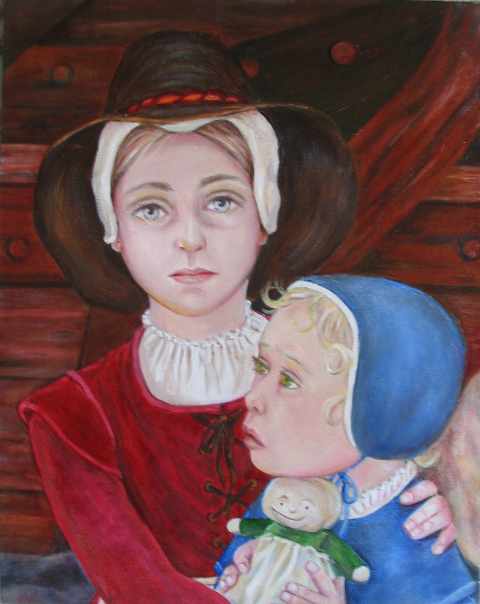
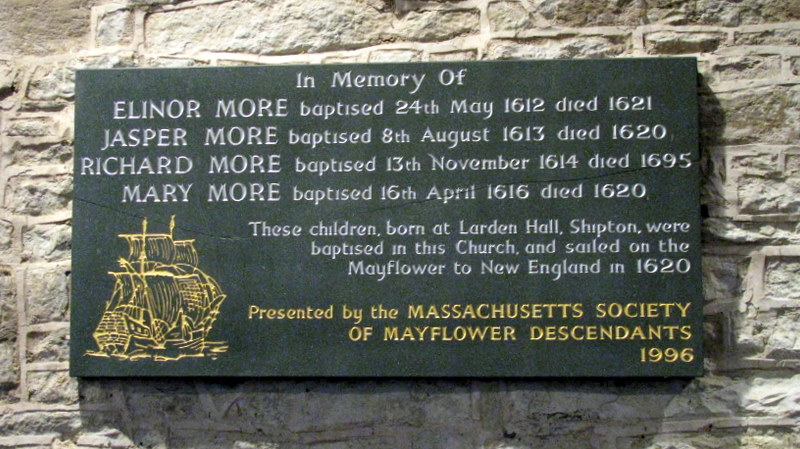
Further enquiry revealed that they were two children, Mary More (1616-1621) and her brother Jasper More (1613-1620) who were on the Mayflower when she sailed from Plymouth, Devon in 1620.  Jasper died at sea and Mary survived only a short while in the raw New England winter conditions.  With them on the voyage were another sister, Ellen and a brother Richard.  Only the latter survived to maturity.  They were the children of Katherine More (1586-1640) #15337 allegedly by her husband Samuel More (1594-1662) #15335 but in truth by Katherine’s adulterous lover, Jacob Blakeway (1583-1620).  Samuel More is my nine times great grandfather.

For over 300 years historians have wondered how on earth a wealthy Shropshire land owner came to despatch his tender young children, unaccompanied on a dangerous 3,000-mile voyage to a wild and lawless colony.  Resulting from some genealogical research, we now know the answer, but it is not a simple story.

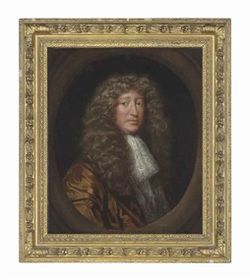
Samuel’s father, Richard More was master of the Linley estate in Shropshire, which today is the site of Linley Hall, a grade 1 listed Palladian Villa built in 1740 designed by Henry Joynes.  He did a deal with a relative, Jasper More, master of the 1,000 acre Larden estate, also in Shropshire, for which there was no male heir, that Jasper’s daughter Katherine should marry Richard’s son thereby keeping both estates in the family.

On learning that Katherine’s children were not his, Samuel hatched his extraordinary plan to get them out of the way.  They were parcelled out as indentured servants; Ellen to Edward Weston, Jasper to John Carver, the first governor of Plymouth and Richard and Mary to William Brewster, the Pilgrims’ spiritual leader.

In 1625 Samuel married secondly Elizabeth Worsley (1592-1655) #15336 with a view to fathering an heir and in February 1626 was granted a royal pardon as technically he still had a living wife.  This was not difficult as he was working in London as secretary to Lord Zouche, a Privy Councillor, diplomat, and courtier.

During the English Civil War, Samuel More fought for Parliament.  As a Colonel he commanded the garrison at Hopton Castle in Shropshire. In 1644 it was besieged by a 500-strong force of Cavaliers.  As his force numbered only about 30, without external support, surrender was inevitable.  Twice he refused.  Finally, the Cavaliers breached the castle’s fortifications and his loyal men were all brutally slaughtered.  He was removed to Ludlow and was later given his freedom in a prisoner exchange.

If ever anyone got off lightly, it was my nine times great grandfather, Samuel More!

Anthony Cobbold

June 2025

Categories
cobbwebs-news-and-views

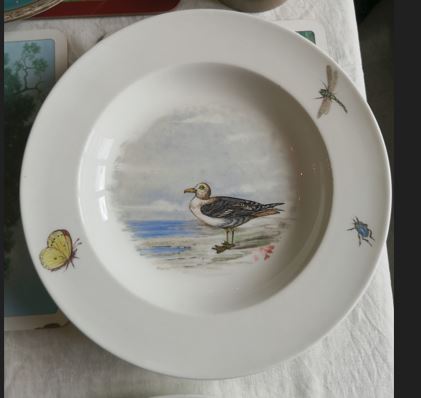
Charlotte’s Flora and Fauna

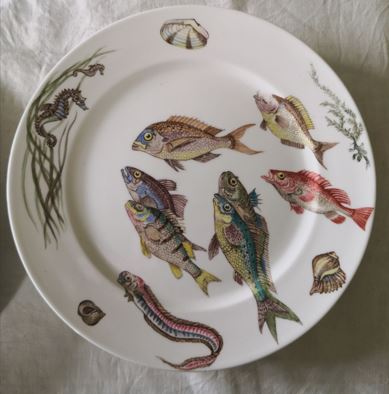
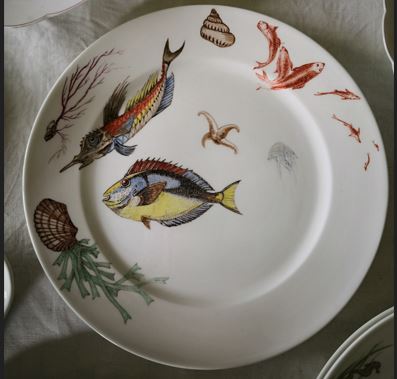
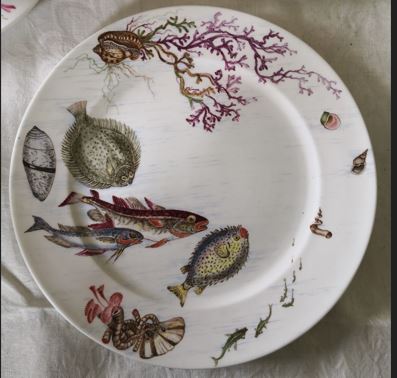
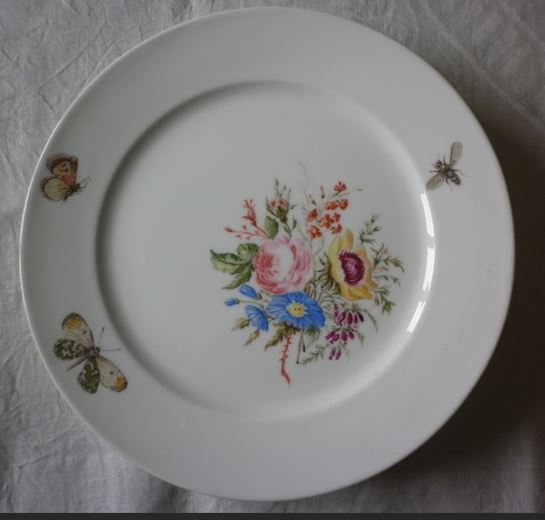
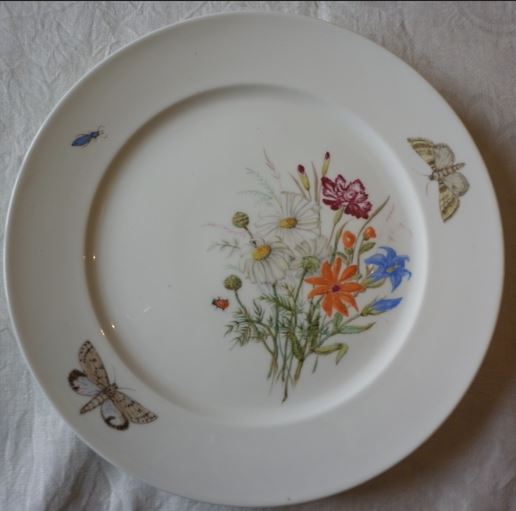
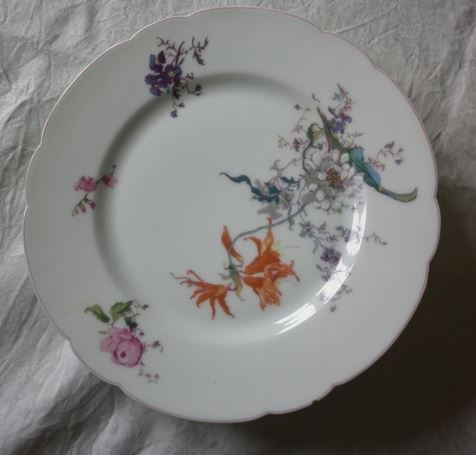
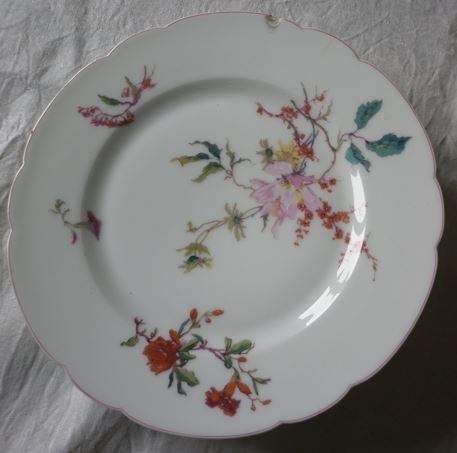
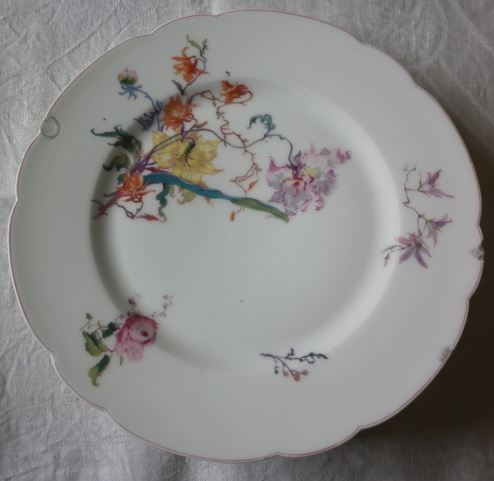
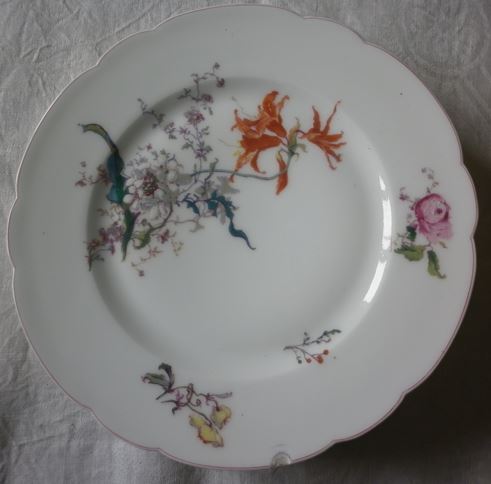
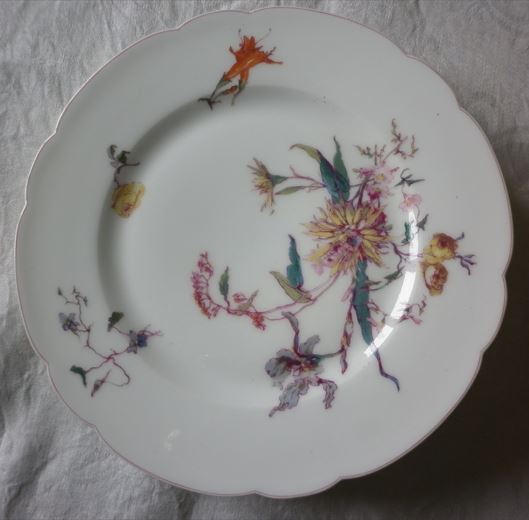
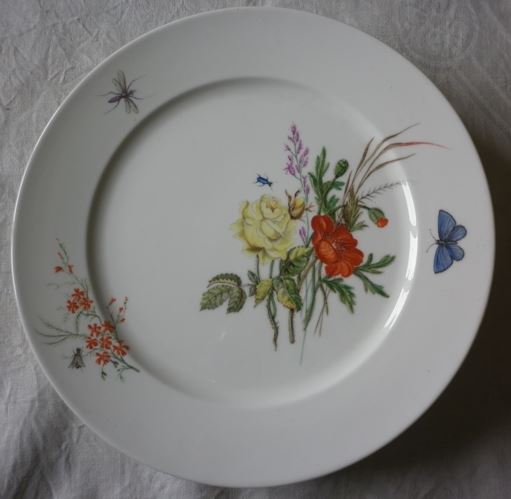
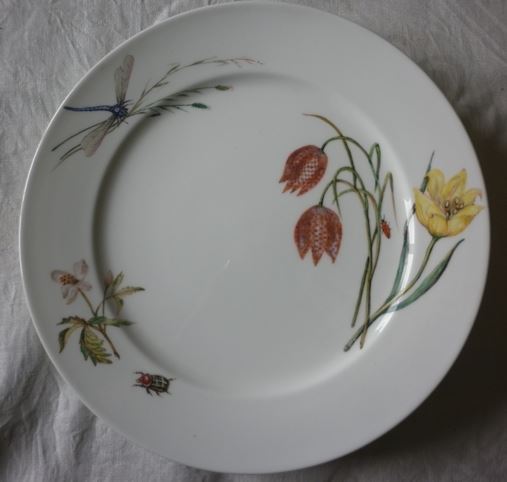
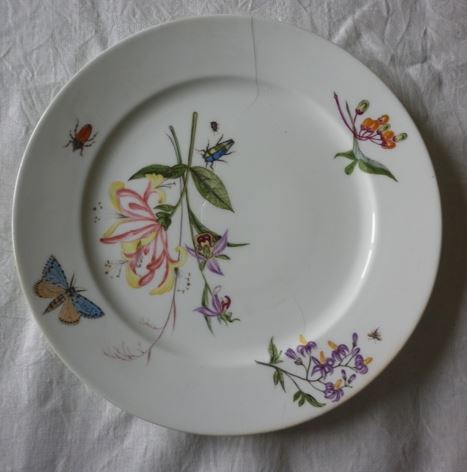
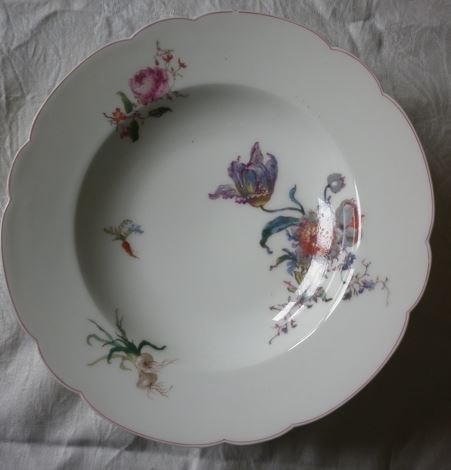
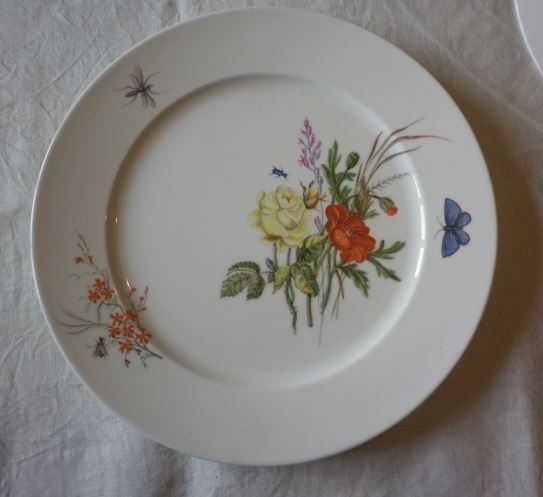
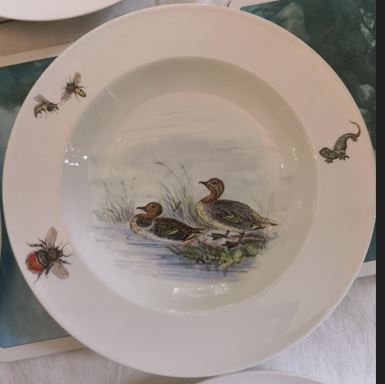
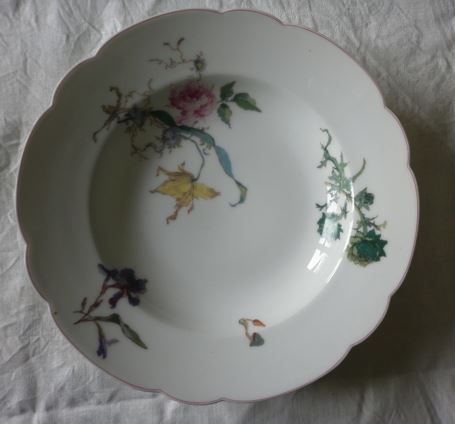
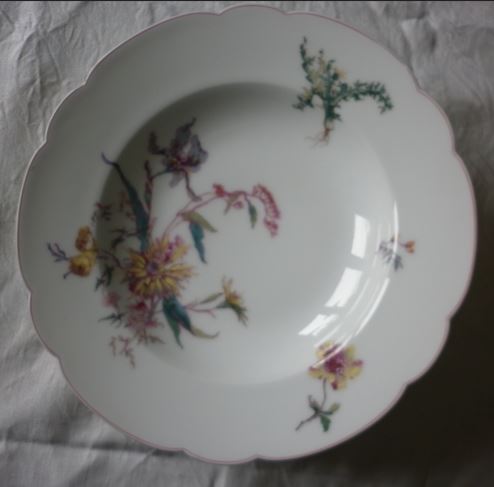
Charlotte’s heraldic plates, which we looked at last month, were by no means her only artwork.  She exhibited paintings with Suffolk Artists which had been founded in 1832 by Henry Davy (1793-1865) and counted amongst its members, John Chevallier Cobbold (1797-1882) #114 and Richard Cobbold (1797-1877) #106.

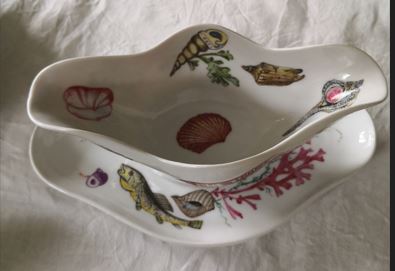
Charlotte Bampton née Cobbold (1817-1914) #141 also left us exquisite decoration on mainly Limoges porcelain of which we show a selection here, all executed, as far as we can tell, between 1876 and 1884.  Porcelain manufacture started in Limoges around 1771.

Pictures are courtesy of a generous family member, thank you.

Anthony Cobbold

Categories
cobbwebs-news-and-views

Charlotte’s Heraldic Plates

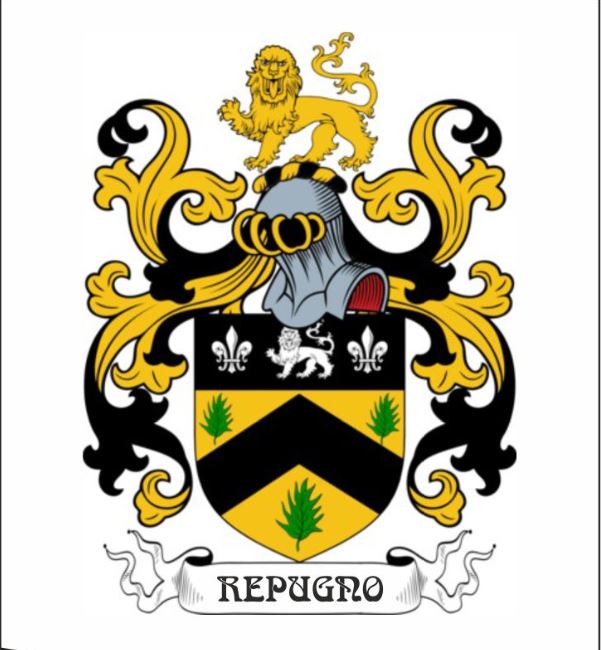
Heraldry is an extensive and complicated subject.  Three of my grandchildren and one of their spouses gave me for Christmas a copy of Simple Heraldry.  Published in 1978 the authenticity of the work (and perhaps the complexity of the subject matter!) are indicated by the grandeur of the authors’ titles: Sir Iain Moncreiffe of that Ilk BT., O.S.T.J., PH.D., F.S.A., Advocate, Albany Herald of Arms and Don Pottinger, O.ST.I., M.A.(Hons), D.A Unicorn Pursuivant of Arms.  Nevertheless, the book tells us that the component parts of a full ‘achievement’ are correctly called, from the top down, the Crest, the Helmet, the Mantling, the Coat of Arms, and the Motto.  Some have Supporters on either side and Supporters stand on a mound called a Compartment.  Not all Coats of Arms have all components.
Over time variations creep in but as far as we can deduce the coat of arms shown here (1) as Cobbold are pretty much what the original family arms looked like.  The Mantling appears above the helmet whereas it should perhaps be below.
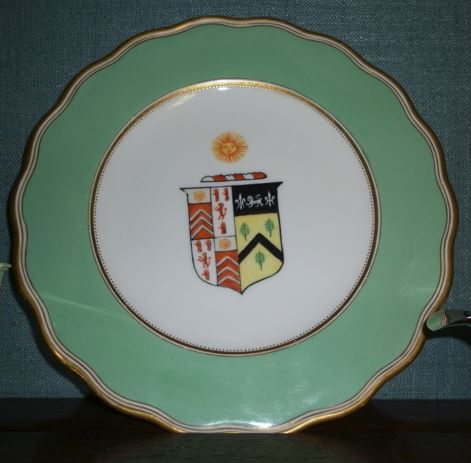
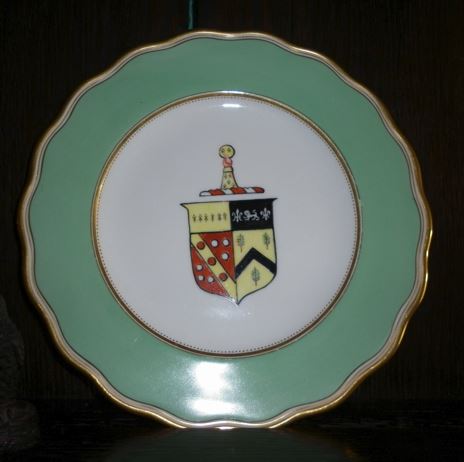
Charlotte Bampton née Cobbold (1817-1914) #141, a daughter of John Wilkinson Cobbold and Harriet Chevallier was an accomplished artist with a leaning towards family history, who recorded the marriages of seven of one of her brothers and six sisters on plates.  In the language of heraldry, a union is called ‘impaling’ and is indicated by a vertical line down the centre of the shield (‘per pale’).  As we look at it, the husband’s coat is always on the left (dexter or baron) and the wife’s father’s coat on the right (sinister or femme).

In 1827 John Chevallier Cobbold (1797-1882) #114 married Lucy Patteson (1800-1879) #115

In 1832 Katherine Georgiana Cobbold (1806-1885) #125 married Rev. William Charles Fonnereau (1806-1855) #126

In 1833 Emily Cobbold (1809-1902) #129 married George Read Dixon (1808-1839) #130

In 1835 Harriet Anne Cobbold (1811-1864) #132 married (secondly) Edward Hanbury (1808-1850) #133

In 1842 Agnes Cobbold (1807-1895) #127 married Rear-Admiral Frederick Chevallier Syer (1799-1874) #128

In 1843 Jane Octavia Cobbold (1819-1888) #143 married Rev. O Thomas Preston (1817-1897) #144

In 1855 Harriet Anne Cobbold (1811-1864) #132 married (thirdly) Borlase Hill Adams (1817-1885) #135

Charlotte had another eight brothers and sisters and we have some unidentified heraldic plates but to date we have failed to find more matches.

Anthony Cobbold

Footnote:  Having consulted the family’s classical scholar, we believe the original motto was ‘Repungo’ being translated as ‘Prick back’ (holly leaves) suggesting a defensive stance.  It is thought to have been changed to ‘Repugno’ in Victorian times translated as ‘Fight back’ or ‘Retaliate’ to give an altogether more aggressive feel.

Categories
cobbwebs-news-and-views

Rear-Admiral Sir Charles Graves-Sawle

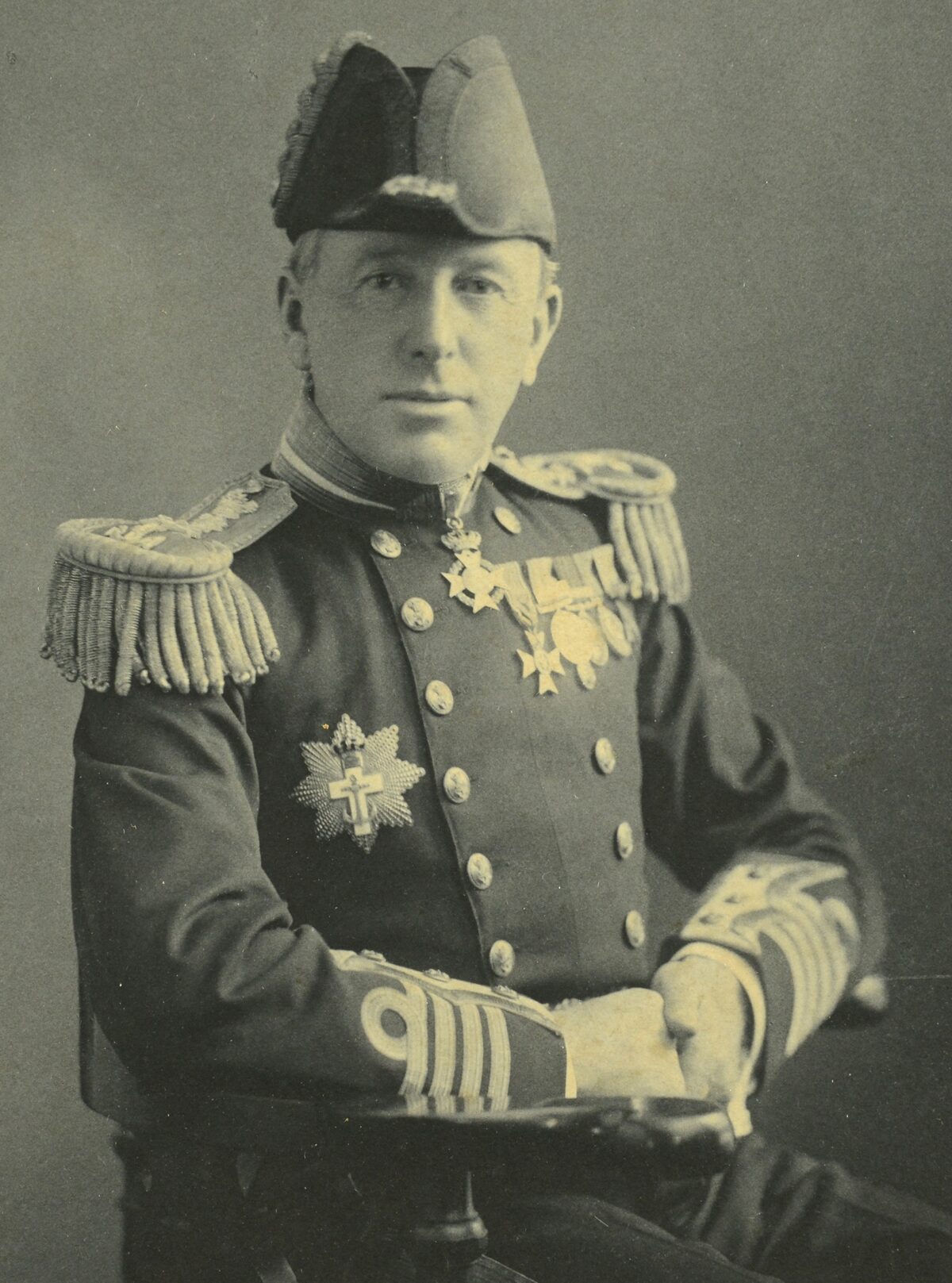
The Graves-Sawle family appears on the Cobbold family tree because of the marriage of Col. Ralph Patteson Cobbold (1869-1965) #316 to Rosemary Graves-Sawle (1890-1971) #319, daughter of Rear-Admiral Sir Charles John Graves-Sawle MVO 4th Bt. (1851-1932) #2535.

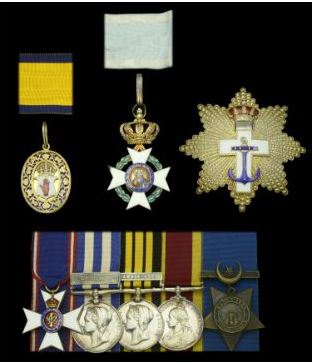
A group of the Rear-Admiral’s awards came up for auction recently but, with a guide price around £4000, it was well beyond our means.  The collection comprised his Baronet’s Badge, his MVO (Member of the Victorian Order) and eight medals awarded during his distinguished naval career.

His obituary in The Times tells us:

He entered the Royal Navy in March 1865.  He served in the Hercules and Bellerophon and was promoted to Lieutenant in April 1876.  He went to the Mediterranean in October 1880 as Lieutenant of the Superb and served there about six years.  He was present at the bombardment of Alexandria in July 1882 and during the operations of the Egyptian War, for which he received the Medal with clasp ‘Alexandria 11th July’ and the Khedive’s Bronze Star.

In 1888 he became Second in Command of the Canada on the North American Station. He was appointed in January 1890 as First Lieutenant of the battleship Anson, Flagship of Rear-Admiral Tracey in the Channel Squadron and was promoted to Commander in 1890.

The following summer he went to the Cape as Commander of Raleigh, Flagship of the Commander in Chief Rear Admiral Sir Frederick Bedford KCB.  [Admiral Sir Frederick George Denham Bedford GCB GCVO (1838-1913) – later Governor of Western Australia – also appears on the Cobbold family tree married to Ethel Turner (1856-1932) #15236, daughter of Edward Rush Turner (1823-1904) #15210 of Ipswich, a pioneering agricultural engineer whose company, E R & F Turner achieved international fame.]  It fell to the Rear-Admiral to conduct certain punitive expeditions in West Africa in one of which Commander Graves-Sawle took a prominent part.

After Flag Captain Gamble had been wounded, he took command of the Naval Brigade landed from Raleigh, Alecto, Satellite, Magpie and Widgeon at Bathurst, on the River Gambia, in February 1894, in co-operation with two companies of the West India Regiment, to punish a rebellious slave trading chief named Fodi Silah.  For his services he was Mentioned in Despatches and received the General Africa Medal with clasp ‘Gambia 1894’.

In the following August he received his first independent command, the light cruiser Mohawk, in North American waters and in December 1896 he was promoted Captain.  His first service as Captain was as Flag Captain to Vice-Admiral Sir Frederick Bedford [with whom he had served previously] in Crescent, on the North American Station.  In 1900 he went to China as Captain of the Bonaventure.  As Captain of the cruiser Aboukir in the Mediterranean on the occasion of King Edward’s visit to Malta in 1903 he was made MVO.  Following his father’s death in April 1903, and the death of his brother without issue in August of the same year, he succeeded to the Baronetcy and property.  He did not seek another appointment and retired.  He was ADC to King Edward VII in 1906 and was advanced to Rear-Admiral on the Retired List in 1907.  He became High Sheriff of Cornwall in 1913.

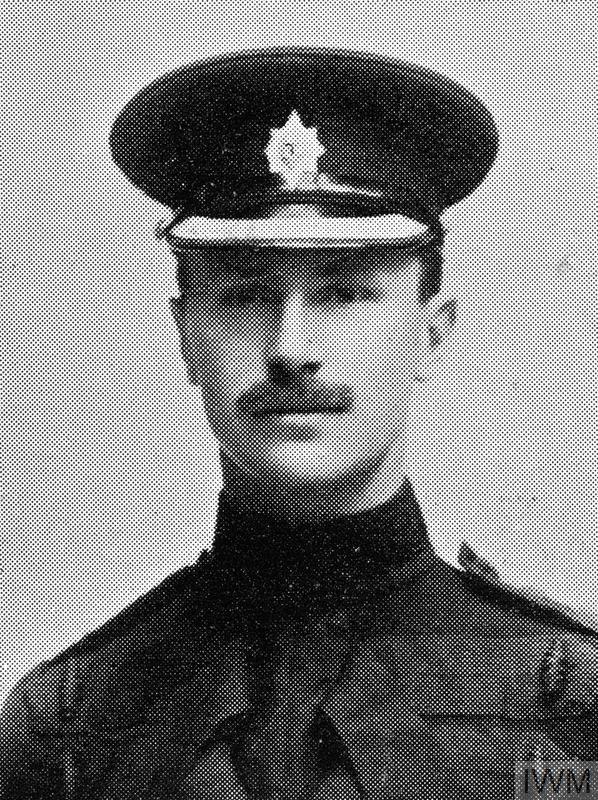
His son, Lieutenant Richard Charles Graves-Sawle (1888-1914) #8052 who served with the Coldstream Guards at Ypres was killed by a sniper in November 1914.  He died without male issue which means that the Baronetcy became extinct.  However, Richard’s image was chosen by Danny Boyle (of 2012 Olympic Games opening ceremony fame) to be one of 28 Heroes’ faces etched in the sand around the UK as an Armistice Centenary tribute.  Richard was portrayed on Porthcurno Beach in his native Cornwall.

Anthony Cobbold

Categories
cobbwebs-news-and-views Uncategorised

Daniel Gardner or George Frost?

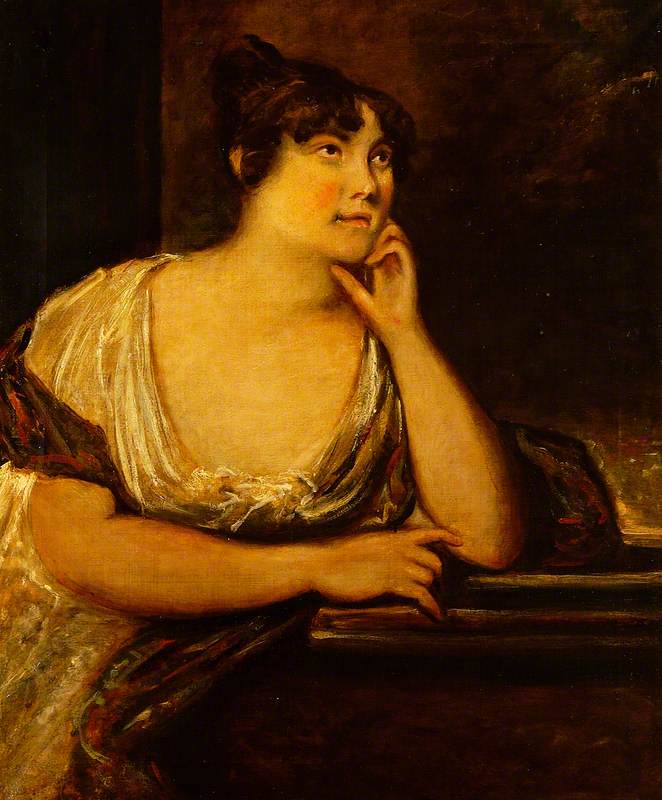
When I first met Lady Blanche (1898-1987) #449 at Glemham Hall in the 1980s she showed me the family portraits which included those of John Cobbold (1745-1835) #56 and Elizabeth Cobbold née Knipe (1765-1824) #58, both painted, probably at about the same time, by Daniel Gardner (1750-1805) and both identified as being his work.

As time went on, I became aware that on many occasions when these portraits were reproduced, they were said to be by George Frost (1754-1821).  As recently as Valentine’s Day this year the Ipswich Star used the image of Elizabeth Cobbold, and quoted it as being by artist George Frost and in the public domain.

A year or two ago I set out to resolve the issue by consulting the admirable Emma Roodhouse, the Art Curator for Ipswich Museums.  She thought that copies may have been made by George Frost. Investigating Frost more closely myself I observed that most of his paintings were of places and I learned that Frost was a keen admirer and copier of Thomas Gainsborough (1727-1788).  I found no specific evidence of Frost being in touch with the Cobbolds.

Two books printed by E. Shalders of Ipswich (Poems by Elizabeth Cobbold and Valentine Verses by Richard Cobbold), both about 1827, contained black & white prints of the portraits clearly identified as ‘Gardiner pinx’ (meaning ‘painted’) and ‘Worthington sculp’ (meaning ‘engraved’).  This lent weight to my belief in Gardner but I noticed that his name had been misspelled!

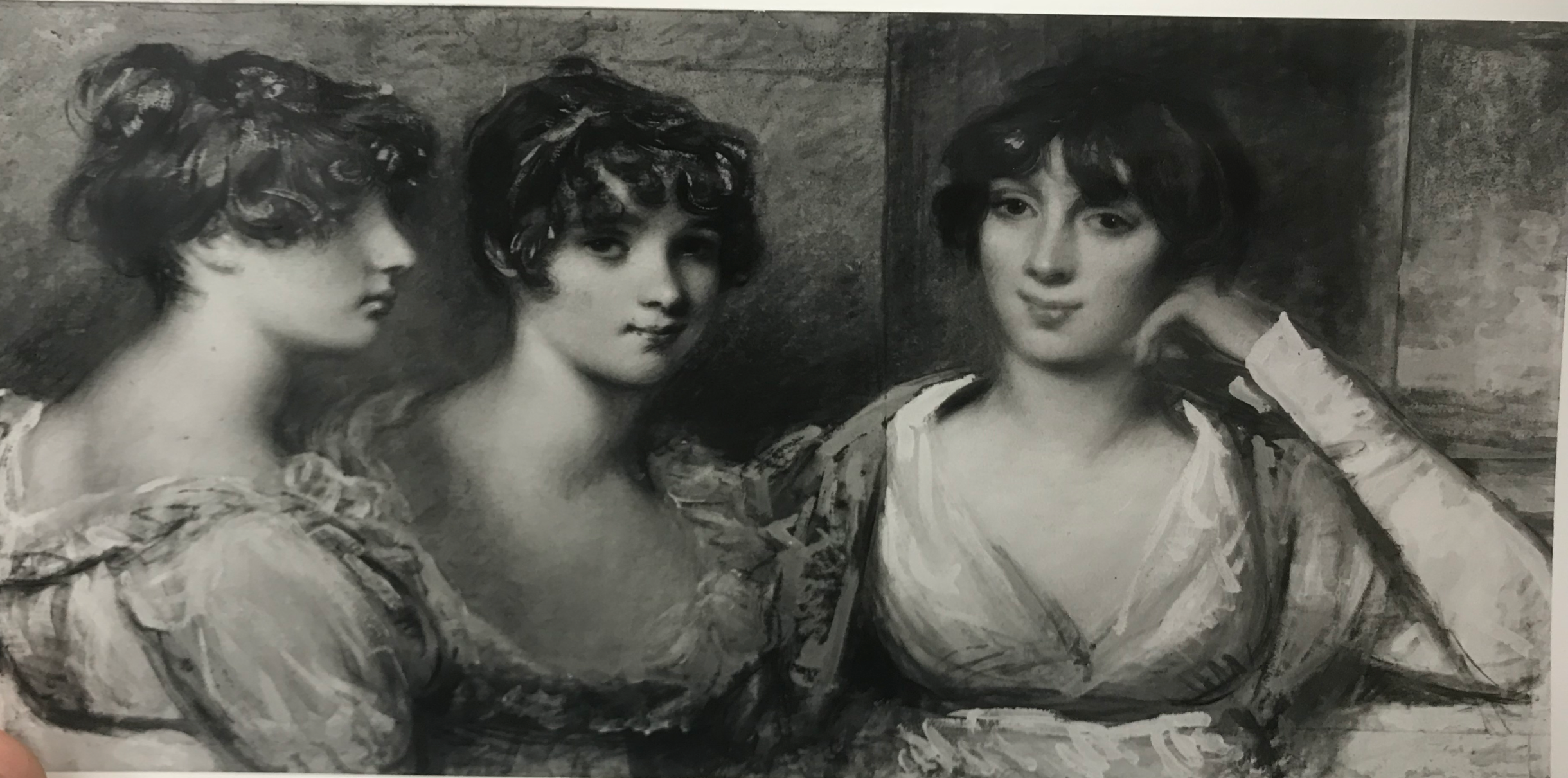
I had known for some time that Daniel Gardner had portrayed ‘The Three Misses Cobbold’, being three of the eight daughters of John Cobbold of Holy Wells [sic], by his first Elizabeth.  It is difficult to know which three daughters they were but my best estimate is that they are Anne (1784-1806) #89, Harriet (1785-1877) #91 and Sophia (1787-1832) #96.

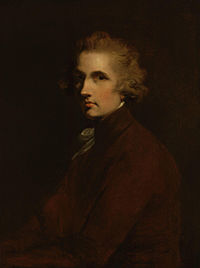
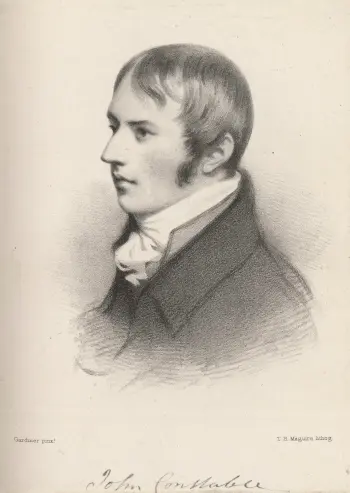
Recently, I was able to purchase a copy of the catalogue for the Daniel Gardner Exhibition staged by the Greater London Council at Kenwood House in 1972 in which The Three Misses Cobbold was displayed.  In her description of the exhibits Helen Kapp, the Curator mentions that May 25th 1793 was the date on which Mrs. Cobbold, Gardner and John Constable (17761837) ‘sat sketching under the lime trees which then fronted the small dwelling house adjoining the more lofty buildings of the brewery.’  ‘A warm friendship grew up between these two – so distant in age – which later became significant to Constable.  Possibly to Gardner too. Certainly, the friendship was close enough for Gardner to have painted Constable’s portrait’ which was also exhibited.

Gardner’s family was well respected in Kendal and his mother was a talented amateur draughtsman and painter in watercolours, all of which supports the widely-held view that Daniel’s family was well known to the Knipes, even from before the time of Elizabeth’s birth.  With so much contact between families I am now convinced that those two all-important portraits were indeed the work of Daniel Gardner.

Anthony Cobbold

0
    0
    Your Cart
    Your cart is emptyReturn to Shop