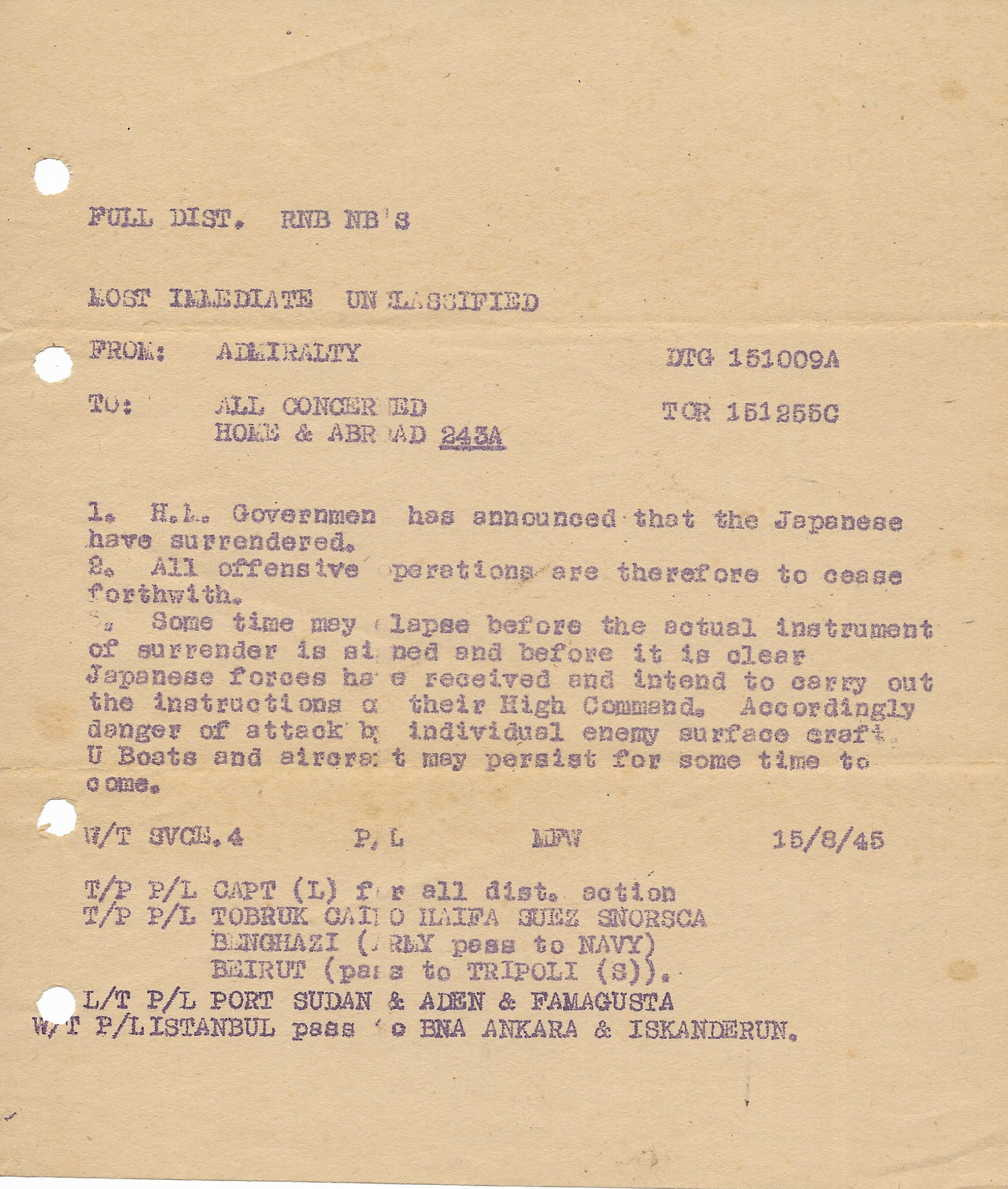
Whilst VE Day in June 1945 was a day of celebration it also carried a tone of sobriety. The war in the Pacific was far from over. The refusal of the Japanese to accept the Potsdam Declaration was followed on 6th and 9th August by the dropping of atomic bombs on Hiroshima and Nagasaki. The surrender was broadcast by the emperor on 15th although the formal declaration was not completed until 2nd September.
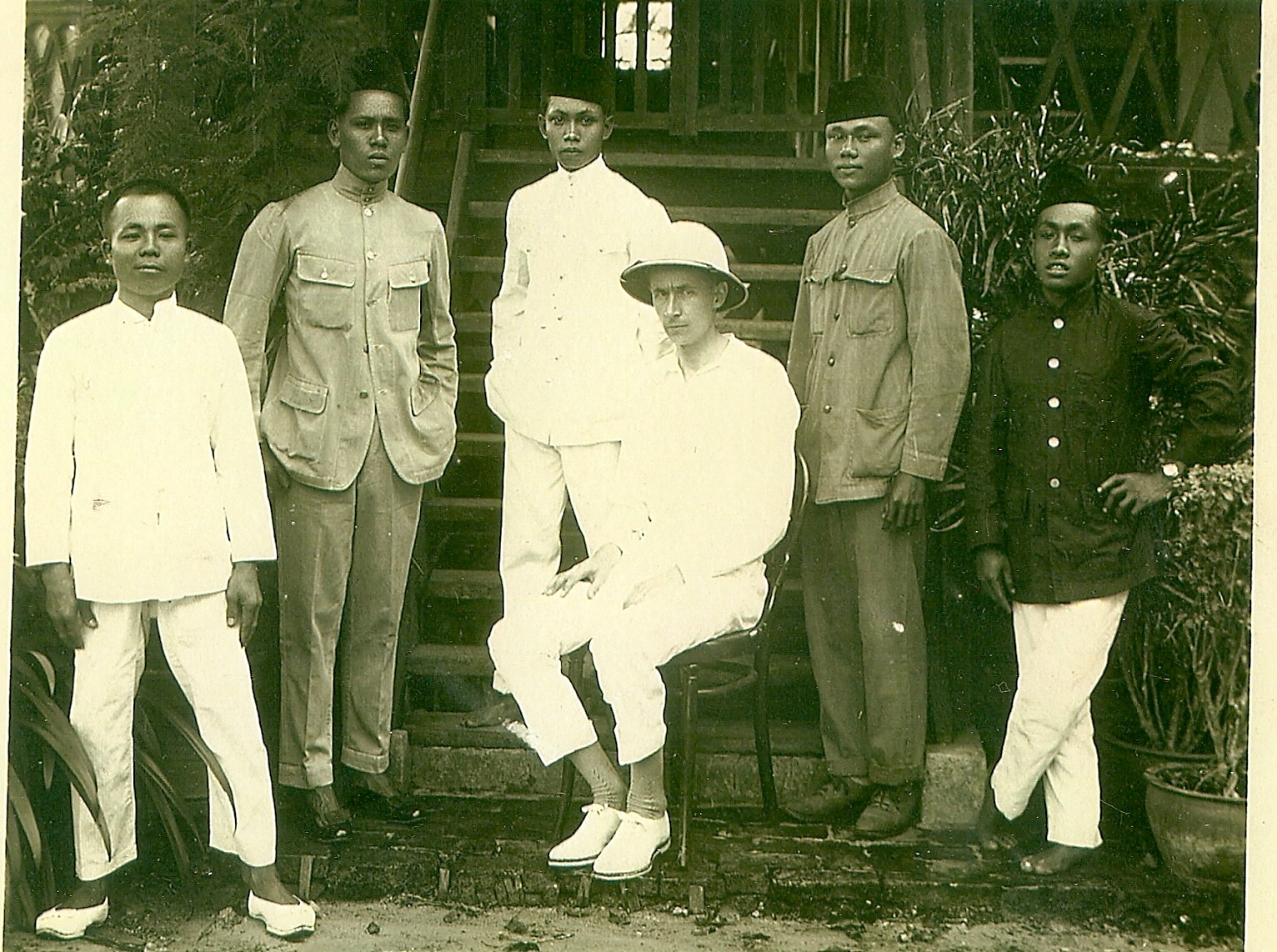
Three years previously Peter Charles Victor Cobbold (1898-26.08.1942) #7595 on the web family tree had been brutally murdered.
When Japan entered the Second World War with its spectacular assault on Pearl Harbor on 7th December 1941, the imperial interests of Britain and its allies in South East Asia became sitting ducks. Within a week the Japanese Imperial Army had landed at Miri on the coast of Sarawak. The population, predominantly British faced a stark choice: to surrender or to flee. At Sibu, Peter Cobbold was among twenty-six westerners who decided to take the latter course.
When news reached Sibu of the Japanese landings at Miri, Peter and the other westerners had to decide whether to remain in post or try to escape. Stories of Japanese atrocities in China and elsewhere convinced the majority that fleeing into the jungle was the best of their unenviable options. Led by the senior resident, Andrew MacPherson a party of about twenty-eight fled up river to the ferocious Pelagus Rapids where they disembarked to proceed on foot.
One boat which included their supply of benzine, food and Peter’s personal possessions was lost but they carried on despite atrocious conditions, and twenty-eight days after leaving Sibu the beleaguered party reached Long Nawang, a Dutch military post just over the border from Sarawak. They were in a sorry state but had the opportunity for modest recovery. The most viable route for escape was a daunting trek across the mountains and through almost impenetrable jungle, a journey that would take at least a fortnight. An advance party battled with near impossible conditions but made it to Jakarta where they sought to persuade the Dutch to send seaplanes to Nawang to mount a rescue. Sadly, the fall of Java precluded any such mission.
A detachment of seventy-two Japanese Marines led by Captain Mora Shima set off for Long Nawang. As the refugees had failed to surrender when the Japanese originally invaded Borneo, Mora’s orders were to treat them as enemy fugitives and this probably explains their treatment. The women and children were removed across the river. The men were led to a hill behind the barracks where mass graves had been prepared. There, they were shot, bayoneted, and thrown into graves. Peter was among the victims. The six women and four children who for the time being had been spared were to face an even worse fate. For a month they were repeatedly molested by Japanese soldiers until eventually they were mutilated and murdered by bayonet.
Not a single refugee survived. A report prepared in 1945 cited Mora and others as perpetrators but despite the assertion that ‘no effort should be spared’ to trace them, none faced trial. After the war crosses were placed on the graves and a priest consecrated the ground.
John Dawson Cooper DSC (1921-2014) #13676 was stationed at the RN Repair Base in Sydney NSW in charge of repairs to aircraft carriers, destroyers, and cruisers when, on 15th August 1945 he received the most
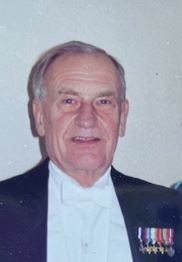
important signal of his life.
THE WAR IN THE PACIFIC WAS OVER
We reproduce below the signal received by John and many others but it is difficult to comprehend the feelings of relief and freedom experienced by the ‘forgotten army’ 80 years ago today.
Anthony Cobbold