Movement of regulator clock made by Benjamin Vulliamy about 1760 Now in the Science Museum London
The Vulliamy family were royal warrant holders for 4 generations spanning 5 monarchs.
Benjamin Gray (1676-1764) #15017 on the web family tree was a well-respected watchmaker who started working in St. Martins in the Fields and then moved to ‘Ye Sun Dyall’ in Thatched House Court, St.James’ Street West before finally settling in Pall Mall in 1752.He had been made Watchmaker-in-Ordinary to King George II by a warrant of 30th March 1742.
In 1746 his daughter Mary (1707-1783) #15016 married Justin Vulliamy (1712-1798) #15015 who went into business with his father-in-law.When Benjamin Gray died in 1764 the royal warrant passed to Justin Vulliamy who continued the business from Pall Mall.Justin’s son, Benjamin Vulliamy (1747-1811) #15013 took over the business with royal patronage and was paid £150 a year for doing so, still working from the premises in Pall Mall.He was much favoured and consulted by George III on mechanical subjects especially in connection with the Kew Observatory which was a hobby of the king.In about 1780 he was commissioned to build the Regulator Clock at Kew which served as the official London time until 1884 when Greenwich Royal Observatory assumed responsibility.
Following Benjamin’s death in 1811 (though some accounts say he died in 1820), his son Benjamin Lewis Vulliamy (1780-1854) #15041, who had been in the business with his father for some time, continued to trade from Pall Mall.He was clockmaker to George IV, WilliamIV and Queen Victoria.He supplied clocks to numerous government offices as well as to royal palaces.Great clockmakers though they were, afficionados level one criticism against the family.They were perhaps too fond of their own work, as they took out older movements of many fine old clocks and substituted their own newer movements in the misplaced belief that they were improving the clock.
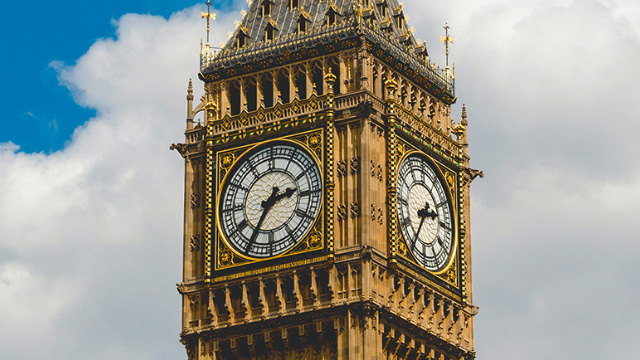
It was thought that Vulliamy might build the clock for the new palace at Westminster, but that was not to be.Edmund Beckett Dennison took 7 years to design a clock to meet the accuracy stipulations laid down by the Astronomer Royal, Sir George Airy.It was constructed by John Dent and was the most accurate 4-faced clock in the world.It was installed in 1859 in what is now known as the Elizabeth Tower and its principal bell is of course Big Ben.
Movement of regulator clock made by Benjamin Vulliamy about 1760 Now in the Science Museum London
Justin Francois Vulliamy 15015
Big Ben
Benjamin Vulliamy
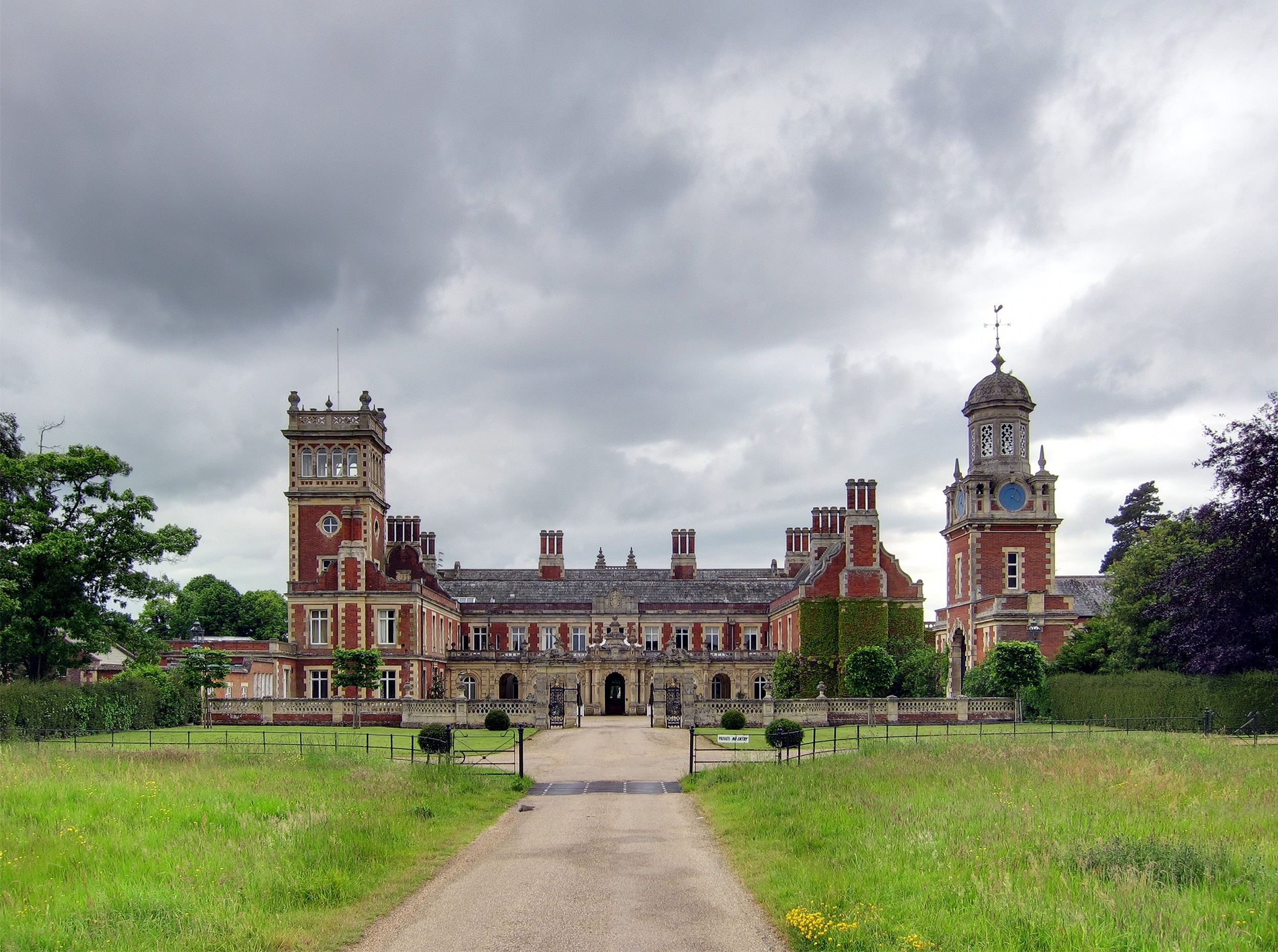
Somerleyton Hall in Suffolk showing a Vulliamy clock in the right hand tower. Estate owned by Hugh Crossly #13832
The trustees and the keeper of the CFHT hope that all friends and family enjoyed a warm family Christmas and now wish you a happy and fulfilling Coronation Year, 2023
If you shop Amazon Prime Day, Amazon will double donations: Simply shop with AmazonSmile ON in the Amazon Shopping app or at smile.amazon.co.uk/ch/1144757-0, and AmazonSmile donates to The Cobbold Family History Trust.
The Trust is currently researching the Gurney family in Norfolk, in part because of its links to the Patteson family, also from Norfolk. It will be remembered that John Chevallier Cobbold (1797-1882) #114, amongst the most illustrious of family members, married Lucy Patteson (1800-1879) #115 in 1827 at Wortham, where later Richard Cobbold (1797-1877) #106 was to be Rector for some 52 years.
John Gurney (1749-1809) #7269 was a banker in Norwich living in the family home, Earlham Hall (now part of the University of East Anglia) and married to Catherine Bell with whom he had 11 children all of whom are shown on the family tree. One of those children was Elizabeth, known as Betsey who married Joseph Fry (1777-1861) #15039
Born just under 250 years ago Elizabeth Fry née Gurney (1780-1845) #15031 was one of the most influential and enigmatic women in English history. Mother of eleven children and a Quaker minister she drew the world’s attention to the plight of women in prison, instituted an order of nursing sisters and became the figurehead of much of the philanthropic endeavour in the first half of the nineteenth century.
‘The genius of good,’ as the Marquess of Lansdowne described Betsy Fry in Parliament, became a living legend, a symbol of saintliness and virtue. The public’s awe and admiration is reflected in the titles of early biographies and tracts about her – ‘Illustrious Woman,’ ‘Woman of Worth,’ ‘Angel of the Prisons.’ At the height of her fame and popularity, to see Mrs. Fry reading to the prisoners of Newgate was considered ‘one of the sights of London.’
But during her lifetime this remarkable woman aroused hostility as well as admiration. Quakers found her ‘worldliness’ disquieting; not all of her fellow penal reformers approved of her unorthodox ways and the ‘irregular authority’ conferred upon her and her lady prison visitors; her family felt neglected.
Elizabeth Fry herself was tortured throughout her life by self-doubt and anxiety, torn between the opposing demands of her family, her religion and her public, disturbed by her own attraction to ‘the high life.’ Despite this Elizabeth Fry was without doubt a ‘modern’ personality and an early precursor of the feminist movement.
Jonathan Shackleton #1541 has been a keen supporter of our Trust for many years. 2022 marks the centenary of the death of Jonathan’s more famous cousin, Sir Ernest so it seems appropriate to recall the extraordinary deeds that have made his name almost a household word.
Ernest Henry Shackleton was born on the 15th February in 1874 in Kilkea House, County Kildare in Ireland. The second in a family of ten, his father Henry was a farmer. His mother Henrietta was descended from the Fitzmaurices, a family which had been in Kerry since the Norman times in the 13th century. Abraham Shackleton was a Quaker from west Yorkshire who came to Ballitore in County Kildare and started a school in 1726.
In 1880 when Ernest was six his father gave up farming and went to Trinity College Dublin, and qualified to be a doctor. The family lived at 35 Marlborough Road in Dublin and in 1884 they moved to Sydenham in South London where Henry practiced for 30 years.
After attending school at Dulwich College as a day boy Ernest, aged 16, joined the Merchant Navy. After 10 years he gave that up and joined a British Expedition led by Captain RobertFalcon Scott(1868-1912) to try and be the first to reach the South Pole. In the summer of 1901 the ship, The Discovery departed for the Antarctic.
On 30th December 1902 Scott, Shackleton and Wilson reached within 400 miles of the South Pole, the furthest South yet achieved by anybody. Shackleton was invalided on the return journey and was sent home early. His experience on this expedition then spurred Shackleton on, to have a go at reaching the South Pole himself. In 1904 after his return, he married Emily Dorman, they had three children Raymond, Cecily and Edward.
In March 1907 Shackleton outlined his own trip, which he organised himself with the minimum of official support. The Expedition was to leave New Zealand in 1908. The ship chosen Nimrod was a sealing ship which generally worked from Newfoundland. It was brought down and arrived in London in mid-June 1907. The Queen presented Shackleton with a Union Jack to carry on the sledge journey. They ship left for New Zealand on the 7th of August.
The Commonwealth Government gave Shackleton £5000 and the New Zealand Government gave him £1000 and agreed to pay for half of the cost of towing the ship down to the Antarctic Circle to save coal for the journey that lay ahead. They entered the Ross Sea on January 16th. On the 28th of January the ship froze in the ice.
The next day they lowered their motorcar onto the ice pack, the first automobile on the Antarctic Continent. The team set up the hut they had brought with them and the men crammed in. The weather began to close in and the sun to set. On the 29th of October 1908 Shackleton, Adams, Marshall and Wild headed for the South Pole, a 1700-mile round trip. The other men had set up many depots for the journey using the motorcar for several of them. The team began to run low on rations and shot the ponies for food. On the 9th of January 1909 they reached a new furthest south – just 97 miles from the South Pole. They had to turn around due to lack of food.
After the Norwegian Amundsen (December 1911) and Scott (January 1912) had reached the South Pole, Shackleton thought up and attempted to carry out another great plan – to cross the 2000-mile Antarctic continent.
This trip was a very successful failure.
The team of 28 men and 68 dogs never set foot on the continent (the husky dogs had come from Gimli near Winnipeg, crated in cattle cars to Montreal and shipped in the cattle boat ‘Montcalm’ to England).
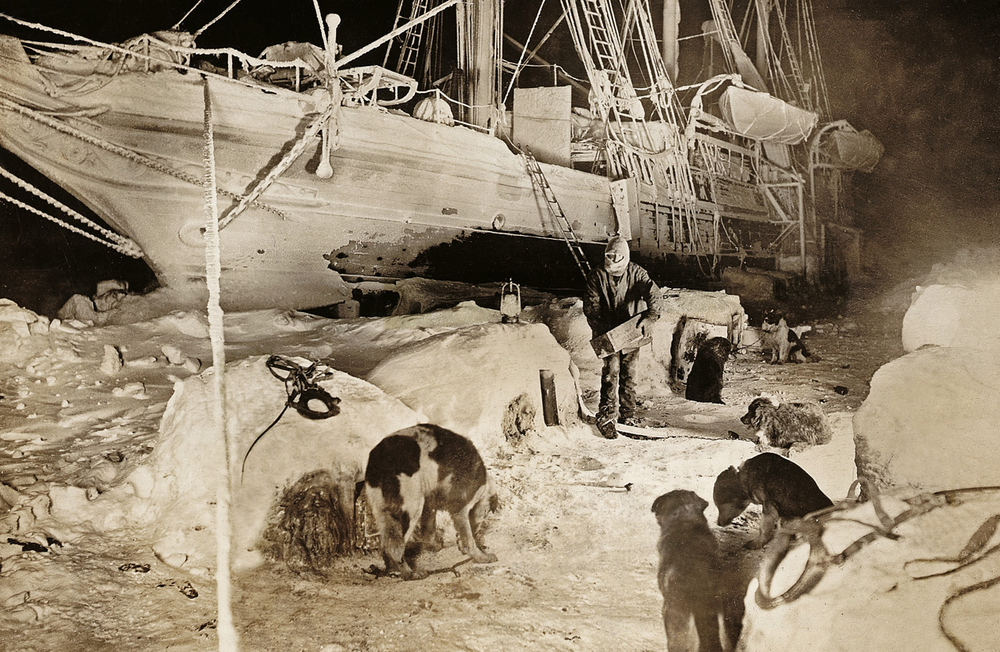
Shackleton’s ship the “Endurance”(named after the family motto “By Endurance we conquer”) was trapped in the ice in the Weddell Sea for 11 months, from January 1915 until it was squashed and sank in November 1915, leaving 28 men on the ice with 3 small ship’s boats. They then spent 5 (admittedly summer) months on an iceberg floating away from the continent. With great good fortune they landed on Elephant Island on the 15th of April 1916. It is a small godforsaken island of rock and ice with a few penguins and seals for food.
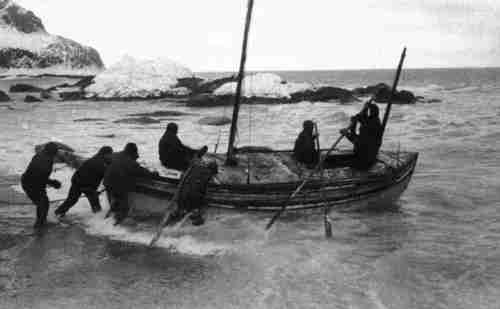
So, there they were in April 1916, lost to the civilised world, and heading into an Antarctic winter. Losing no time Shackleton’s next move was to be one of the greatest small boat journeys ever made. Shackleton and 5 others set off in the 22-foot boat the “James Caird” on an 800-mile journey across one of the roughest seas in the world to the island of South Georgia to get help.
Two other members of the crew were from Ireland – TomCrean from Annascaul in County Kerry and Tim McCarthy from County Cork. Tom Crean was one of the great crew members of the heroic age of Antarctic exploration. He was strong, courageous and good humoured and experienced – he had already been on two of Scott’s expeditions – and was awarded the Albert Medal for bravery. Frank Worsley, the superb New Zealand navigator of the “James Caird’ described Tim McCarthy as “the most irrepressible optimist I have ever met”. Despite their awful conditions McCarthy was always happy – and it was him who first spotted South Georgia, 15 days after they had left Elephant Island.
Their extraordinary journey was not yet over – to reach help, Shackleton, Crean and Worsley then had to cross the mountains, glaciers and snowfields of South Georgia to get to the whaling station at Stromness. Three and a half months later, at the fourth attempt, Shackleton, in a Chilean tug the “Yelcho’ rescued the remaining 22 crew on Elephant Island on the 30th August 1916. It was amazing that all the crew had survived.
In December Shackleton left New Zealand on the Aurora to rescue the Ross Sea Party from Cape Royds – on the other side of the Antarctic, this party had successfully laid food depots along the Ross Ice Shelf towards the South Pole. Shackleton had intended to use these as he crossed the Continent from the Weddell Sea side.
The 1921 trip on the Quest was his final journey. He died of a heart attack in the early hours of the 5th January 1922 shortly after the start of the expedition, at Grytviken in South Georgia where he was buried. A few months later on their journey home the crew of the Quest erected a cross at King Edward Point, across the bay from the cemetery where their “Boss” lies buried.
The Motto of the Irish Branch of the Shackleton Family is:
“FORTITUDINE VINCIMUS”
“By endurance we conquer”
The following highlights from Jonathan’s biography give us an idea of his profound love of Antarctica, no doubt inherited from the great man himself.
Travelling with the Australian photographer Frank Hurley’s two daughters on their first visit to the Antarctic,
landing on the godforsaken Elephant Island and visiting Ernest Shackleton’s grave on South Georgia.
He has been involved in many Shackleton activities including films, TV documentaries and radio interviews and has given talks in Canada, United States, England and Ireland.
He is the family historian for the Irish Shackletons, whose ancestor founded a Quaker school in Ballitore, County Kildare in 1726.
He is also very proud to have led a group of Irish students to the Antarctic several years ago with the Canadian based Students On Ice group. This was the first group of students from Ireland or Europe to visit Antarctica.
Jonathan owns one of the sledges that Shackleton took on his “Nimrod”expedition in 1907-1909.
Jonathan welcomes inquiries about giving talks about Shackleton and Antarctica – from anywhere in the world.
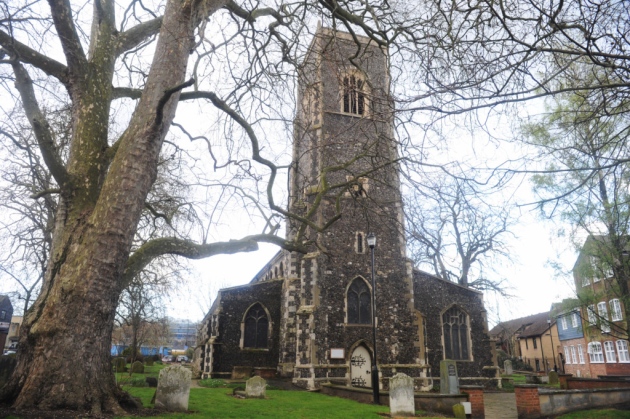
The last time we wrote about St. Clement’s (we should write the Church of St. Clement but are permitting ourselves to slip into current usage) it was to describe a beautiful leather tribute book given to an ailing church warden, signed by over 200 parishioners, of whom five were Cobbolds, in January 1909. It was the gift of Delia Golding and we wrote about in this column in July 2019.
St. Clement’s, one of Ipswich’s twelve medieval churches is currently being cared for by the Ipswich Historic Churches Trust. The main structure dates from the late 14th and early 15th centuries and is one of three dockland churches and was long known as The Sailors’ Church, St. Clement being the patron saint of sailors. Partly because of the number of family monuments it is sometimes known as the Cobbold Church.
Although Thomas Cobbold (1680-1752) #31 on the family tree, the founder of the brewery was buried at St. James’ Bury St. Edmunds his son, also Thomas (1708-1767) #44 was the first to occupy the family tomb at St. Clement’s. We understand that the tomb is beneath the altar but a headstone to ‘young’ Thomas stands just near the font and describes him as a ‘Common Brewer’ meaning that, in days when most pubs brewed their own, he had started a wholesale trade.
The third-generation brewer, fair haired and blue eyed, John Cobbold (1746-1835) #56 who has certainly earned his modern nick name of ‘Big John’ on account of his prolonged business stewardship and his huge philoprogenitive capacity (he fathered 22 children) also occupies the tomb with both his wives, Elizabeth Wilkinson (1753-1790) #57 and Elizabeth Knipe (1765-1835) #58
Also in the vault are the remains of Reverend George Routh (1740-1821) #63 who was Rector of St. Clements in the 1770s. He married Mary Cobbold (1750-1832) #62, who subsequently joined him, daughter of ‘young’ Thomas. They had no children of their own but adopted Henstridge Cobbold (1775-1849) #2873, the daughter of Mary’s brother William. Following the death of her husband Mary erected a monument to him on a piece of land they owned in Foxhall, Ipswich and the neighbouring farm became known as Monument Farm. The land must have become valuable as when Henstridge was elderly she appears to have been a wealthy woman.
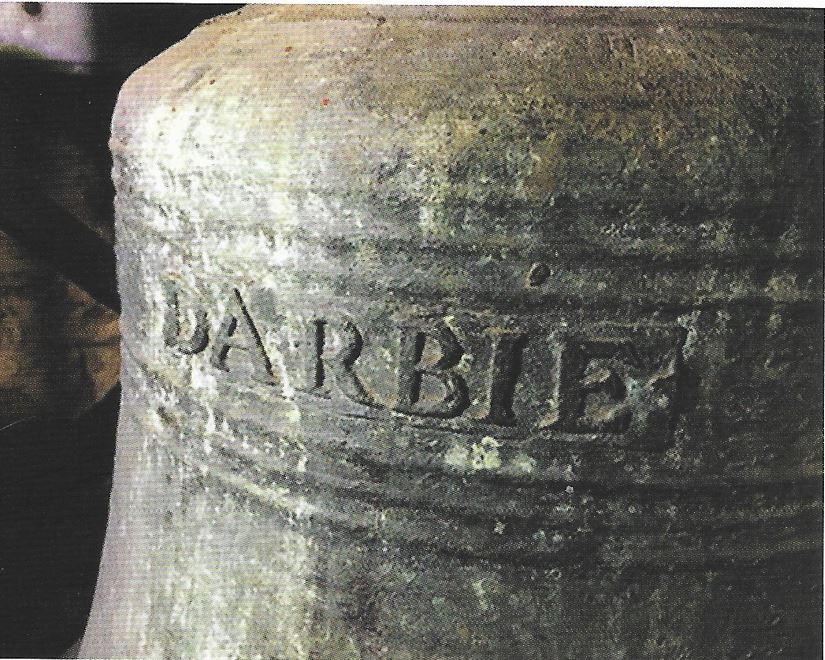
No church is complete without bells and those in St, Clement’s were made byJohn Darbie, an Ipswich bell founder between 1660 and 1680. In 1884 a carillon was installed, the gift of Felix Thornley Cobbold (1841-1909) #201 in memory of his father John Chevallier Cobbold (1797-1882) #114. These bells were rung vigorously in 1891 to celebrate the homecoming of John Dupuis Cobbold (1861-1920) #307 and his bride Lady Evelyn (1867-1963) #308.
Monumental inscriptions are also prominent for Adela Harriette Cobbold (1837-1917) #187 and Mary Anne Cobbold (1806-1868) #8595 and the church witnessed at least three other Cobbold baptisms, six weddings and a funeral!
HER MAJESTY QUEEN ELIZABETH II 1926-2022 Sep. 2022
We echo all the fine tributes that have already been paid:
…the finest monarch in our history…
…an enduring presence of strength and stability…
…a stateswoman of unmatched dignity and constancy…
…a shining light in our history…
…this irreparable loss…
…her extraordinary lifetime of service…
…an exceptional woman who led by quiet and dignified example…
…her life of unstinting service to the good of the Nation and the Commonwealth…
Some of her quotes:
“I shall always work, as my father did throughout his reign, to uphold the constitutional government and to advance the happiness and prosperity of my peoples, spread as they are the world over…I pray that God will help me to discharge worthily this heavy task that has been laid upon me so early in my life.”
“When I was 21, I pledged my life to the service of our people and I asked for God’s help to make good that vow. Although that vow was made in my salad days when I was green in judgement, I do not regret or retract one word of it.”
Personal Comment:
As an octogenarian who must be approaching the end of his allotted span, dare I observe that in death, as in life, she was exemplary? If I can be at work on Tuesday, rest on Wednesday and die on Thursday I shall feel I have left this life exactly as I wish, quickly and quietly.
The majority of family members probably know that Felix Thornley Cobbold (1841-1909) #201 gave Christchurch Mansion to the people of Ipswich in 1895. He required that it be used as an art gallery. The grateful inhabitants made him Mayor of Ipswich in Queen Victoria’s Jubilee year, 1897, although strictly he didn’t qualify, and commissioned his portrait by the Hon. John Collier which hangs in the mansion to this day. Some will know that in his will of 1909 he left £20,000 for the purchase of works of art; the best part of £2½ million in today’s money. Few will appreciate the enormous benefit conferred by that legacy.
When family and friends gathered in 2009 to mark his centenary the Ipswich Museum Service laid on a trail around the mansion which identified 100 works of art that had been acquired, wholly or in part with funds from the Felix Cobbold Bequest. In May this year an exhibition opened, at Christchurch Mansion of course, expertly curated by EmmaRoodhouse, titled Creating Constable, which reveals that no less than fourteen works by Constable have entered the collection between 1909 and 2020 with the assistance of this funding. The exhibition is open until 25th September so if you want to see it – hurry!
But that is not the end of the story because Emma Roodhouse and Caleb Howgego’s book which accompanies the exhibition describes how local families like the Kilderbees and the Cobbolds, and of course George Frost (1744-1821) and their involvement in the artistic and scientific community helped Constable gain recognition.
Elizabeth Cobbold (1765-1824) #58 neé Knipe published her first creative work Poems on various Subjects in Manchester at the age of eighteen. By the age of twenty-two she had published her second volume of poetry, Six Narrative Poems (1787) dedicated to Sir JoshuaReynolds (1723-1792). In 1790 Elizabeth married William Clarke (1730-1791) #2712, comptroller of customs and bailiff of Ipswich but the marriage was short lived as William died the following year, leaving his widow in a strong financial position. Young, wealthy and unattached, Elizabeth soon received a proposal from the equally rich and recently widowed ‘Big’ John Cobbold (1746-1835) #56 whom she married in 1791 taking on the care of his fourteen children. That same year she produced her third publication, a novel entitled The Sword or Father Bertrand’s History of his Own Time (1791)
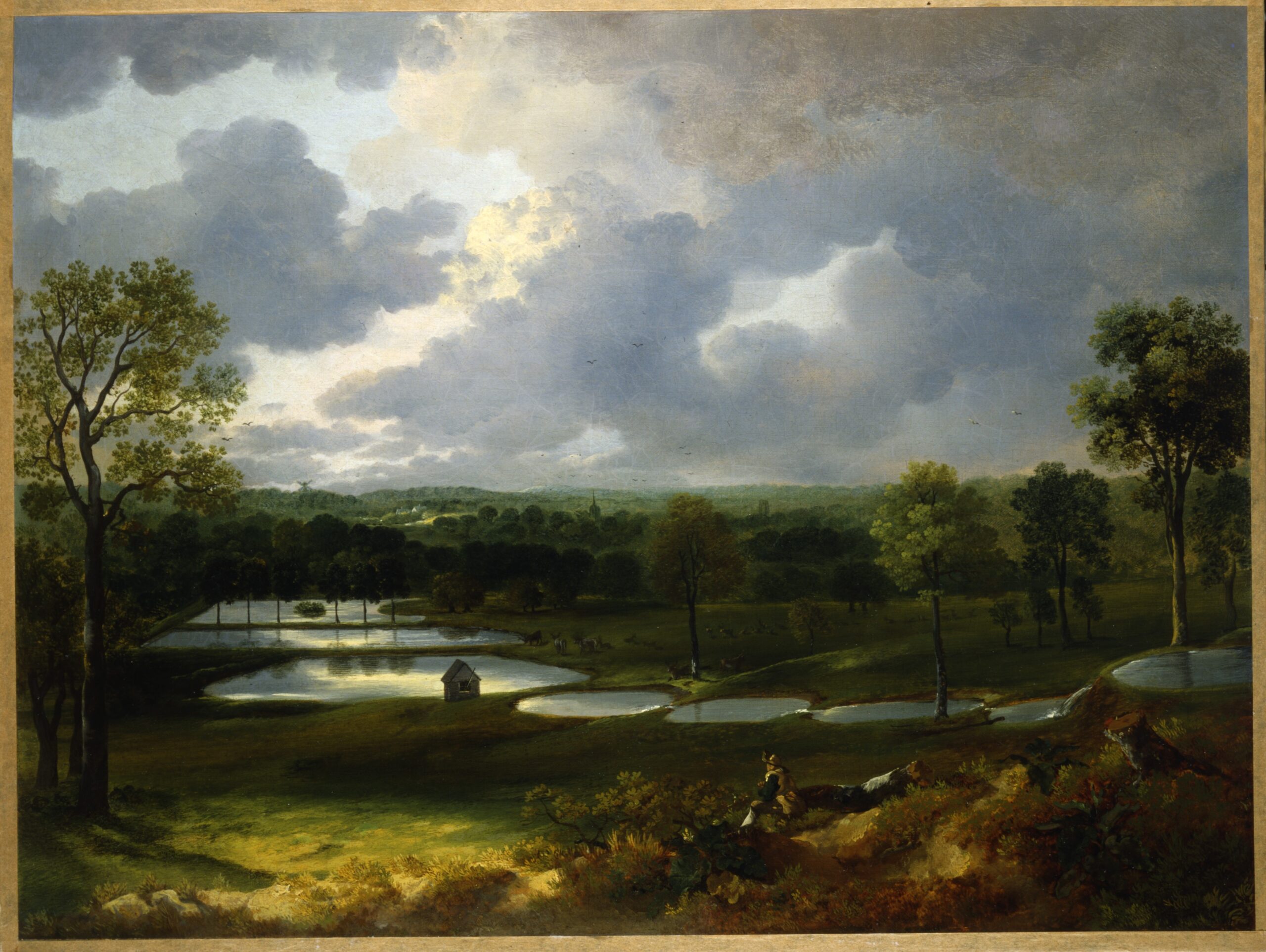
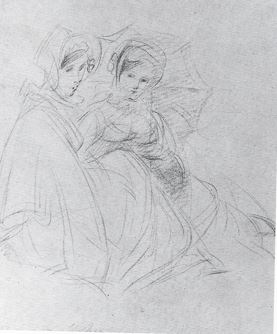
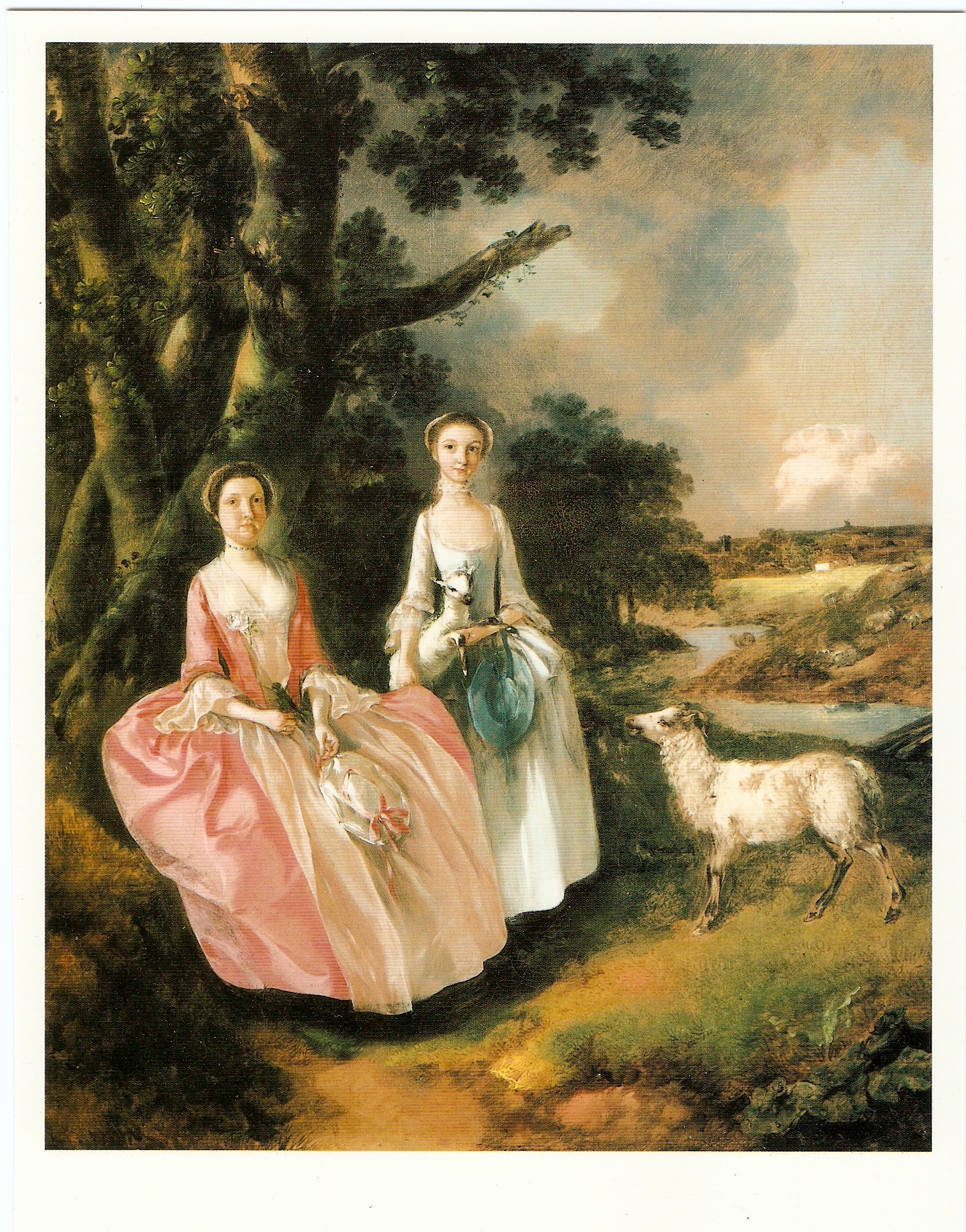
Her new husband supported Elizabeth’s interests in the sciences and particularly the arts. His family had already commissioned two works from Thomas Gainsborough (1727-1788),Mrs Mary Cobbold with her daughter Anne and Holywells Park and Elizabeth’s family were friendly with Daniel Gardner (1750-1805) and probably Joshua Reynolds. John Constable(1776-1837) had been born in East Bergholt in Suffolk and returned there frequently after he had established himself in London. He is known to have stayed with the Cobbolds in 1799 and to have maintained contact until around 1804 or 1806 when he sketched Elizabeth’s step daughters Harriet (1785-1877) #91 and Sophia (1787-1832) #96. Some of these sketches are in private hands but others are at Le Louvre and the British Museum. His last visit is recorded in 1821 after Elizabeth had experienced a nasty fall. Even the year after his father’s death John’s son John Charles Constable (1817-1841) visited his father’s friends, the Cobbolds in Ipswich.
It seems poignantly appropriate that some of the profits made from the people of Ipswich should be returned to them, with interest.
Thomas Gainsborough (1727-1788), Holywells Park
John Constable (1776-1837), Harriet & Sophia Cobbold holding a parasol 1806
John Constable (1776-1837), Harriet Cobbold seated on a garden bench 1806
Thomas Gainsborough (1727-1788), Mrs Mary Cobbold with her daughter Anne