Those readers on our mailing list will have received a letter recently announcing our new fundraising venture, The Cobbold & Kin Virtual memorial Wall. For those who have not received a letter we give below a link which will allow you to take part.
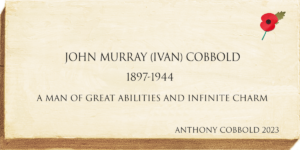
This new permanent page on our website offers an opportunity for you to honour a family tree member, who is no longer with us by having a ‘stone’ inscribed like the example below. ‘Your stone’ will remain in the online wall for the life of the charity’s website, for all visitors and future generations to discover and enjoy. You have an opportunity to compose your own personal tribute to appear on ‘your stone’ which will also be linked to the biography of the person commemorated. A poppy can be added if your family member died in service.
The cost of a permanent engraved ‘stone’ is £100 which if using PayPal can be accepted in three installments. By honouring our forefathers, please help us to continue our work to preserve our past for future generations. Thank you.
Holywells Family Day and COBBOLD 300 will take place at Holywells Park on Saturday 24th June 11-6 pm. It celebrates the tercentenary of the founding of the Tolly Cobbold family brewery. Organised by the Friends of Holywells Park and Ipswich Borough Council, it is the first major celebration since Covid.
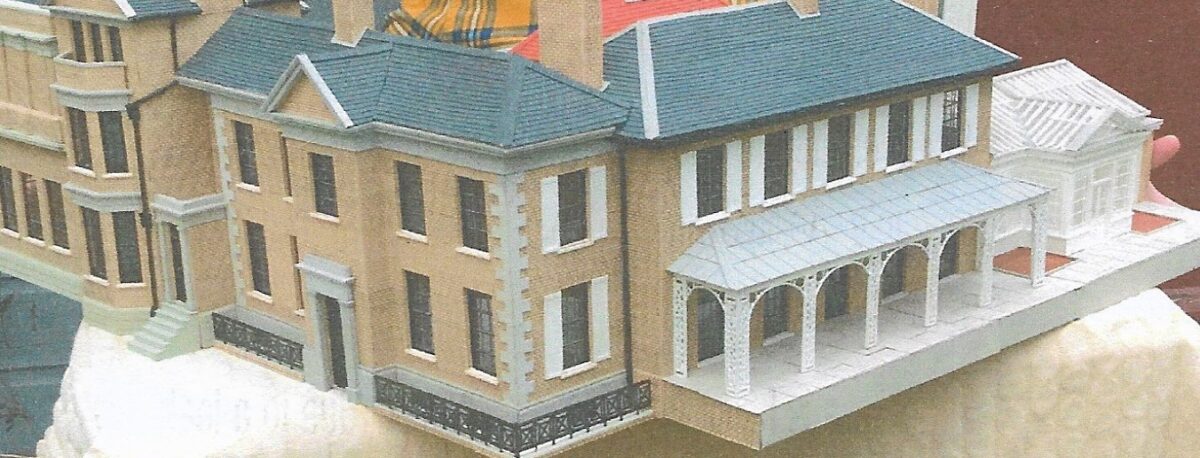
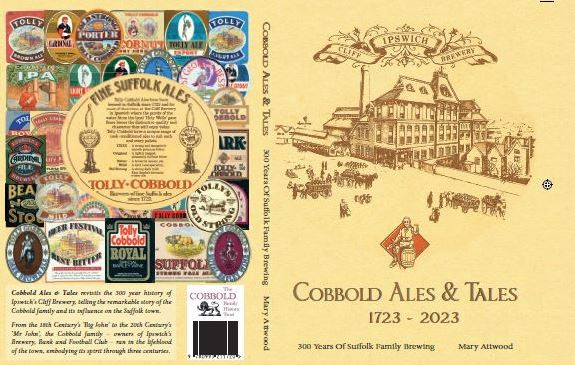
The Cobbold Family History Trust will launch its new book COBBOLD ALES & TALES by Mary Attwood to mark the occasion. Mary will sign copies for you, and you will find us in the IPSWICH SOCIETY gazebo. Historic vehicles from the Ipswich Transport Museum and from the Suffolk Vehicle Enthusiasts Club will be on display. Long time friend of the Trust, Lois Cordelia will demonstrate paper cutting using a scalpel rather than scissors employed by Elizabeth Cobbold. For the first time ever, a model of Holywells Mansion by Stuart Hawkins will be on display. It is an occasion not to be missed.
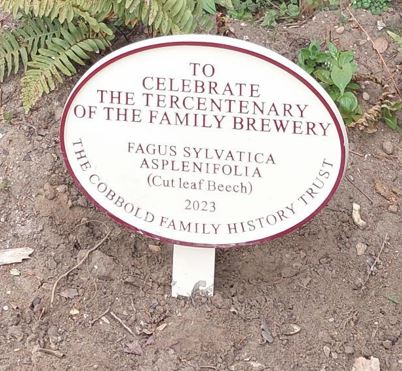
As a permanent tribute to the brewery The Cobbold Family History Trust has planted a fine Cut-Leaf Beech tree in the Arboretum at Christchurch Park.
The Plaque
Model of Holywells Mansion by Stuart Hawkins
The CFHT Cut-Leaf Beech in Ipswich Arboretum, Christchurch Park
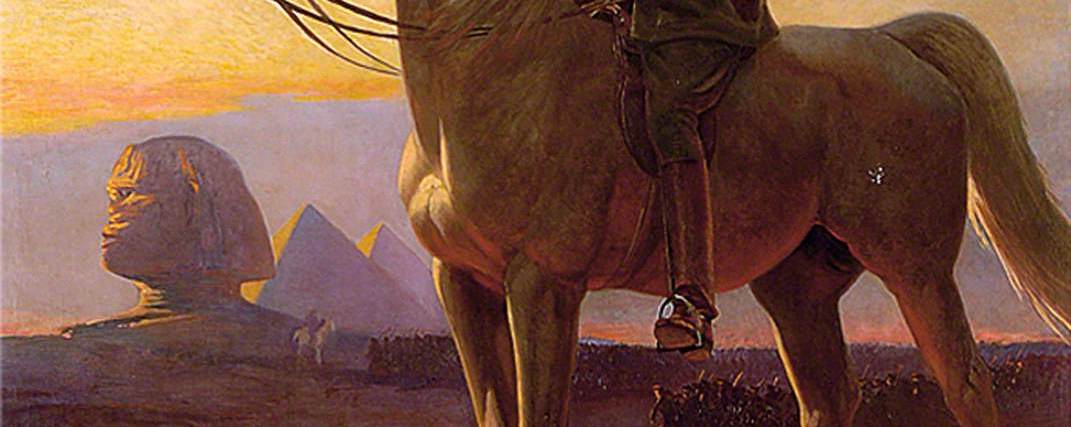
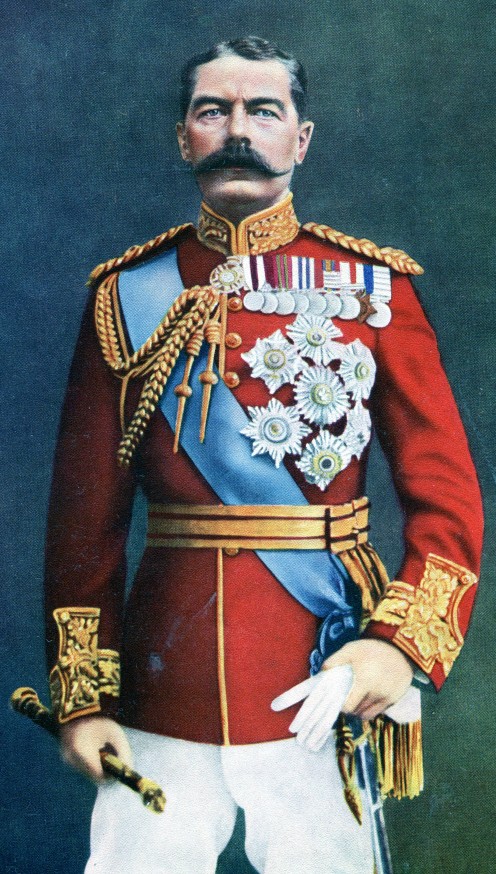
Jones, Adrian; Earl Kitchener of Khartoum; Colchester and Ipswich Museums Service; http://www.artuk.org/artworks/earl-kitchener-of-khartoum-11629
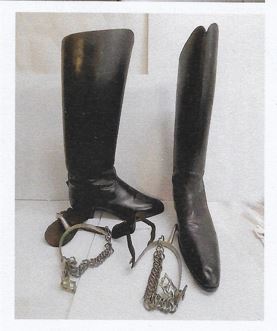
No, we are not going to devote a whole Cobbweb to a pair of boots but his footwear and his portrait have been in the news lately in Ipswich. Maybe as a result of the refurbishment of the museum his lordship’s boots and their detachable spurs emerged as due for a clean. This task was carried out by that perpetually most loyal Ipswich citizen, Rowell Bell, who is an ardent supporter of our trust. He wrote an article about the boots and their owner for the Friends of Ipswich Museum spring newsletter. In it he reminded his readers that Kitchener’s mother was a Chevallier and that Chevalliers and Cobbolds had married in three separate generations. He also pointed out that the boots had been gifted to the museum by Viscountess Broome, Adela Mary Evelyn Monins (1893-1986) #1168, daughter of Edith (Edie) Julia Cobbold (1863-1947) #309. They are recorded as the boots worn by Lord Kitchener (1850-1916) #733 on his last visit to France before being tragically lost at sea.
John Dupuis Cobbold (1861-1929) #307 donated a fine portrait of Earl Kitchener of Khartoum, mounted and possibly wearing the same boots, to the Borough Council Collection of the Colchester and Ipswich Museum Service, which was in the Town Hall for all to see. That is, until very recently, when it was taken down, wrapped and put into storage. The unanswered question is why? Were the council ashamed of him? Did they fear damage from protesters? Was it in need of restoration or were they just bored with it? As yet, we have no answer but it does seem an opportunity was missed as the upcoming exhibition in the Wolsey Gallery at Christchurch Mansion is titled ‘Animals in the Art Gallery’ for which Adrian Jones’ portrait would have been perfect.
2023 marks the tercentenary of the founding of the COBBOLD brewery. The Trust is preparing a book to mark the occasion to be launched (all being well!) at Holywells on 24th June this year. A date for your diary?
Dare I suggest that a family has characteristics that echo monarchy? We don’t anoint the head of the family and we don’t expect him or her to wear a crown but we do espouse the principles that matter to us.
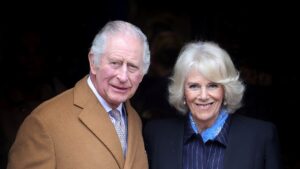
In paying our tribute for the coronation this week of King Charles III and Queen Camilla we have selected appropriate words from six people who know the king well:
Ahead of the curve, diligent and gifted with an empathy that allows him to connect with all people, Charles III will be a great and much-cherished monarch. Sir John Major
Charles III has long articulated collective misgivings about new steel-and-glass buildings and we can hope his defence of Classical and vernacular architecture continues. Simon Jenkins
An early advocate for the environment and adept at bringing people together to find solutions, The King has long fought to save the planet. Tony Juniper
Long-time patron of the Rare Breeds Survival, The King has worked tirelessly, publicly, and privately to promote endangered farm animal breeds. Christopher Price
In Charles III, we can rejoice in a king who is inspired by the wisdom that is ancient but always fresh. Baron Chartres
The King has been a force for good in the world of organic and sustainable farming in more ways than we might realise. Patrick Holden
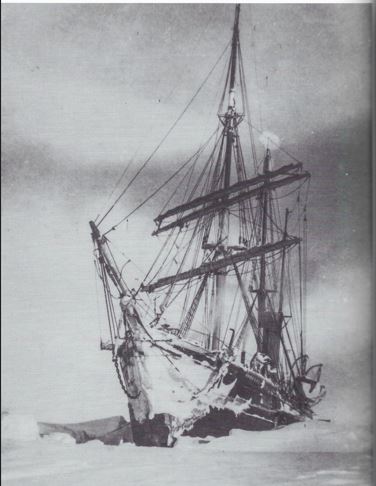
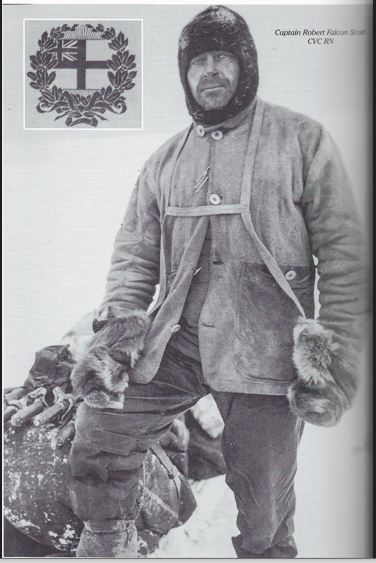
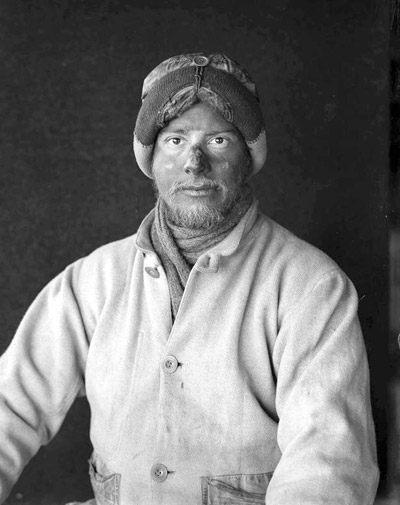
Back in 1837, Robert Knipe Cobbold’s eldest daughter, Elizabeth Harriet(1817-1910) #155 married Canon Charles Shorting (1810-1864) #156 who was a canon of Norwich Cathedral, a rural dean and Rector of Stonham Aspall. Thus began a long association between these two clans which was brought into focus recently by a member of the Lovegrove family. We already knew that Canon Shorting’s daughter, Alice had married Shropshire geologist, Edgar Sterling Cobbold (1851-1936) #250 but what the Lovegroves (descendants of the Shortings) added was the fact that the canon’s grandson’s brother-in-law was Apsley Cherry-Garrard(1886-1959) #15067 the assistant zoologist on Captain Scott’s ill-fated Terra Nova Antarctic Expedition, 1911-1913.
Born in Bedford, as Apsley Cherry, the Garrard was added later when his father inherited a large country estate, Lamer, which Apsley himself inherited in 1907 on the death of his father.
The second youngest member of the expedition at 24. Cherry-Garrard was rejected initially by Scott. He then made another application with the promise of a £1,000 payment towards costs, though again was rejected. He decided to donate the money anyway, so Scott with persuasion from Wilson took him on as assistant biologist despite his lack of a scientific background.
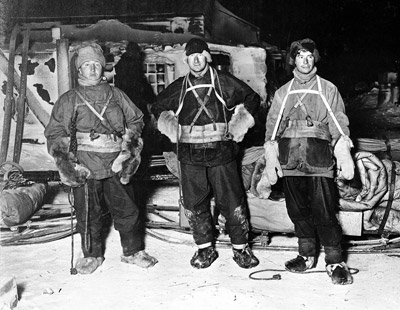
Most famous for his widely acclaimed book about the journey he made with Bowers and Wilson to Cape Crozier to retrieve an emperor penguin egg in the continuous night of the depths of the Antarctic winter, The Worst Journey in the World, published in 1922, and considered to be a classic of travel writing and by many to be the best travel book ever written.
He was involved with depot laying in January – March 1911 as preparation for the south pole attempt later in the year. Starting in November 1911 he accompanied Scott’s Polar Party by leading a pony called Michael pulling a sledge. Cherry made it as far as the top of the Beardmore Glacier before being sent back with his team, as they got closer to the pole, there were supplies for an even- smaller number of men.
Before Scott left for the Pole, he gave orders to be met on the 1st of March 1912 at 82 or 82.30 degrees south by a dog team with supplies to help their return to the base. For a variety of reasons, it fell to Cherry-Garrard to do this and along with Dmitriy Girev he set off on this journey on the 26th of February, reaching a place called “One Ton Depot” on the 3rd of March, at the time Scott was 60 miles south of this point (3 days by dog team), they remained in the area until the 10th of March before returning due to a combination of poor weather and lack of dog food.
Scott and the surviving members died 11 miles south of One Ton Depot on the 29th of March. Cherry continued with his scientific work through the winter and was part of the team that found the bodies of Scott, Bowers and Wilson in their collapsed tent on the 12th of November 1912.
Cherry-Garrard suffered from mental and physical health issues for the rest of his life that arose at least partially from his experiences in Antarctica. He blamed himself for not venturing further south from One Ton Depot when he might have encountered Scott, Bowers and Wilson and been able to save them.
Terra Nova
Capt. Robert Falcon Scott
The Cape Crozier Party: Bowers, Wilson & Cherry-Garrard
The Duchess was born Lady Mary Crewe-Milnes (1915-2014) #15070 on the family tree. Lady Mary’s father was Robert Crewe-Milnes, 1st Marquess of Crewe and her mother was Lady Peggy Primrose, one of the first of seven women appointed as magistrates in 1919 following the passing of the Sex Disqualification (Removal) Act 1919. Her maternal grandparents were Hannah Primrose, Countess of Rosebery and Archibald Primrose, 5th Earl of Rosebery. A goddaughter of Queen Mary, she was the first wife of George Innes-Ker, 9th Duke of Roxburghe(1913-1974) #14591. They married in 1935 but divorced in 1953. During divorce negotiations she was advised by her lawyer not to leave the family home, Floors Castle, voluntarily as the settlement would be better if she was removed by her husband. The considerable lengths to which he went to persuade her to depart included turning off first the electricity and then the gas and finally the water. In the end she got her generous settlement!
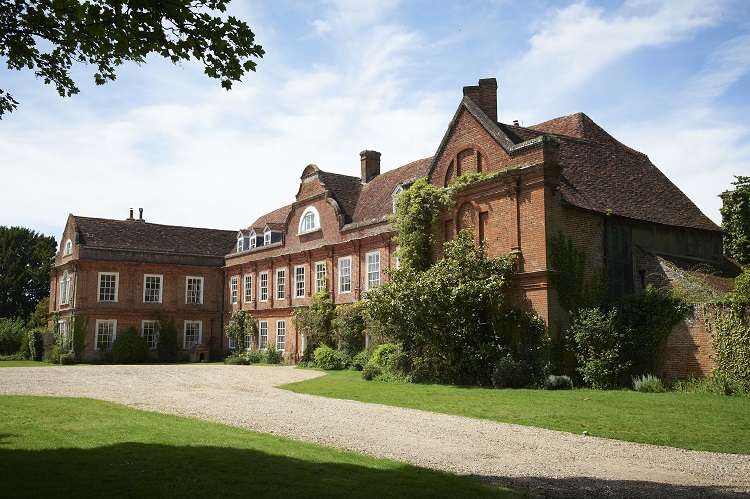
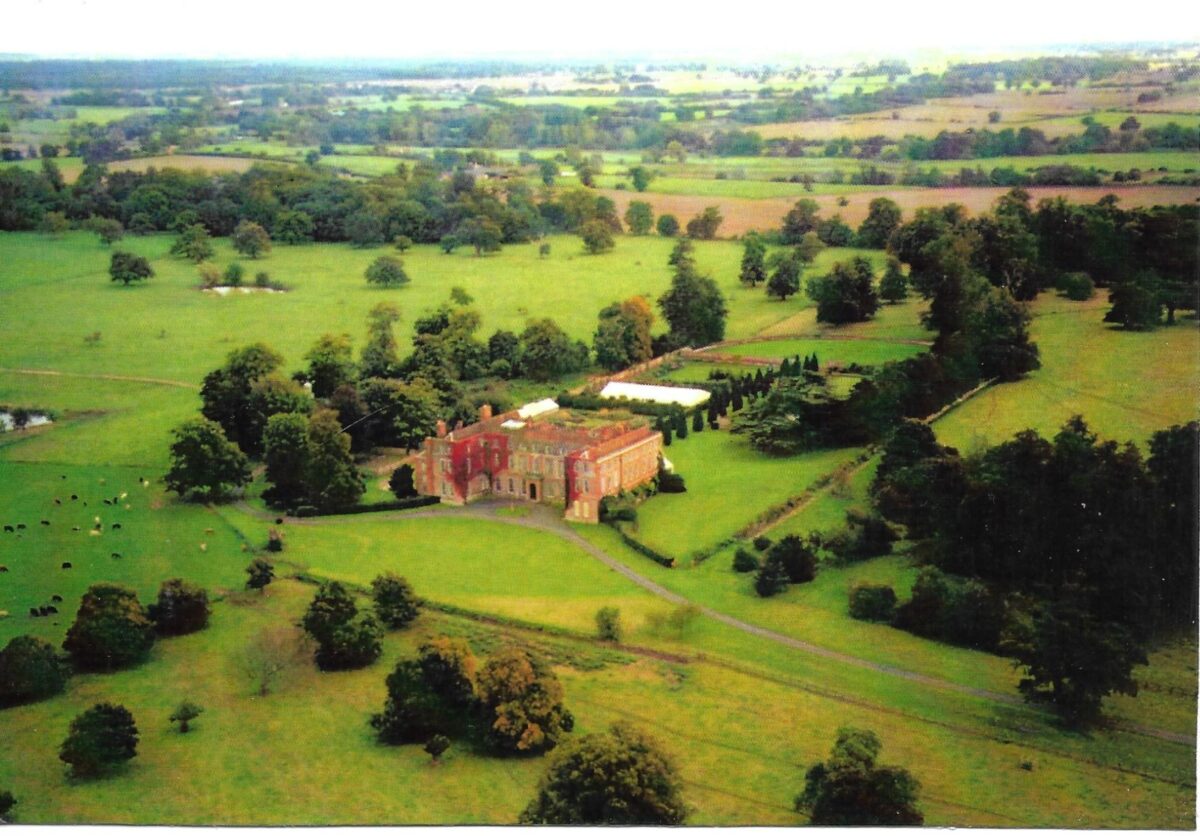
She was a great patron of the Royal Ballet in the era of Margot Fonteyn and Frederick Ashton and in 1967 her mother, Margaret (Peggy), Lady Crewe died and left her the 300-acre estate of West Horsley, Surrey which included a large country house dating from the 16th century. She lived there for the best part of 50 years but sadly was not able to keep the property in good condition. Without warning him in advance, when she died aged 99 in 2014, she left the whole estate to her great nephew, Bamber Gascoigne, the historian, author and original University Challenge quizmaster who was already nearly 80 years old and married to Christina, a celebrated potter, but without children. What were they to do with this enormous grand, but unexpected, responsibility?
Having wrestled with the problem for some considerable time and mindful that their house had hosted a 35-course dinner for Henry VIII and allegedly been visited by Sir Walter Raleigh’s severed head they came up with a plan to do it justice. They decided to sell off those items of furniture that did not belong in the house having been brought in in the 1930s, which raised nearly the £10 million seed capital required to convert the whole estate to a magnificent hub for the visual and creative arts. As a central part of the plan, they were able to welcome Grange Park Opera to a wonderfully romantic spot just beyond his aunt’s ancient orchard. Here they built, in record time, a 5-storey opera house based on La Scala to seat 700. Visitors would arrive in the late afternoon and enjoy a saunter through the fragrant gardens before taking their seats. During the interval dinner is served in the grand rooms of the house and when the evening is over, they return through unspoiled moonlit countryside.
To oversee the provision of facilities for all manner of arts and crafts and to ensure the historic house’s survival Bamber Gascoigne gifted the house to a charitable trust, the Mary Roxburghe Trust, which established a governing body experienced in conservation, the arts and commercial management. Gascoigne died in 2022, after a life of extraordinary eminence and climactic generosity.
The Trust has noticed that a 122 cm high lead figure of Mercury, possibly by van Nost is coming up for sale in Cambridge later this month. The auctioneer’s estimate is £4,000 to £6,000 so it is well beyond our reach, but its provenance is what interests us. If it is by van Nost, it is most likely by the nephew, Jan van Nost the younger (1713-1780) after the model by the great Italian Renaissance Sculptor, Giambologna (1529-1608). From the early 18th century, it was owned by John Shepherd and his heirs at Campsea Ashe High House, Suffolk. From about 1880 it was with the Earls of Guildford and later Lady North at Glemham Hall.
This fine Elizabethan mansion was built by the de Glemham family in about 1560. It passed to Francis North, 2nd Baron Guildford in about 1709. His wife, Catherine was the daughter of Elihu Yale the founder of the famous American university. After belonging for a while to Mrs Herbert it reverted to the 8th Earl of Guildford who sold it in 1923 to the Cobbold family which makes this its centenary year. Mercury was moved to Philip Wyndham Cobbold(1875-1945) #324 at Tattingstone Place where it stayed from 1947 until 1966 with the Budd family before joining the present owners. Other garden statues from Tattingstone were sold by Christie’s in 2003. They were attributed to the workshops or ‘yards’ of the van Nosts and the Cheeres.
Glemham was bought in 1923 for John (Ivan) Murray Cobbold (1897-1944) #448 who had married a daughter of the 9th Duke of Devonshire, Lady Blanche Cavendish (1898-1987) #449. John Murray, who put up the money for Ipswich Town Football Club to turn professional, sadly died on 18th June 1944 when a doodle-bug demolished the Guards Chapel. His son, John Cavendish (1927-1983) #575 better known as ‘Mr. John’ in football circles, took over and the hay day of ITFC was celebrated before he prematurely died of cancer. By the will of his brother Patrick (1934-1994) #576 Glemham Hall passed to Philip Hope-Cobbold (1943-2020) #577 who started the process of turning the Hall into the highly successful wedding, conference, and event venue that it is today in the skilful hands of his two sons Tom (1974) #1390 and Tim (1976) #3234.
Emperor Claudius believed that his soldiers fought better if unmarried. Valentine, a priest disagreed and secretly married them. Exposed, Valentine lost his head on 14th February 270. He left a note to his girl friend saying simply “From your Valentine.” He became the patron saint of lovers. Hence, you leave your card unsigned but fortunately do not have to make such a big sacrifice!
I have three sons and the thought of losing two of them is beyond horrendous; the agony experienced and the gaping void unfilled are unimaginable. But that is exactly what happened to Rev. Robert Russell Cobbold (1853-1925) #232 in WWI. He had married MaryElizabeth Wanklyn (1864-1936) #233 whose cousin was to win a submariner’s VC in WWII.
Being the eldest son of a man of the cloth it is not surprising that Robert Henry Wanklyn Cobbold (1892-1915) #375 won a classical scholarship to St. John’s College, Cambridge having started his education at King’s College Choir School and progressed with a foundation scholarship at Marlborough where he was head boy. We have a photograph of him in a group, The Eagles in 1914 whilst at St John’s. (The Eagles started as a cricket club at St. John’s but later became The Hawks Club, a non-collegiate internationally known club for Blues and Half Blues. It is worth observing that 60% of undergraduates are wearing waistcoats and there is not a beard in sight!). Later that year he was commissioned into the Rifle Brigade and was serving with the 2nd battalion when he was killed on 9th September 1915. In a letter to his parents Major General Sir Havelock Hudson, commanding 8th Division said “Your son had done excellent work whilst serving this division, and was a most promising officer. You have every reason to be proud of his gallantry and devotion to duty.” He is buried in Y Farm Military Cemetery, Boisgrenier.
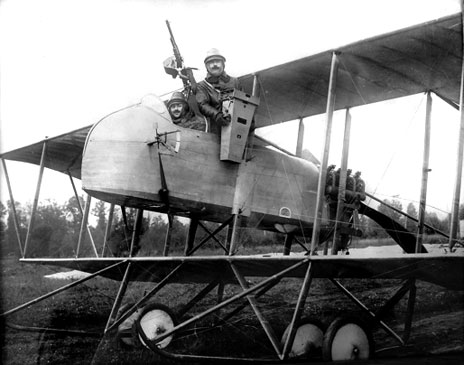
His younger brother Edgar Francis Wanklyn Cobbold (1895-1916) #378, who also went to Marlborough (a school which was founded to educate the sons of Clergy) was commissioned into the Cheshire Regiment in 1914 but transferred to the Royal Flying Corps in 1915, only a couple of years after its formation but before it became the Royal Air Force. He joined No. 16 Squadron which was based at an airfield in La Gorgue in France and which was flying very fragile pre-war planes. The history of No. 16 Squadron lists the loss of one of its aircraft on 12th January 1916 and this was certainly the date of Edgar’s death which probably occurred in a French Farman Shorthorn MF 11 aircraft.
The story of No. 16 and other squadrons using La Gorgue airfield is comprehensively told by Serge Comini in his book “Abbaye Notre-Dame de Beaupré-sur-la-Lys, des Hommes sur les Terres…et le chemin des Dames”, a copy of which is in the Trust library. The airfield was on the site of an abbey founded I 1221 and archeological work has revealed much history. We were pleased to learn recently that the relics of the abbey and the history of the WWI airfield are to be preserved officially in and by the township of La Georgue. Edgar is buried in the Cabaret-Rouge Military Cemetery.
The brothers are commemorated at Marlborough in their house and the Memorial Hall; in their father’s parishes of Earls Barton and Hitcham and at St. Nicholas, Salthouse, probably because this is where they took their summer holiday as children. Edgar is also commemorated on the RFC Memorial at the Army Museum of Flying at Middle Wallop in Hampshire. That Robert was a classical scholar probably explains the rather ‘larger than life’ dedication written by John Bain at Marlborough:
IN MEMORY OF CAPTAIN R H W COBBOLD AND LIEUT. E F W COBBOLD. KILLED IN ACTION
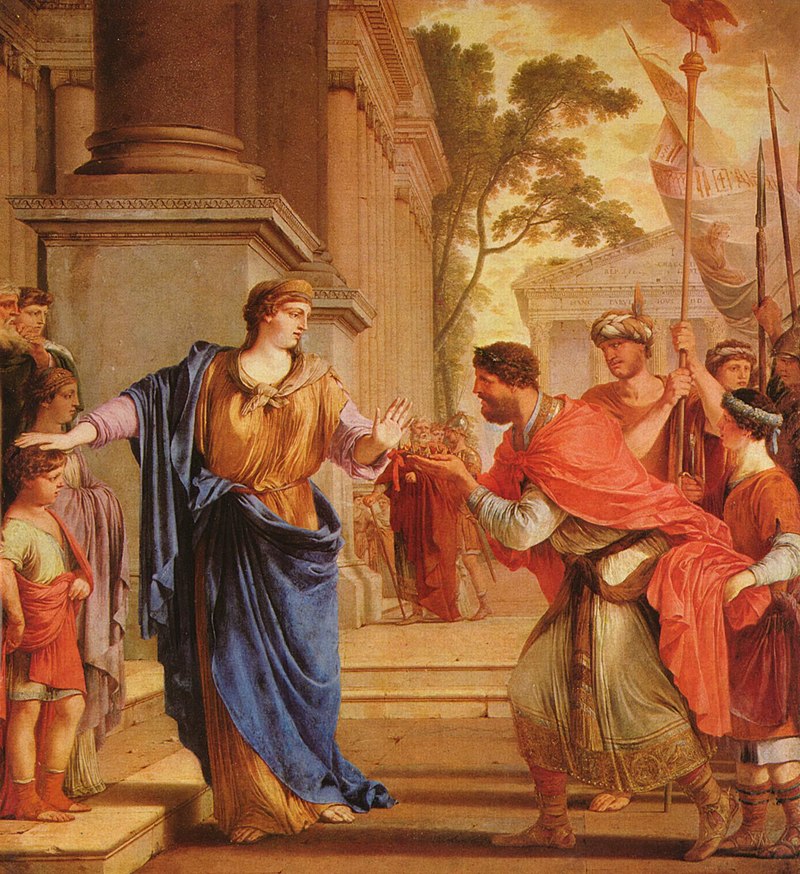
In ran the boys, as purred a jewelled dame, / (Long e’er these days of guns) / “Where be thy jewels?” Quick the answer came, / “Thou see’st them there, my sons.”
How fared thy jewels, Lady? “My sweet twain, / Tiberius and his brother, / Fought the good fight, and in the fray were slain – / Right proud am I, their mother.”
O English mother, be Cornelia’s pride / Thine, in thy stricken home! / For Freedom and for England thy sons died, / For Freedom hers and Rome.
For those who are struggling, as I did; Tiberius was Roman Emperor (42BC – 37AD). He expanded the Roman Empire into Germany. His brother was Nero Claudius Drusus (38BC – 9BC). Cornelia was mother to 12 children and after her husband died, she turned down the hand of King Ptolemy VIII to educate her boys
Anthony Cobbold.
Farman Shorthorn MF11 aircraft
Edgar
Eagles 1914. Robert middle row, left end
Robert
Cornelia turns down King Ptolemy VIII’s crown so as to educate her children