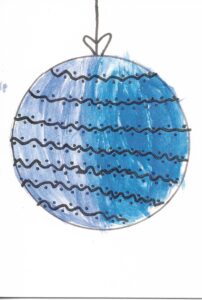
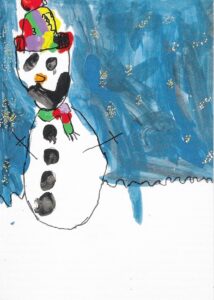
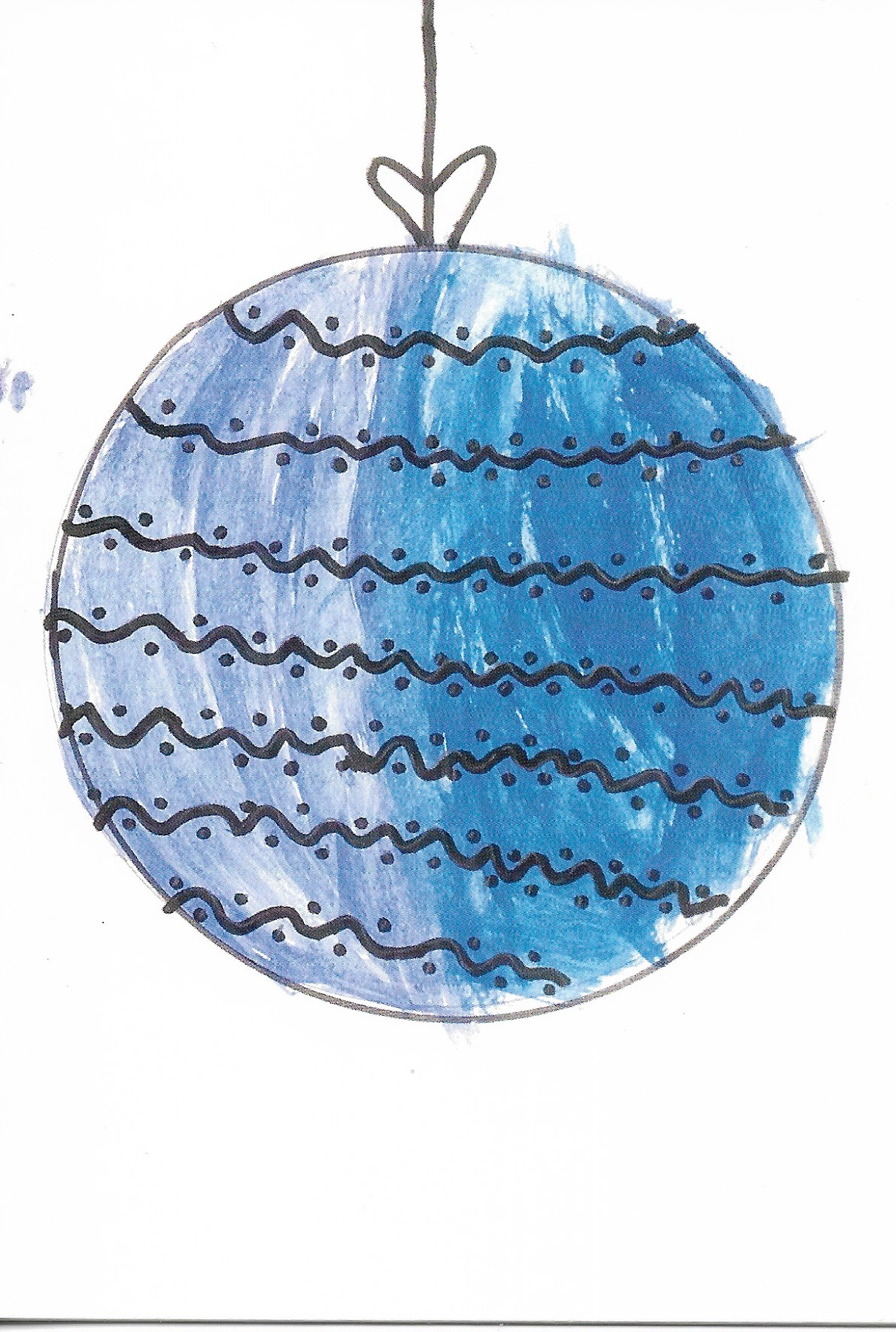
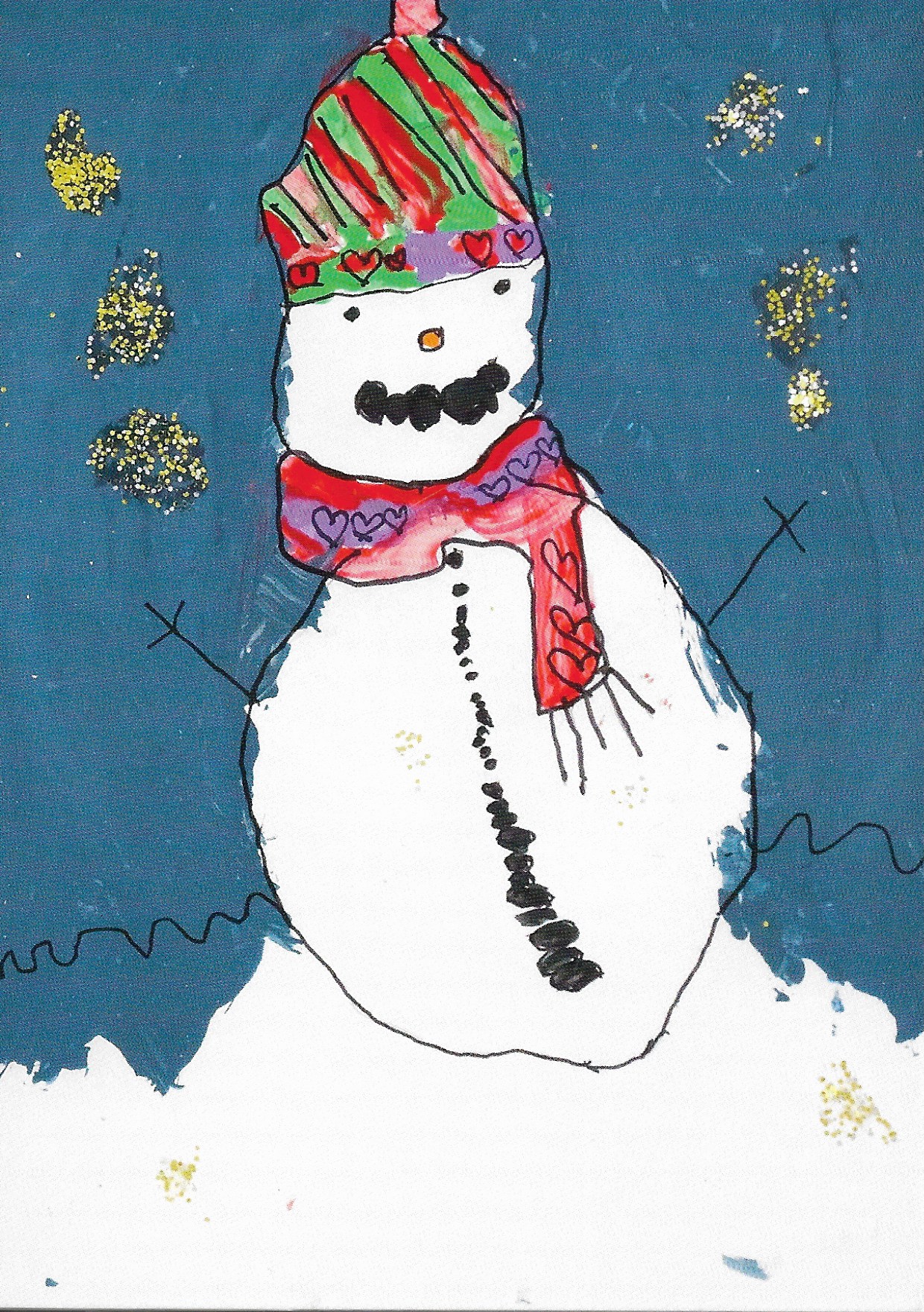
Last year I identified four cards which met the criteria for ‘most famous’, ‘most humorous’, most ‘unusual’ and most ‘poignant.’
Observing the galloping commercialisation of Christmas I was wondering what would catch my eye this year.
Suddenly my neighbour’s three children brought me their cards in which they had written beautiful greetings to supplement their own designs.
Etta-May, age 7
Full marks to the children for creativity, but just as importantly ten out of ten to Ugborough Primary School, set in a little Devon village south of Dartmoor, for getting them named and printed.
Seb (twin), age 5
I hope this early teaching and the children’s pride at the outcome will ensure the long-term survival of the Christmas card despite the internet.
Best wishes to all our website visitors from the Trustees, Keeper and everyone connected with the Cobbold Family History Trust. The archive will be closed from 2:50pm on Tuesday 16th December, re-opening on Tuesday 6th January 2026.
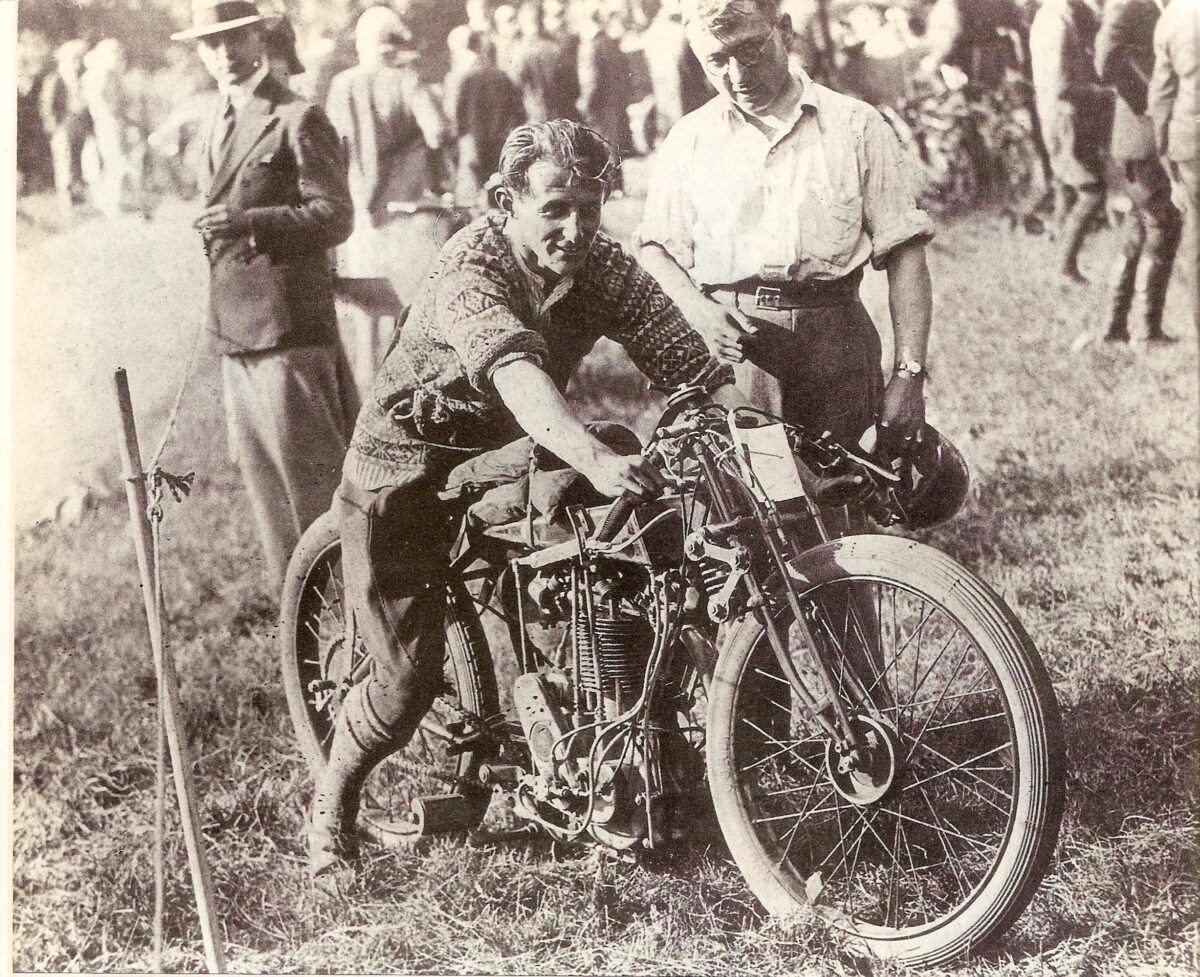
The recent purchase of a back number of the Brooklands Bulletin reminded us of the extraordinary achievements of motor cyclist Gordon Cobbold (1903-2004) #337 and taught us a few things we didn’t know.
In a nutshell Gordon set sixteen World Records at Brooklands on different bikes, and over a variety of distances, demonstrating his skill and versatility. His first win, in his first race at Brooklands in 1923, on a newly acquired SunbeamLongstroke demonstrated the superiority of that machine, though the success is attributed in part to its WEX carburettor developed by Harry Weslake. Harry had developed expertise in the science of gas flow and JohnMarston Ltd who built Sunbeam motorcycles were happy to let Gordon and Harry, who had become his race tuner, act as their test bench. They made a formidable team and Harry’s expertise was sought by Bentley, Brough and Jaguar.
Gordon on his bike, with Harry Weslake.
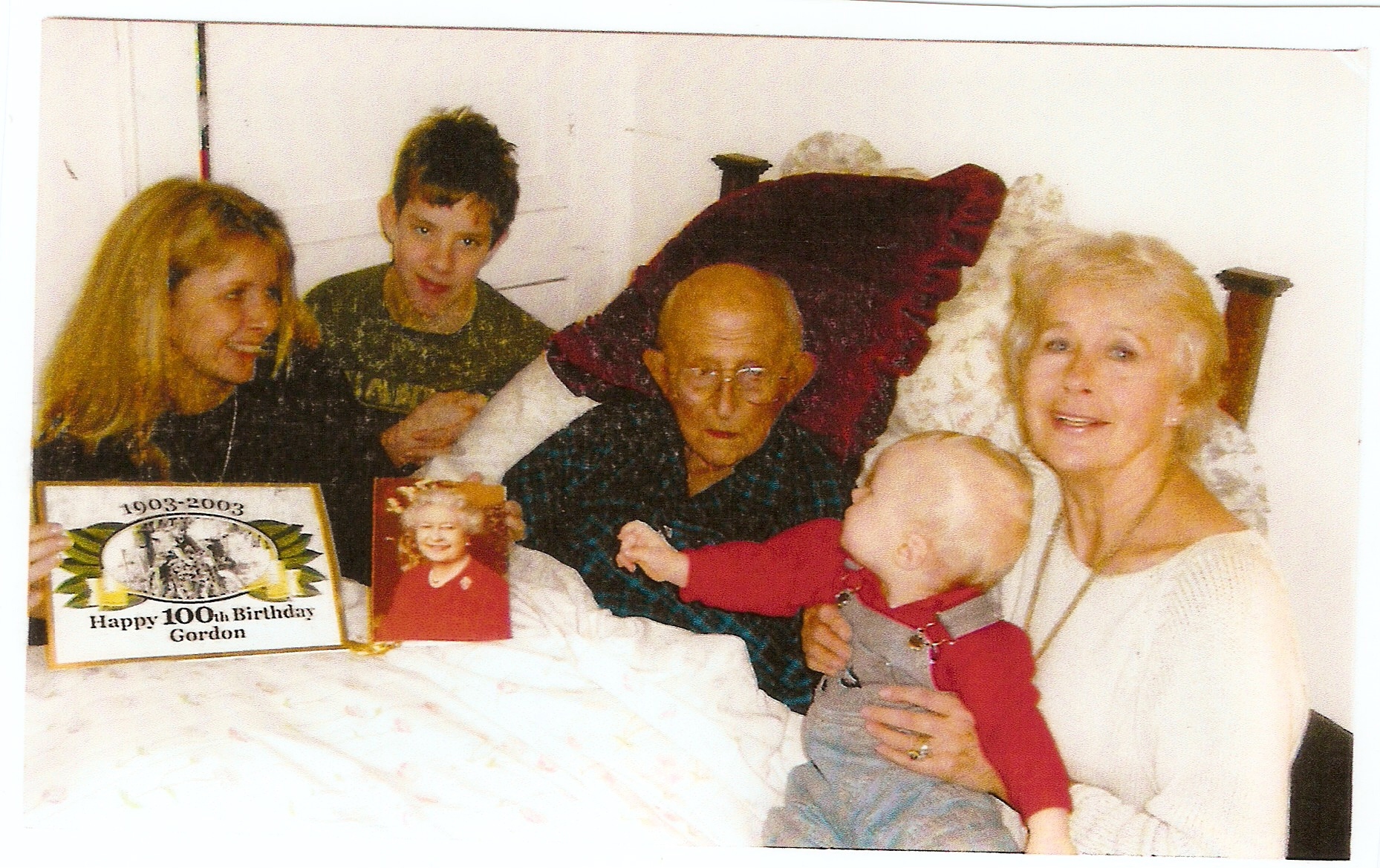
Gordon had to buy his first competition bike but Marstons soon supplied his engines which he and Harry developed. Between 1927 and 1929 he not only set 16 World Records but also lapped Brooklands at over 100mph for the first time ever. As Clive Hodges wrote in Cobbold & Kin ‘an average speed of 100mph was the measure that marked out the great from the good.’ That was not the only ton he cracked. On 30th December 2003 he celebrated his centenary, exactly as he had predicted to a friend on his 91st birthday.
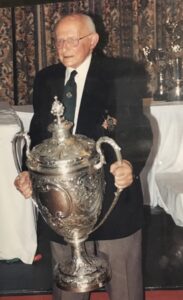
Gordon awarded a Brooklands Trophy.
Among his many adventures he survived catching fire during the Belgium Grand Prix; riding speedway bikes at Crystal Palace and in France where he got himself thrown out of the Folies Bergère and organising a Speedway Festival, again in France, ‘on a wing and a prayer.’ But he will be remembered most affectionately for his work, post war, in re-forming of the British Motorcycle Racing Club (BEMSEE) where he was an active and enthusiastic member becoming in 1993 the Club’s Life President.
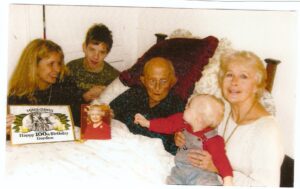
100th birthday, with his family.
Gordon well deserved his telegram from the Queen and died peacefully a few days after his 100th birthday.
It all began with a dinner party in Bristol, back in 1955. Anthony Cobbold (#539)’s father was celebrating his 50th birthday and decided to mark the occasion with a small family gathering. Alongside the roast and reminiscing was a clever touch: a family tree printed on the back of the menu. For 20-year-old Anthony, it was a revelation—something about seeing those relationships laid out visually lit a spark that, although dormant for a while, never quite went out.
As life marched on—career, marriage, mortgages, and children—the idea simmered quietly in the background. The occasional reference to Cobbold connections in banking, brewing, football, or even civic life in London helped keep that flame alive. When time finally allowed in the early 2000s, Anthony dove into family history with a storyteller’s passion and a visual learner’s eye. Anthony proudly identifies not as a traditional genealogist, but as a “family history storyteller.”
Anthony’s curiosity soon spilled beyond the Cobbold name. He began exploring the fascinating families they married into—names like Chevallier, Fiske, and others rich with history. His focus was less on tracing back to Adam and Eve and more on the Georgian and Victorian heyday when Brits were, quite literally, everywhere.
By 2004, he’d accumulated enough material to warrant preserving it properly. The Cobbold Family History Trust was born, with formal legal backing and a mission to ensure the legacy would outlive him. Anthony covered many of the running costs personally but has also raised money from Cobbold family members worldwide and has established a £40,000 endowment fund to secure its future.
In 2011, the Trust became a registered charity (No. 1144757), unlocking Gift Aid and a responsibility to demonstrate a public benefit. The website is free and open, exhibits have begun, and publications are appearing in print. By telling the stories of individual family members, who worked in trade, academia, the church, sport and the arts, the trust provides a fascinating five hundred years of social history.
The Trust is now housed at Knebworth House where Henry Lytton Cobbold is taking a keen interest in promoting the family tree as an excellent case study of how a documented family tree contributes meaningfully to public education and social history.
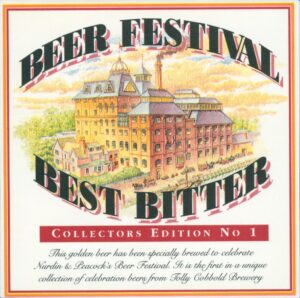
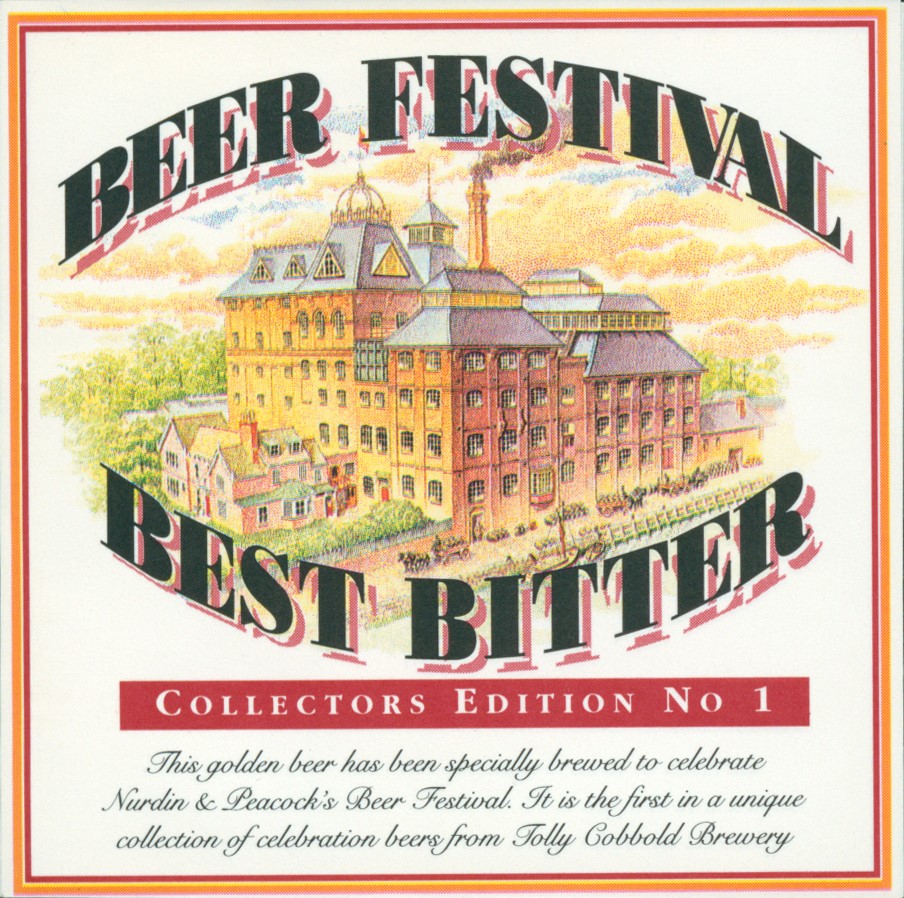
The Cobbolds were a prominent family in Suffolk heavily involved in local industries, especially the Cobbold Brewery, founded in 1723. The family tree helps trace the economic and civic development of the region through business, philanthropy, politics and cultural life. Students can learn how family fortunes rose alongside regional industrialisation.
Tolly Cobbold beer label, featuring the Cliff Brewery in Ipswich.
The family includes brewers, landowners, politicians, authors, scientists and artists, showing the diversity of roles across generations. The tree reflects changes in gender roles, education and class structures over more than 300 years.
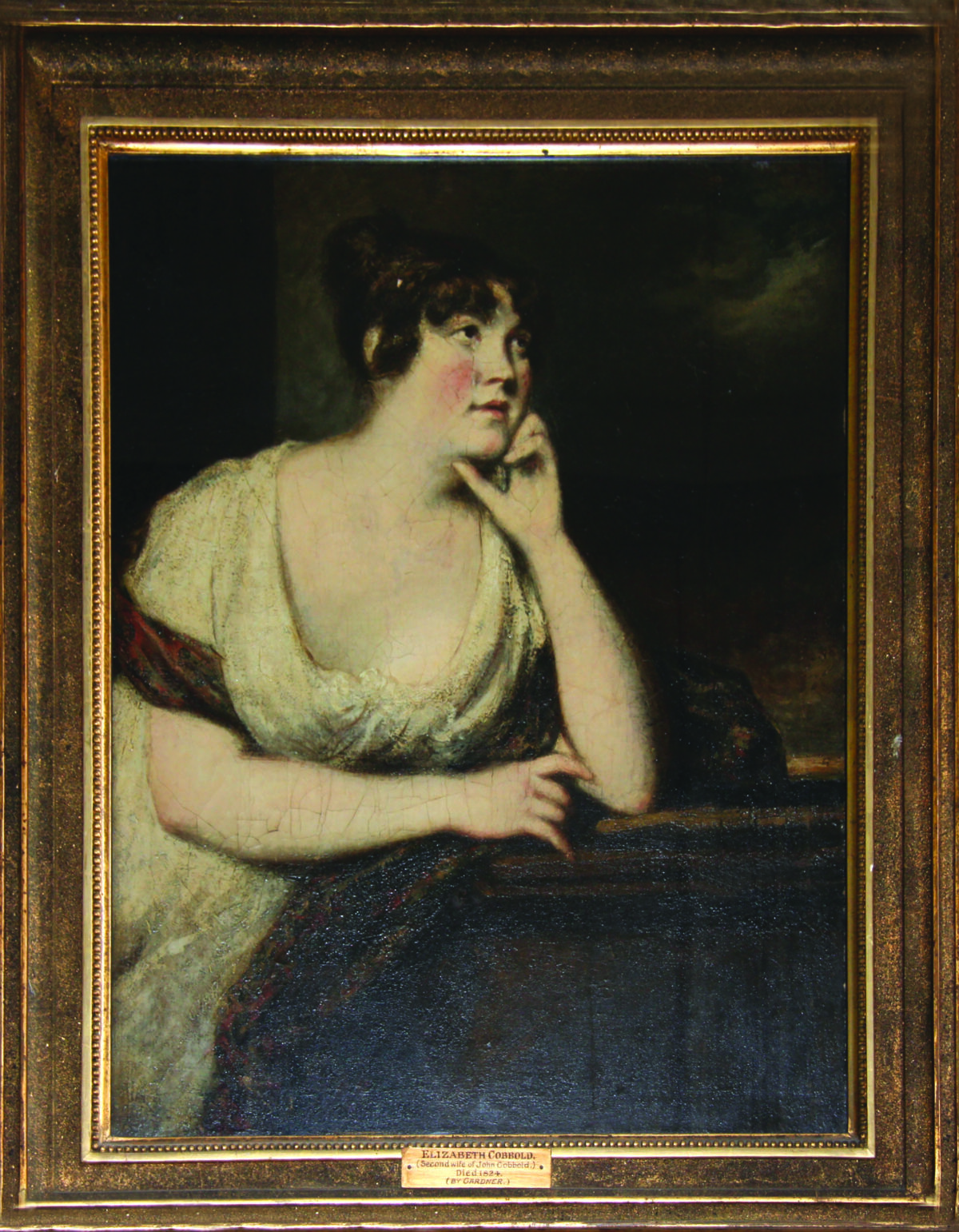
Elizabeth Cobbold
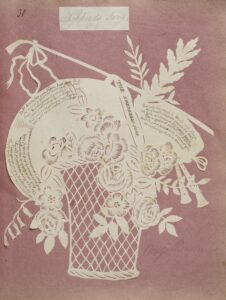
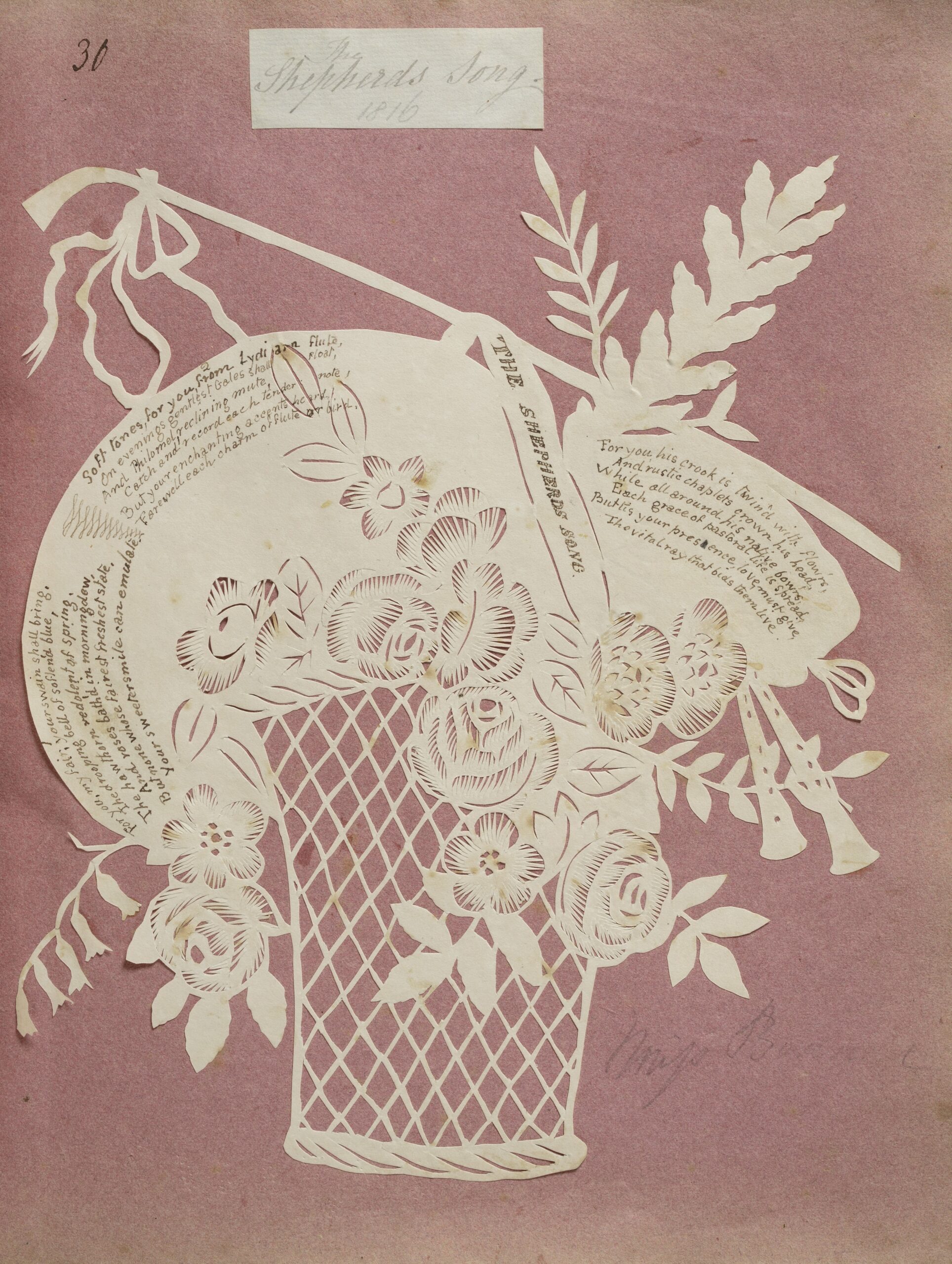
For example, Elizabeth Cobbold (1767–1824, #58) a poet and philanthropist provides insight into the lives of educated woman in the Georgian era. One of the Trust’s crown jewels is its collection of paper-cut Valentines by Elizabeth. An album of these delicate treasures was donated by Elizabeth Jauncey and the Trust now holds the world’s largest and finest collection of these charming tokens.
Paper cut by Elizabeth Cobbold
Family trees humanize the past by connecting names, dates, and places to real people with stories, relationships and struggles. They show how individuals and families were affected by major events, such as wars and social reforms. Extensive and well documented family trees, such as the Cobbold Tree, can illustrate how people from different regions, countries, and economic and cultural backgrounds are socially and genetically connected. They can reveal patterns of education and mobility and how individuals and families contributed to the development of industries, communities and institutions over generations.
Family trees support multidisciplinary research related to demography, genetics, migration, sociology economics and anthropology and help to democratise history.
As the Trust evolves, Anthony sees it not only as a dispenser of family history, but a preserver of it, with the Trust offering to be the final home for those bits and pieces of family memorabilia that otherwise risk ending up in landfill after a loved one passes. “The tree is the body,” Anthony says, “but the biographies are the soul.”
The Cobbold Family History Trust aims to be more than just a database of dates and names. It is a treasure chest of tales about a family from Suffolk whose descendants have forged links with other families around the world, providing a living, breathing archive of stories, triumphs, travels and romances.
Let’s keep the stories alive.
Poster offering a reward for the capture of Margaret Catchpole..
Elizabeth Cobbold
Paper cut by Elizabeth Cobbold.
Tolly Cobbold beer label featuring the Cliff Brewery in Ipswich.
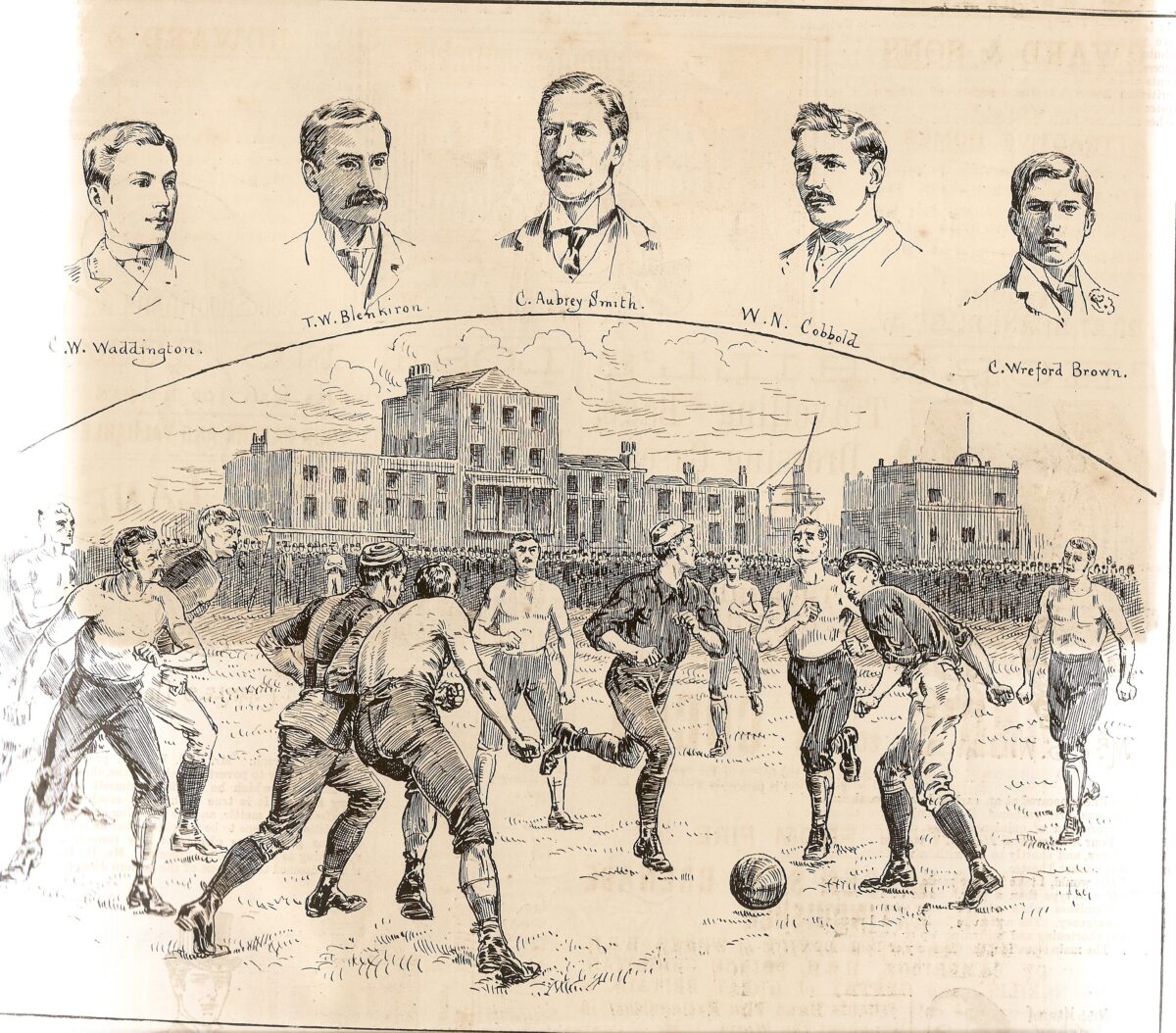
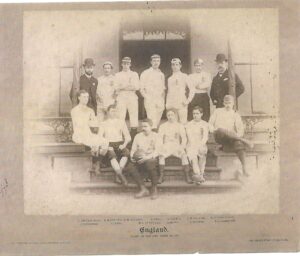
Old Carthusians v Preston North End, 12th March 1887
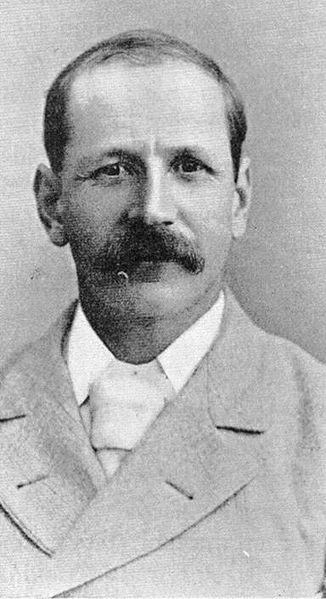
One of the most colourful characters in our family tree is William Nevill “Nuts” Cobbold (1862–1922), #289 on the web family tree—a man remembered not just for his unforgettable nickname, but for his dazzling skills on the football pitch. According to legendary sportsman C.B. Fry, the nickname “Nuts” may have come from Cobbold being “all kernel and extremely hard to crack”—a true compliment to his toughness and grit.
William Nevill Cobbold
Born in Suffolk, Cobbold first honed his football skills at Charterhouse, a school known for shaping early stars of the beautiful game. He went on to play for Long Melford before heading to Jesus College, Cambridge, where between 1884 and 1888, he became a true sporting icon. During his university career, he made 46 appearances, scored 40 goals, and captained the Light Blues in both the 1885 and 1886 seasons.
His international debut came in 1883, when England defeated Ireland 7–0. Cobbold scored twice in just three minutes. Over his career, he earned nine caps for England, winning five of those matches. Described by those who saw him play as “the finest dribbler ever seen,” Cobbold was short and powerfully built, with strong legs and hips—ideal traits for the style of football played in his day.
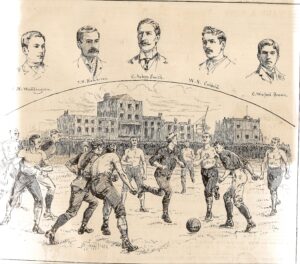
England v Scotland, 21st March 1885 at The Oval, drawn 1-1
At the time, football was a game of dribblers rather than passers, and Cobbold was a master of the art. Once the ball was at his feet, it seemed glued there, as he weaved his way past opponents. He was fast, agile, and fearless in front of goal, known for his stunning accuracy and power. A staunch traditionalist, Cobbold never once headed the ball—he considered it a distasteful trend that had no place in the game he loved.
Beyond Cambridge, he also played 16 times for the Old Carthusians and 46 times for the famed amateur club Corinthians, whose values of sportsmanship, amateurism, and fair play helped shape the spirit of modern football.
Old Carthusians v Preston North End, 12th March 1887
Later in life, Cobbold ran a “crammer” school to prepare young men for Army officer commissions. Physical fitness and sport were core to his teaching, but he struggled deeply with the knowledge that many of his students were heading to the trenches of World War I. A Rustat Scholar with a love for the classics, he found comfort in writing verse—often humorous, sometimes touching, and sometimes, by his own admission, “little better than doggerel”—in both English and Latin.
William Nevill “Nuts” Cobbold lived a life of sporting excellence, intellectual curiosity, and deep humanity. In the proud annals of our family’s history, he remains a shining example of character, courage, and charm—a true “Prince of Dribblers.”
England v Scotland, 21st March 1885 at The Oval, drawn 1-1
William Nevill Cobbold
Old Carthusians v Preston North End, 12th March 1887
This playful rhyme fits remarkably well when we look back at three extraordinary men on the family tree —each a key figure in his own field, and each leaving a legacy.
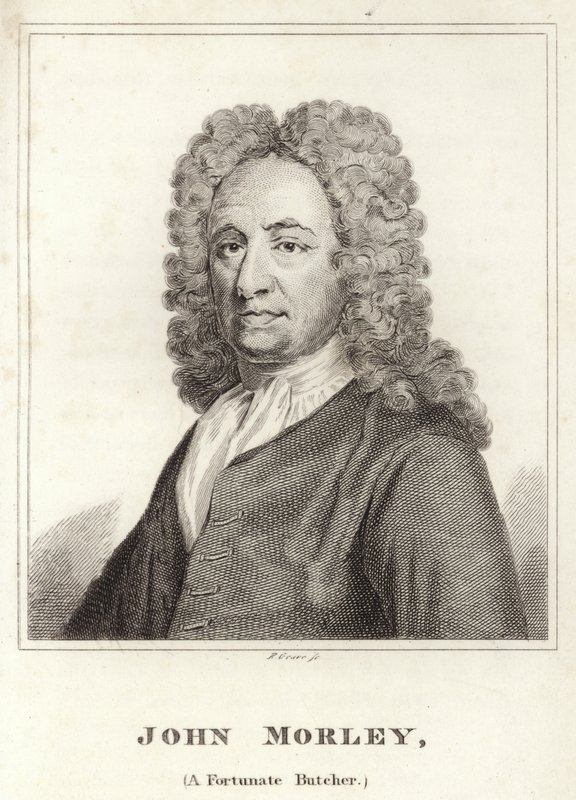
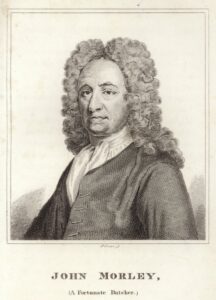
The Butcher: John Morley (1656–1732) – #15088
John Morley (1656-1732)
John Morley may have started out as a humble butcher in Halstead, East Anglia, but he quickly earned a reputation for much more. Known locally for ceremonially killing a pig in Halstead market each year—a tradition that earned him a groat—John’s ambitions didn’t end with meat. Through savvy land deals and mercantile work, he became known as Merchant Morley.
Most notably, he acted on behalf of the powerful Harley family, reportedly brokering the marriage between Edward Harley (later the 2nd Earl of Oxford) and Lady Henrietta Cavendish-Holles, heiress to the 4th Duke of Newcastle. His commission? A staggering £10,000—a small fortune in its day.
Not everyone was impressed. Jonathan Swift, the famed satirist, wrote disparagingly in 1738: “I remember a rascally butcher, one Morley, a great land jobber and knave…” Whatever Swift thought, Morley’s success speaks for itself.
His legacy continued through his daughter Anna, who married Reverend Thomas Fiske, ancestor to Harriet Temple Chevallier. And that takes us to the next key figure…
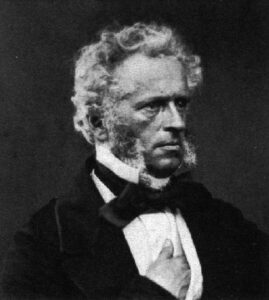
The Banker: John Wilkinson Cobbold (1774–1860) – #77
John Wilkinson Cobbold (1774-1860)
John Wilkinson Cobbold married into the Chevallier family, known for their Norman roots and cyder-making expertise. Following the death of his father, “Big John” Cobbold, he and his wife dove into expanding the family’s business empire.
In 1839, John Wilkinson helped found the Harwich Bank of Cox, Cobbold & Co, making him the first Cobbold banker. The bank flourished and stayed in family hands for 65 years, with successive generations continuing the tradition of enterprise and civic involvement
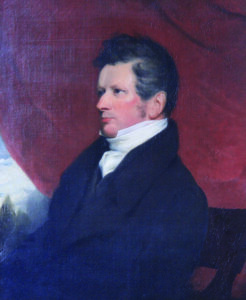
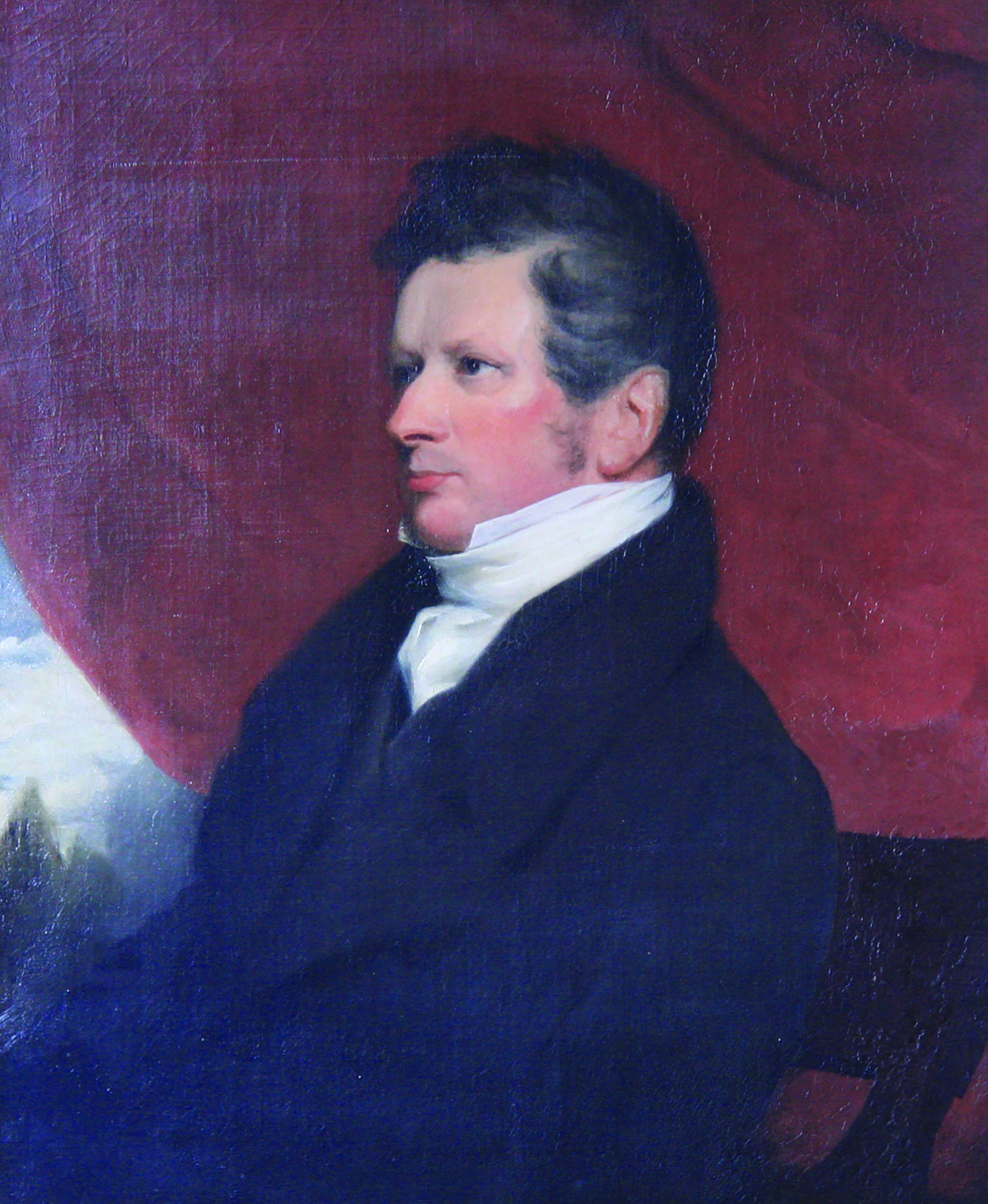
The Wet-Dock Maker: John Chevallier Cobbold (1797–1882) – #114
John Chevallier Cobbold (1797-1882)
Son of the banker, John Chevallier Cobbold was a true Victorian dynamo. With energy to spare and vision to match, he wore many hats: MP for Ipswich (1847–1868), Justice of the Peace, Mayor of Ipswich (1841), and Deputy Lieutenant of Suffolk.
He played a key role in bringing the railway to Ipswich as Chairman of the Eastern Union Railway and helped transform Felixstowe into a seaside retreat. But his most enduring achievement? Spearheading the development of the Ipswich Wet Dock. Today, the Waterfront remains one of the town’s most prized assets—a testament to his foresight and dedication.
So there you have it—three men, three remarkable stories:
John Morley, the ambitious butcher-turned-land-agent
John Wilkinson Cobbold, the enterprising banker
John Chevallier Cobbold, the visionary wet-dock maker
Our Trust’s contribution, representing that of the family, to this exhibition is enormous. Not only have we loaned Richard Cobbold’s 32 original watercolours, painted to illustrate his book, and a couple of other items, but we are also providing the speaker for what in effect is the keynote speech on the heroine, taking place this Friday (21st November). His talk will be illustrated by some 60 pictures from the Trust’s archive.
Robert Knipe Cobbold (1792-1859) #100 on the web family tree, donated the 2 Botany Bay Pheasants sent to Elizabeth Cobbold by Margaret, to the Ipswich Museum (only one survived) but, perhaps most important of all, Margaret’s letters home were donated to the State Library in New South Wales by Augustus Hills Cobbold (1854-1931) #281 in 1922.
So, this is the second time those letters have been welcomed to Suffolk!
John Simpson, internationally renowned reporter from war zones, said, after his 25-year-old Iraqi translator was shot by friendly fire, ‘The only duty I can perform is not to forget.’
It is not much to ask that on one day a year we re-dedicate ourselves to ‘not forgetting’ those who gave us our freedom.
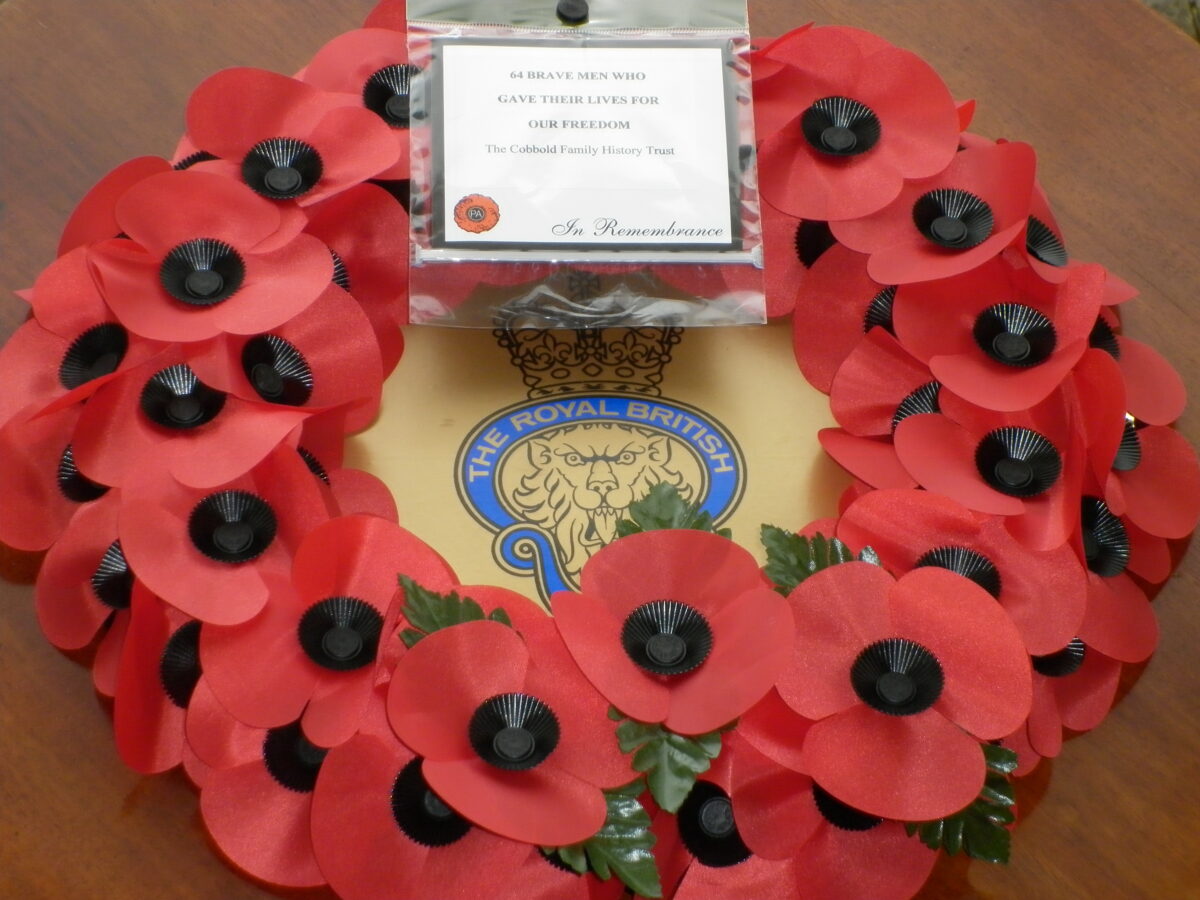
In 2013, as part of the commemoration of the start of World War I, I travelled to Ypres to lay a wreath at the Menin Gate to remember 35 Cobbolds who died in World War I, 13 Cobbolds who died in World War II and 16 men from Framlingham who had accidentally been omitted from their war memorial.
The Menin GateThe 2013 Wreath
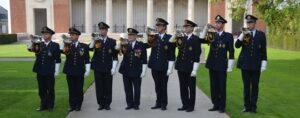
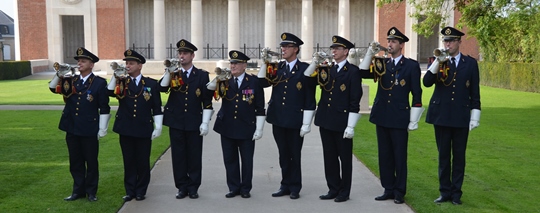
With wreaths from nations around the world and the arresting call of the 8 buglers, it was a profoundly moving ceremony and one I would not have missed ‘for the world.’
The Eight Buglers
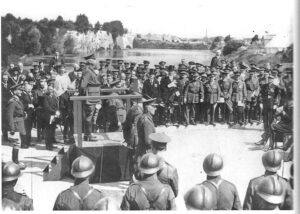
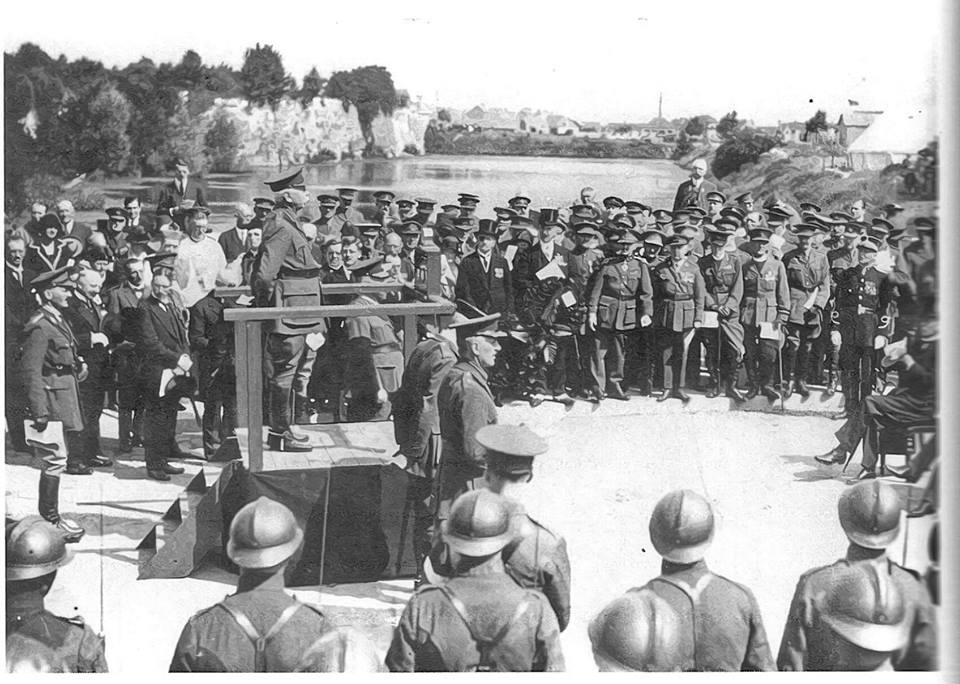
The annual ceremony in Ypres has particular importance to family and friends of The Cobbold Family History Trust because the Menin Gate was inaugurated on 24th July 1927 by Field Marshal Lord Plumer (#2546 on our tree) with the now famous words ‘He is not missing. He is here.’ The Menin Gate commemorates all those who have no known grave.
He is not missing. He is here.
The only duty we can perform is not to forget them.
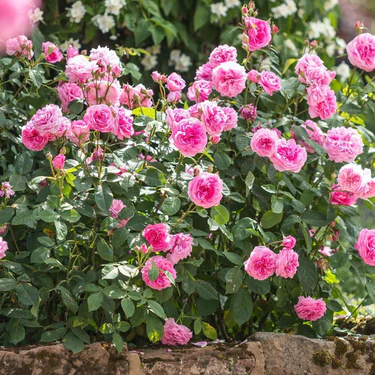
Gertrude Jekyll: the world's favourite flower in 2025
In Greek mythology roses are closely linked with Adonis, the lover of Aphrodite. One day Adonis was gored by a wild boar while hunting. Aphrodite wept as his blood stained a nearby white rose, a deep crimson. Hence red roses gained their unassailable position as symbols of carnal affection, which they retain to this day.
However, the world’s favourite rose in 2025 is not red. According to the Royal Horticultural Society it is shocking pink. Rosa Gertrude Jekyll, a shrub rose bred by David Austin in 1986, is a non-fussy rose which will flower well in almost any garden. It is not confined to the boarder and can be planted in a good-sized pot as a shrub or a climber. But its tolerance is not its position-winning asset; it is supremely fragrant.
Gertrude Jekyll: the world’s favourite flower in 2025
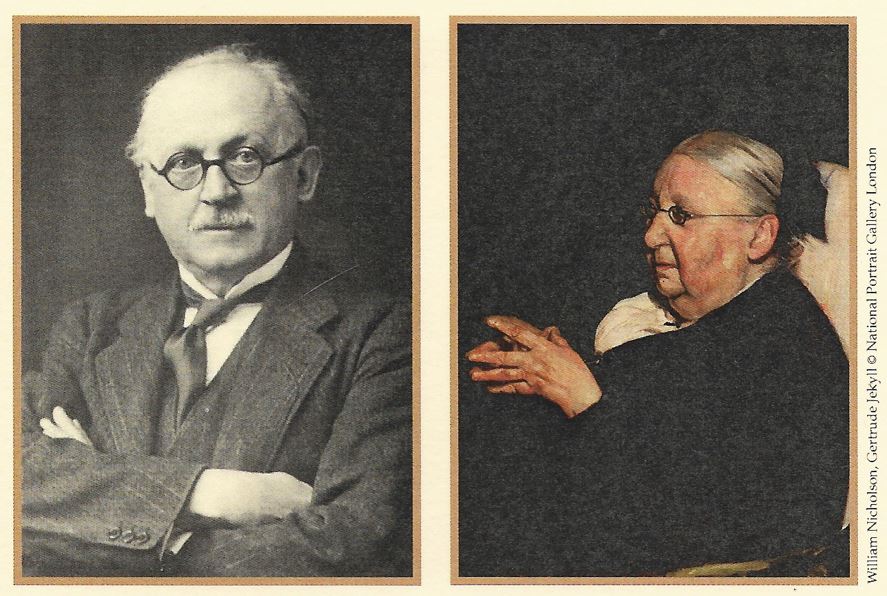
Named after Gertrude Jekyll (1843-1932) #4566 on the web family tree, it reflects on an activity which was not her first choice. In her teens Gertrude enrolled at the Kensington School of Art, a bold step for a young lady in mid Victorian times, but she had influential friends in artistic circles amongst which were Ruskin, G. F. Watts, and William Morris. She travelled widely in Europe, but sadly the deterioration of her eyesight compelled her to abandon her two favourite occupations of painting and embroidery.
She had always loved flowers and friendship with gardening neighbours encouraged her interest. She was soon writing articles for the gardening press and a chance meeting with a young architect, Edwin Lutyens (1869-1944) #3176 led the pair to a most prolific contribution to the English country garden. She brought an artist’s eye to garden design and made fashionable many long disdained species, particularly fragrant ones, from cottage gardens.
Lutyens and Jekyll as they appeared on a Trust greetings card
How appropriate that her name should be chosen, years later, for a robust and generously fragrant rose!
Anthony Cobbold
Gertrude Jekyll: the world’s favourite flower in 2025
Lutyens and Jekyll as they appeared on a Trust greetings card
The founder of the Trust and one of its Trustees, Anthony Cobbold, will be giving a talk about ‘The Story of Margaret Catchpole’ on Friday 21st November at 10am at The Hold in Ipswich, the home of Suffolk Archives, as part of their exhibition: Behind Bars – Suffolk’s Criminal Past.
The Cobbold Family History Trust’s three trustees plan to be at the talk, and all would be very welcome to attend. Tickets are available from the Suffolk Archives website.