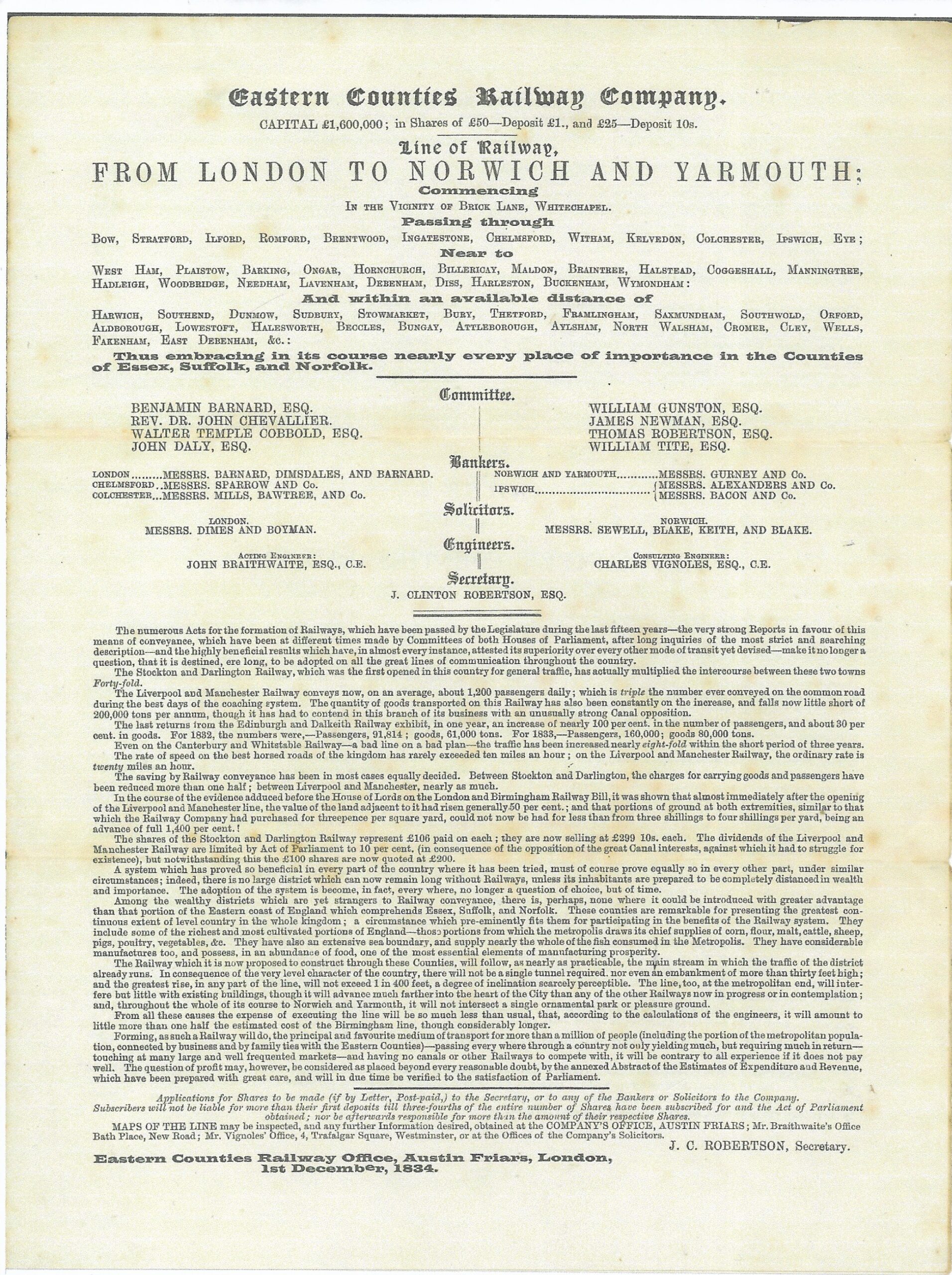
Last year saw the 200th anniversary of the railways in Britain. It was also the year in which the Trust acquired a copy of the 1834 Prospectus of the Eastern Counties Railway Company.
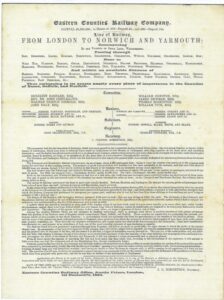
The document, written in intensively persuasive terms, sought to raise £1.6m for a rail route from ‘Brick Lane, within less than a mile of the Royal Exchange – being the only one of the Great Railways which will advance into the heart of the Metropolis……crossing the river Yare near Trowse…into Norwich.’
Chelmsford, Colchester, Ipswich, and Eye were all on the route ‘thus embracing in its course nearly every place of importance in the counties of Essex, Suffolk, and Norfolk.’
The promoting committee included Walter Temple Cobbold (1801-1850) #118 and that extraordinary master of all activities, Rev. Dr. John Chevallier (1774-1846) #729, first a medical doctor, then a cleric and finally a pioneering agriculturist best known for propagating and commercializing Chevallier Barley, a two-row malting variety that revolutionized British brewing in the 19th century by becoming the dominant crop for ale production world-wide for over 50 years.

Potential investors were encouraged by being advised that ‘The Stockton and Darlington Railway, which was the first opened in this country for general traffic, has actually multiplied the intercourse between these two towns FORTY-FOLD. The Liverpool and Manchester Railway conveys now on an average, about 1,200 passengers daily, which is TRIPLE the number ever conveyed on the common road during the best days of the coaching system.
‘The shares of the Stockton and Darlington Railway represent £106 paid on each; they are now selling at £299 10s each. Among the wealthy districts which are yet strangers to Railway conveyance, there is, perhaps none where it could be introduced with greater advantage than that portion of the Eastern Coast of England which comprehends Essex, Suffolk, and Norfolk.’
The Abstract of Estimates advises investors that if only two-thirds of present traffic was won (from canals) a dividend of 18% would be earned. However, if the increase in traffic matched that of the Stockton and Darlington Railway, investors should expect 20%.
Messrs Gurney & Co were the bankers in Norwich, Yarmouth, Diss, Harlestone, and Framlingham (see John Gurney (1749-1809) #7269) and John Chevallier Cobbold (1797-1882) #114 was the Agent in Ipswich.
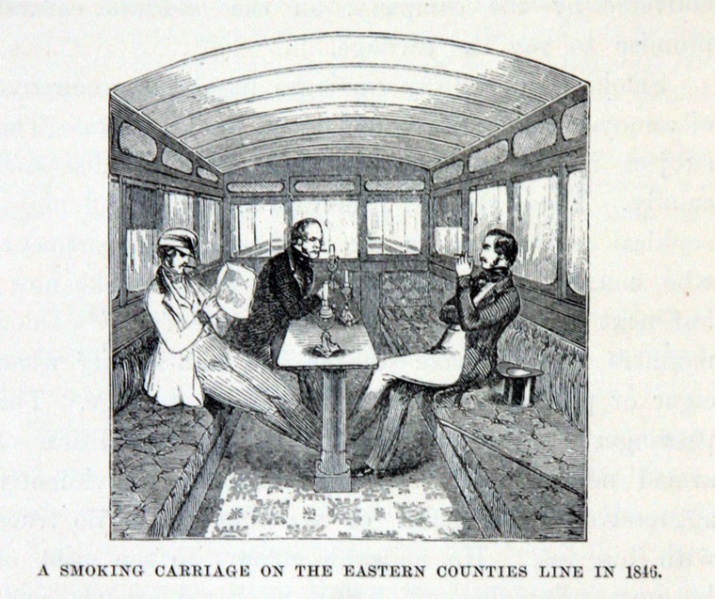
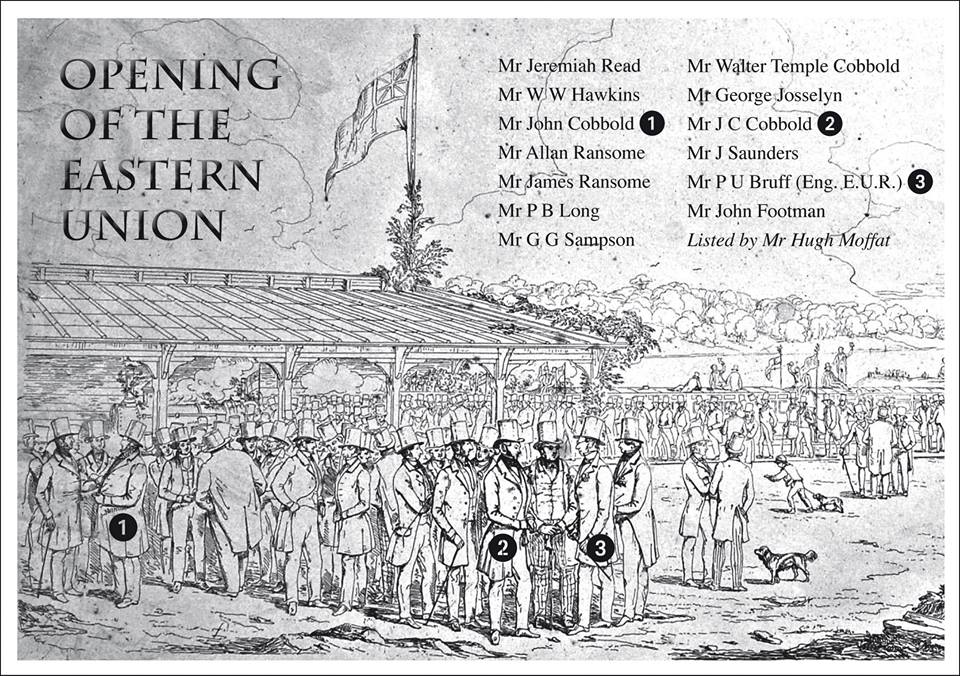
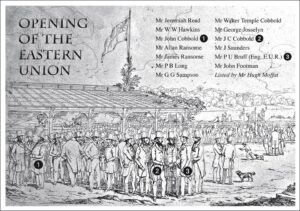
The company was sanctioned in 1836 and started carrying traffic on 20th June 1839 on a gauge of 5 ft, completing the line between Shoreditch and Brentwood the following year with a lavish opening party. By 1843 it had reached Chelmsford, and in 1844 it adopted the now universal gauge of 4 ft 8.5 in, being granted an extension to Cambridge in 1845. All was not well, however, and that year ‘railway king’ George Hudson (1800-1871) was appointed Chairman to restore integrity. 1846 saw the Eastern Union Railway (of which John Chevallier Cobbold was the principal protagonist) complete its line between Colchester and Norwich, bringing the railway to Ipswich on 15th June.
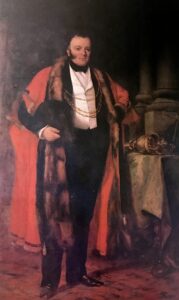
Meanwhile George Hudson, who had inherited handsomely and made himself even richer on the North Midland Railway, was found to have further enriched himself at the expense of the company, for which he was rightly fired. The three-times Lord Mayor of York was imprisoned in the castle and died there a broken man.
In 1853 the Eastern Counties Railway took over the Eastern Union and just 10 years later found itself incorporated into the Great Eastern Railway.
Even then the family’s interest was not over. Following the departure of Chairman David Waddington (who had been Hudson’s deputy) and Horatio Love the seat fell to James Goodson MP (1818 – 1895) whose deputy was Col. Henry Jervis-White-Jervis RA MP (1825-1881) #183, who had married John Chevallier Cobbold’s daughter, Lucy (1828-1916) #182.
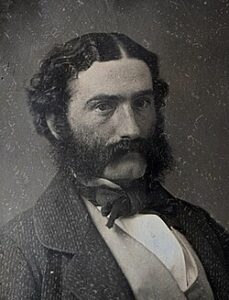
In 1865, Col. Jervis-White-Jervis expressed concern about the management of the company. At a board meeting, from which he was absent, he was replaced. The investigating committee found that his concerns, which included borrowing more money than was authorised, were wholly justified and the board was replaced, largely by members of the investigating committee! The company was overhauled and one of the measures introduced was the conversion of its London terminus at Shoreditch into a coal depot and the construction of a brand new station in 1874, Liverpool Street.
Anthony Cobbold