That £20,000 Legacy Aug 2022
The majority of family members probably know that Felix Thornley Cobbold (1841-1909) #201 gave Christchurch Mansion to the people of Ipswich in 1895. He required that it be used as an art gallery. The grateful inhabitants made him Mayor of Ipswich in Queen Victoria’s Jubilee year, 1897, although strictly he didn’t qualify, and commissioned his portrait by the Hon. John Collier which hangs in the mansion to this day. Some will know that in his will of 1909 he left £20,000 for the purchase of works of art; the best part of £2½ million in today’s money. Few will appreciate the enormous benefit conferred by that legacy.
When family and friends gathered in 2009 to mark his centenary the Ipswich Museum Service laid on a trail around the mansion which identified 100 works of art that had been acquired, wholly or in part with funds from the Felix Cobbold Bequest. In May this year an exhibition opened, at Christchurch Mansion of course, expertly curated by Emma Roodhouse, titled Creating Constable, which reveals that no less than fourteen works by Constable have entered the collection between 1909 and 2020 with the assistance of this funding. The exhibition is open until 25th September so if you want to see it – hurry!
But that is not the end of the story because Emma Roodhouse and Caleb Howgego’s book which accompanies the exhibition describes how local families like the Kilderbees and the Cobbolds, and of course George Frost (1744-1821) and their involvement in the artistic and scientific community helped Constable gain recognition.
Elizabeth Cobbold (1765-1824) #58 neé Knipe published her first creative work Poems on various Subjects in Manchester at the age of eighteen. By the age of twenty-two she had published her second volume of poetry, Six Narrative Poems (1787) dedicated to Sir Joshua Reynolds (1723-1792). In 1790 Elizabeth married William Clarke (1730-1791) #2712, comptroller of customs and bailiff of Ipswich but the marriage was short lived as William died the following year, leaving his widow in a strong financial position. Young, wealthy and unattached, Elizabeth soon received a proposal from the equally rich and recently widowed ‘Big’ John Cobbold (1746-1835) #56 whom she married in 1791 taking on the care of his fourteen children. That same year she produced her third publication, a novel entitled The Sword or Father Bertrand’s History of his Own Time (1791)
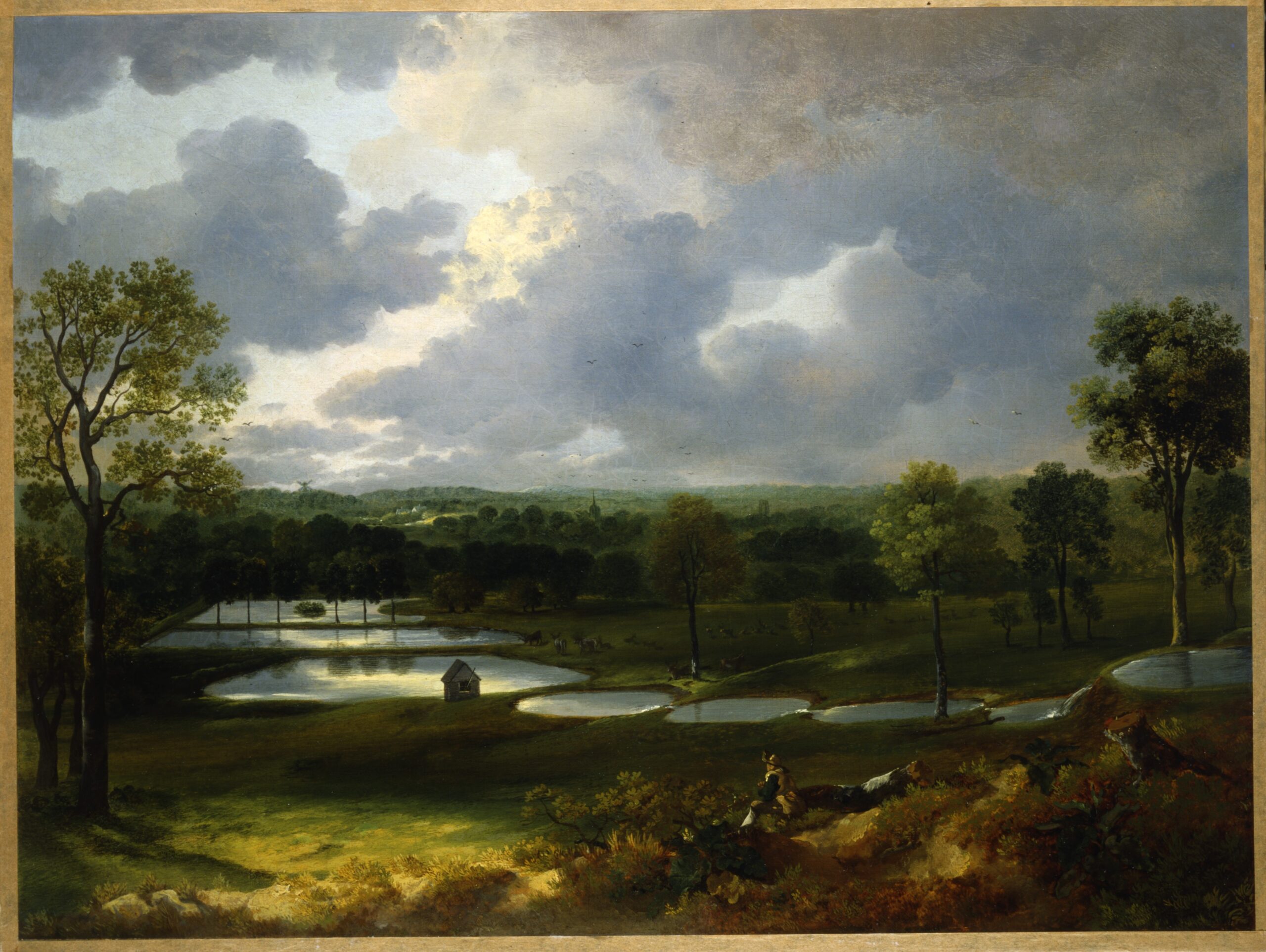
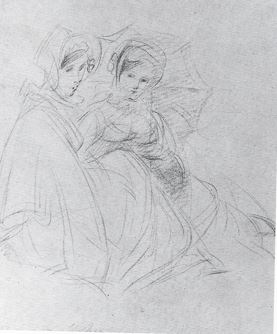
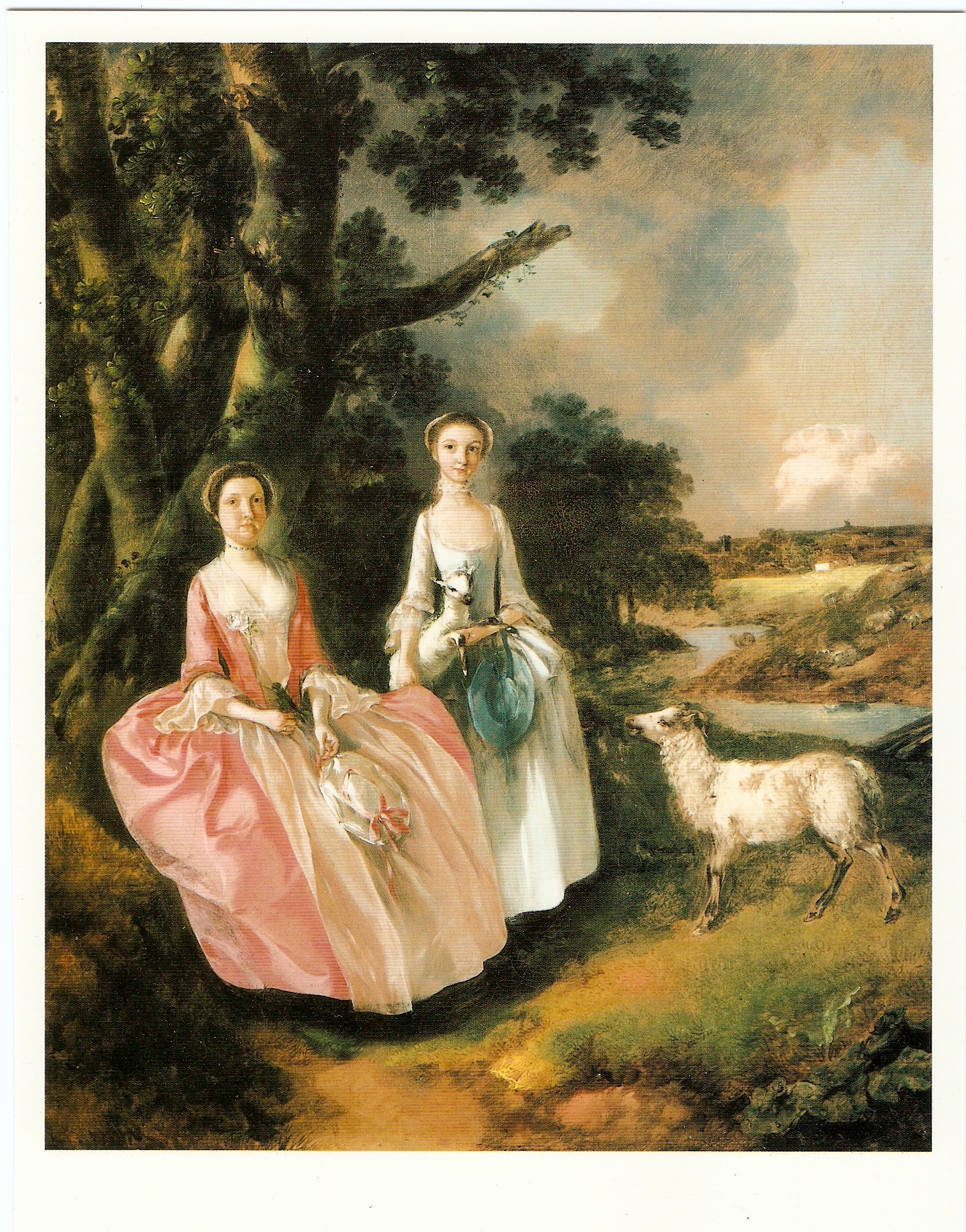
Her new husband supported Elizabeth’s interests in the sciences and particularly the arts. His family had already commissioned two works from Thomas Gainsborough (1727-1788), Mrs Mary Cobbold with her daughter Anne and Holywells Park and Elizabeth’s family were friendly with Daniel Gardner (1750-1805) and probably Joshua Reynolds. John Constable (1776-1837) had been born in East Bergholt in Suffolk and returned there frequently after he had established himself in London. He is known to have stayed with the Cobbolds in 1799 and to have maintained contact until around 1804 or 1806 when he sketched Elizabeth’s step daughters Harriet (1785-1877) #91 and Sophia (1787-1832) #96. Some of these sketches are in private hands but others are at Le Louvre and the British Museum. His last visit is recorded in 1821 after Elizabeth had experienced a nasty fall. Even the year after his father’s death John’s son John Charles Constable (1817-1841) visited his father’s friends, the Cobbolds in Ipswich.
It seems poignantly appropriate that some of the profits made from the people of Ipswich should be returned to them, with interest.