THOMAS CLARKSON Slave Trade Abolitionist Aug. 2022
The Reverend John Clarkson (1710-1764) #12444 was the Headmaster of Wisbech Grammar School in Cambridgeshire. He had 2 sons, Thomas and John.
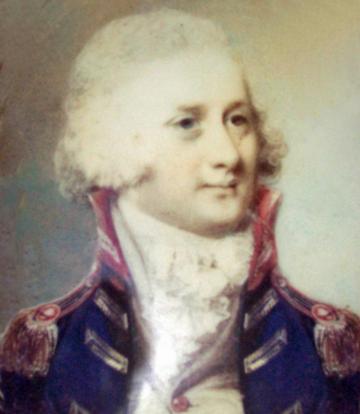
Lt. John Clarkson RN (1764-1828) #5605 saw service in the West Indies where he experienced at first hand the brutality of the slave trade. In 1791 he was engaged to organise a fleet to take freed slaves from Nova Scotia to Sierra Leone where he later became Governor. Towards the end of his life, he settled in Woodbridge where a blue plaque in Church Street commemorates him. He married Susannah Lee (1764-1832) #5604, daughter of Hannah Thornley (1735-1773) whose maiden name was later chosen for Felix Cobbold #201.
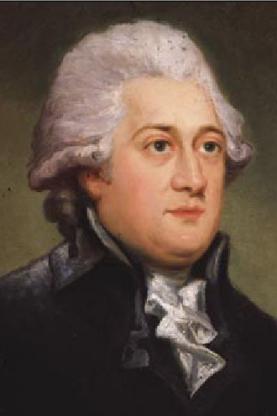
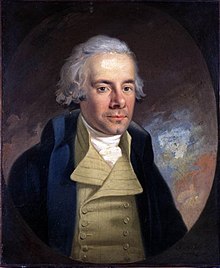
Thomas Clarkson (1760-1846) #12445 attended his father’s school before going on to St. Paul’s in London. Whilst up at St. John’s College, Cambridge he wrote a prize-winning essay “Is it right to make slaves of others against their will?” This proved to be a turning point in his life culminating in him changing the abolition campaign into one of the major issues of the day. Working with William Wilberforce (1759-1833) who became their political leader and Granville Sharp (1735-1813) they succeeded in securing the passage of the Slave Trade Act in 1807 which banned slavery in Britain and the Slavery Abolition Act in 1833 that banned slavery in most of the British Empire.
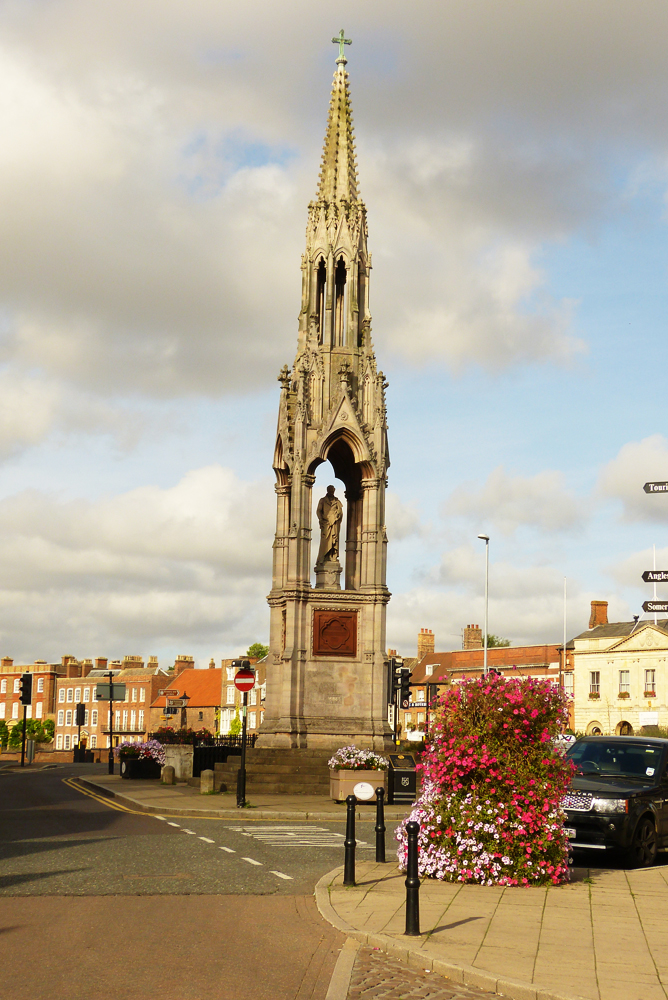
The Clarkson Memorial on Bridge Street, near his former home in Wisbech includes his statue on a high platform above which rises a canopy in the form of a spire. It is 68 feet in height and on three sides are tributes to William Wilberforce, Granville Sharp and a manacled slave in a beseeching attitude. On the fourth side is an inscription to Thomas Clarkson himself. The memorial was designed by Sir George Gilbert Scott (1811-1878), a brother of Reverend John Scott, vicar of St. Peter’s Wisbech. Sir George also designed the Prince Albert Memorial in Hyde Park, London.
In our nationwide retrospective horror of slavery, we should not overlook the fine lives of those who worked so hard to overcome it.