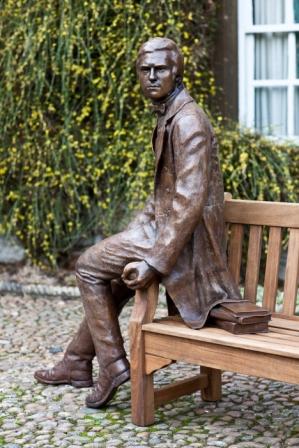
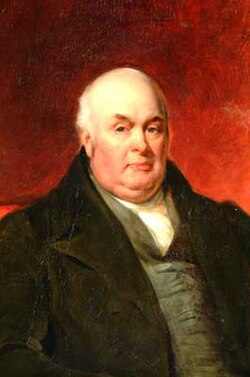
Charles Robert Darwin (1809–1882) #15505
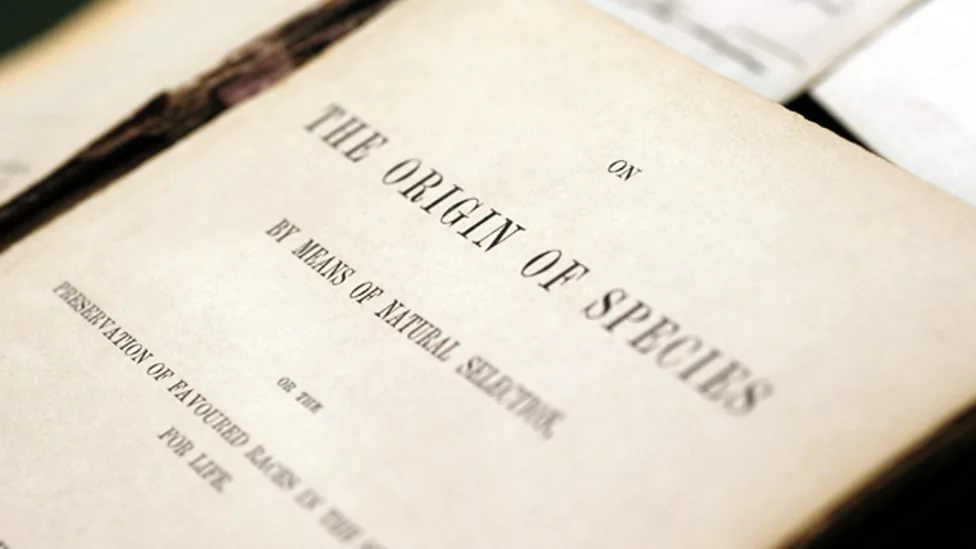
Few people have changed the way we see ourselves quite as profoundly as Charles Robert Darwin. Almost everyone has heard of On the Origin of Species, but evolutionary biologist Ernst Mayr neatly reduced Darwin’s revolutionary theory to just five facts and three inferences.
The five facts are surprisingly straightforward. Organisms produce far more offspring than can survive. Populations generally remain stable rather than exploding. Food and habitat are limited. Every individual is unique. And those unique characteristics can be inherited.
From these observations came three simple conclusions. Some inherited variations give individuals an advantage. Those individuals are more likely to survive and reproduce. Over generations, those inherited differences accumulate and evolution becomes inevitable.
Darwin’s genius was not in predicting the future but in explaining the past. Yet natural selection is still at work today, whether in increasing life expectancy, ever-faster athletic performances or perhaps, one day, thumbs perfectly adapted to tapping smartphone screens.
A remarkable family
Charles inherited an extraordinary family tradition of curiosity and innovation.
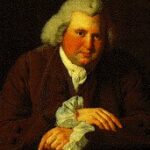
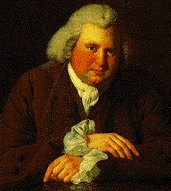
His grandfather, Erasmus Darwin (1731–1802) was one of the most colourful doctors of the eighteenth century. Standing over six feet tall and famously overweight, he was a physician in Lichfield, inventor, poet and polymath. He reportedly devised a knitting machine, a weighing machine, a mechanical flying bird and a lightning conductor for Lichfield Cathedral, while also improving the suspension of his own coach. He even declined an invitation to become physician to King George III.
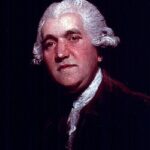
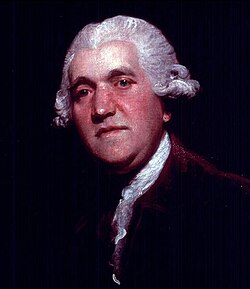
Erasmus was a close friend of Josiah Wedgwood (1) (1730–1795) #15501, whose pottery business transformed British manufacturing.
Their friendship became family when Erasmus’ third son, Robert Waring Darwin (1766–1848) #15503, married Wedgwood’s daughter Susannah (1765–1817) #15504 in 1796.

Robert followed both his father and grandfather into medicine. After studying in Edinburgh, he established a practice in Shrewsbury in 1786 and rapidly became one of the town’s leading physicians. Unlike Erasmus, he disliked practising medicine, preferring to build his fortune through astute investments. He also supported the movement to abolish slavery, bringing him into contact with William Wilberforce (1759–1833) #15010 and Thomas Clarkson (1760–1846) #12445.
An inquisitive child
Charles was born in February 1809 into this exceptionally intellectual family. His mother died when he was just eight years old, leaving him to be lovingly cared for by his older sisters Marianne, Caroline and Susan.
A quiet, observant child, he was happiest exploring the natural world. His father encouraged these interests, introducing him to books on geology and natural history.
After attending the school of the Unitarian minister Revd George Case, Charles boarded at Shrewsbury School under Revd Samuel Butler (1774–1839). Although Butler was a distinguished headmaster, Darwin later dismissed his education there as “simply a blank”. The school’s focus on memorising the classics was entirely unsuited to a boy who preferred observation and experiment.
Finding his true calling
Like his father and grandfather, Charles entered Edinburgh University in 1825 to study medicine. Unfortunately, witnessing surgery before the days of anaesthetics convinced him that medicine was not for him.
Instead, he transferred to Christ’s College, Cambridge, intending to become a clergyman. Ironically, this gave him the freedom to pursue his real passion—natural history. He graduated in 1831 after spending much of his student life collecting beetles in the Fens.
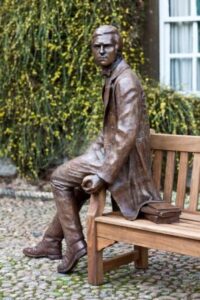
Before ordination could begin, his tutor recommended him as the gentleman naturalist aboard HMS Beagle.

The voyage that changed the world
The five-year voyage (1831–1836), including five weeks in the Galápagos Islands, gave Darwin something priceless—time to observe, read and think.
Gradually he began developing ideas about evolution that conflicted with his religious education. The implications troubled him deeply, particularly as he remembered the criticism his grandfather Erasmus had endured for similar ideas.
Personal tragedy added to his burden. His beloved ten-year-old daughter Anne died in 1851, while recurring illness plagued him for much of his adult life.
Despite filling notebooks with evidence, Darwin hesitated to publish.
A race to publication
Everything changed in 1858 when Alfred Russell Wallace (1823–1913) sent Darwin a manuscript outlining a strikingly similar explanation of evolution.
Faced with an ethical dilemma, Darwin and his friends arranged for extracts from both men’s work to be presented jointly to the Linnean Society, ensuring Wallace received proper recognition.
Among fellow members of the Society was Thomas Spencer Cobbold (1828–1886) #174, Britain’s leading helminthologist, whom Darwin consulted about the evolution of parasites.
Changing the world
In November 1859 Darwin finally published On the Origin of Species by Means of Natural Selection. The reaction was explosive. Many church leaders fiercely opposed the book, while others rejected the suggestion that humans shared common ancestry with apes.
Too unwell to defend himself publicly, Darwin relied heavily on his friend Thomas Huxley to champion the new science.
Darwin also reflected personally on heredity. Married to his cousin Emma, he worried that close marriages might explain the deaths of two sons and a daughter, as well as the frequent illnesses suffered by several of their ten children.
The book became an immediate bestseller. By the fifth edition Darwin introduced the memorable phrase “Survival of the Fittest”, and in 1875 he published The Descent of Man, extending his ideas to human evolution.

Although he expected to be buried quietly in his local churchyard, the nation had other plans. Led by Thomas Huxley, Britain honoured the scientist who transformed our understanding of life by burying Charles Robert Darwin (1809–1882) #15505 in Westminster Abbey.
For family historians, Darwin’s story is a reminder that great discoveries rarely emerge from nowhere. They often grow from generations of curiosity, learning and remarkable family connections—and perhaps that’s a lesson every family tree can tell.
Anthony Cobbold