The Story of “British Gold”
Your humble cod and chips has a surprisingly important place in history!
The Treaty of Paris in 1763 brought an end to the Seven Years’ War, judged by some to have been the first truly “World War.” So important was cod as a food source that William Pitt the Elder (1708–1778) referred to it as “British gold.” The settlement was, of course, complex, but briefly stated, it gave Great Britain control of all of North America east of the Mississippi. British fishermen had been fishing for cod off Newfoundland for years, but the seas there were becoming overcrowded.
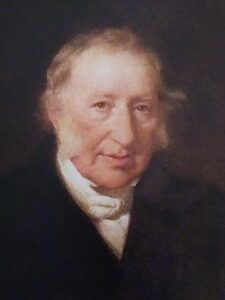
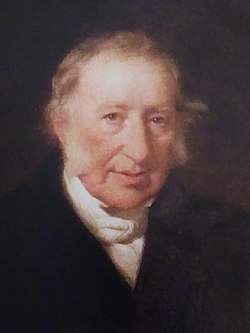
Enter Charles Robin #15457, born in St Aubin, Jersey, the youngest of three brothers. Together with his relatives, the Pipons #15454, he formed the Robin Pipon Company. They invested in a brig, the Seaflower, and began fishing off Louisbourg. Two more ships were purchased, and operations were expanded to the coast of the Gaspé. A new business, Charles Robin and Company, was formed in 1766, making it only the second company to be formed in Canada after the Hudson’s Bay Company.
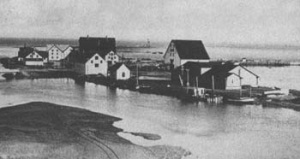
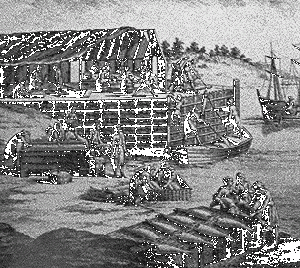
Two circumstances contributed greatly to the company’s success. Paspébiac was identified as the ideal site for drying fish on waist-high splits, and the company’s headquarters was established there. A new method combining drying with salting preserved the fish for long periods. This opened up the huge Catholic market, particularly in Portugal and Spain.
By the 1770s, Charles was regularly shipping several thousand quintals (112 pounds each) to Europe, bringing back salt and other products for fishermen in return.
Fish caught by local fishermen—mostly Acadian—was also processed, but Charles’s years of dedicated hard work were almost destroyed during the American Revolution. In 1778, American privateers came to Paspébiac, stole his ships and plundered his stores. Charles was captured but, ingenious man that he was, escaped into the woods. He returned to Jersey, where he stayed until 1783.
In 1784, his life became more political. He persuaded the Lieutenant Governor, Nicholas Cox, not to grant land immediately around Paspébiac to Loyalists, enabling him to acquire some of it for his business the following year. Slowly, he gained government support, backed by Cox, who was himself deeply in debt to Charles’s company. Charles persuaded the government to pass an ordinance which, in effect, prevented his competitors from acquiring large beach properties.
On the domestic front, Charles never married, concentrating his energy and dedication on his business. However, he did not neglect his civil responsibilities. He became a judge of the Court of Common Pleas, a Justice of the Peace and a member of the local land board.
By 1790, he had established a shipbuilding yard capable of turning out a 200-ton vessel every other year to carry his cod to Europe. His strength enabled him to ride out the French Revolutionary War, retire to Jersey in 1802, and leave his company to dominate the cod trade for another century.
From “British Gold” to Fish and Chips
Atlantic cod (Gadus morhua) spawns in the north-east Atlantic in February, March and April each year, as it has done for thousands of years. Sadly, gross overfishing has depleted stocks, so today only approved quotas may be removed. Recovery is taking place, although some would say too slowly. Cod is now an expensive fish.
But salt cod has certainly stood the test of time. BBC Food describes it as dried, salted cod that needs to be rehydrated and desalinated before use. It may look rather unappetising—“a bit like a dried-up leather shoe”—but softens once rehydrated and tastes delicious when cooked.
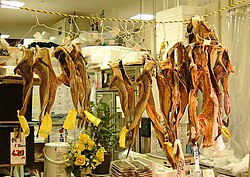
It remains extremely popular in Mediterranean countries, particularly Portugal, where it is known as bacalhau, as well as in tropical countries where its ability to keep well in hot temperatures is invaluable. In parts of Italy, salt cod is traditionally eaten on Christmas Eve, while in France it forms the basis of brandade.

And then there is cod and chips.
Once labelled the iconic symbol of British working-class culture, comfort and industrial history, fish and chips have now become universal. Winston Churchill referred to fish and chips as “the good companions,” and the dish was famously exempted from rationing during the Second World War because of its vital morale-boosting properties.
So next time you tuck into a portion of cod and chips, spare a thought for Charles Robin #15457—the Jersey-born entrepreneur who helped turn a humble fish into “British gold.”
Frying tonight?
Anthony Cobbold