Despite some declaring the Boat Race an elite event that should be abandoned, the fact is that as many people tune in to watch it as see the Grand National, The Masters or the London Marathon. A quarter of a million people from all walks of life will line the banks of the Thames this year to watch the 197th running of one of the oldest and most respected sporting events this great country has to offer.
In May 2019 we told the story of How Cambridge got its ‘Blue’. Today we tell the story of that very first Boat Race in which family member Thomas Entwisle (1808-1897) #15445 occupied the no.5 seat in the Cambridge boat. Oxford won easily over a shorter course at Henley.
The race was initiated by two old Harrow school friends; Charles Merivale (later Dean of Ely) at St. John’s Cambridge and Charles Wordsworth (nephew of William Wordsworth) at Christ Church, Oxford. In February 1829 a letter was sent to Oxford stating that ‘the University of Cambridge hereby challenge the University of Oxford to row a match at or near London, each in an eight-oared boat, during the ensuing Easter vacation.’
On 10th June 1829 the race took place between Hambleden Lock and Henley Bridge, a course of two and a quarter miles. Despite a delayed start some 20,000 people gathered to watch. Cambridge won the toss and opted for the Berkshire station but Oxford drew ahead and won easily.
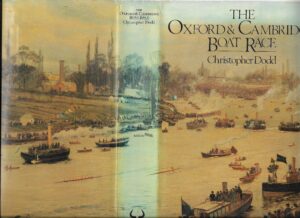
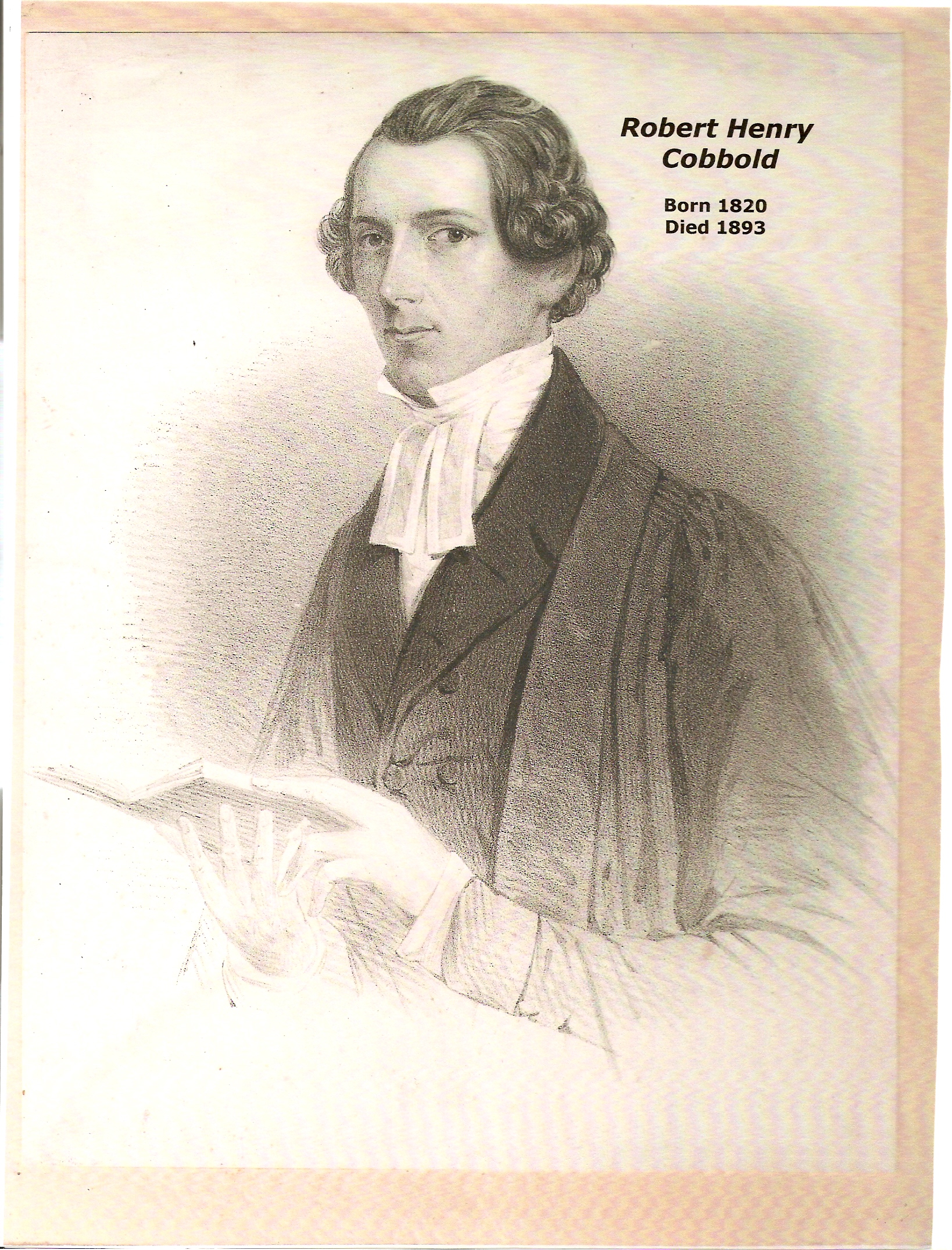
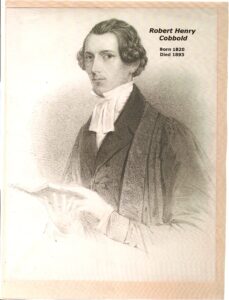
The next race was in 1836 when 3 Caius men insisted on rowing under the pale blue now well established as Cambridge’s colour. Only 5 years later Robert Henry Cobbold (1816-1893) #148 was in the winning Cambridge crew (1841) but was defeated the following year. In 1843 he was elected president of the Cambridge University Boat Club but there was no race that year.
The most successful family member, in rowing terms, is unquestionably Robert Croft Bourne (1888-1938) #1187. He was a silver-medalled Olympian but his earlier prowess saw him stroke the Oxford boat to victory four years in a row, 1909-1912, in the last two as President of the OUBC.

There was controversy over the 1877 decision that the race was a draw. History tells us that Oxford finished narrowly ahead but the umpire, unable to see the outcome clearly, declared a draw. Nurtured by years of respect for authority his decision was accepted. In an act of great chivalry Cambridge offered to concede victory but in an act of even greater chivalry Oxford refused, so the umpire’s decision stood!
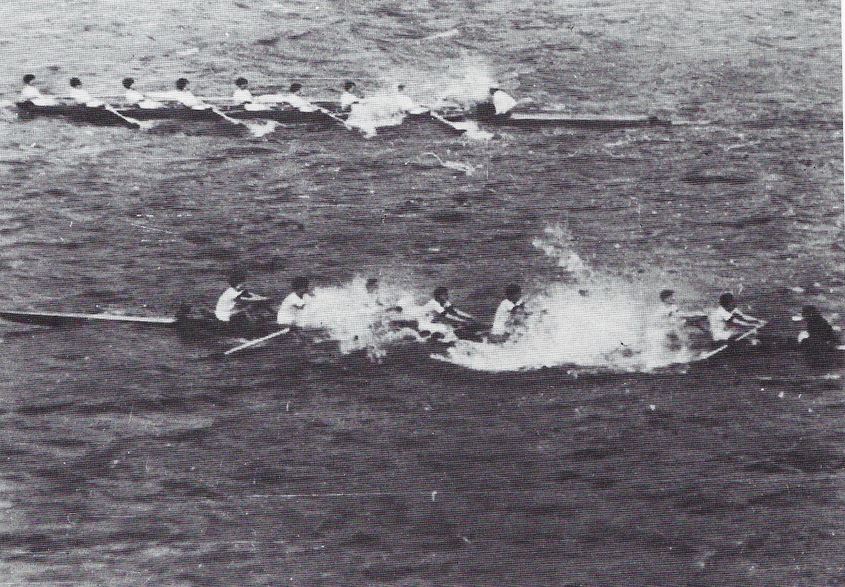
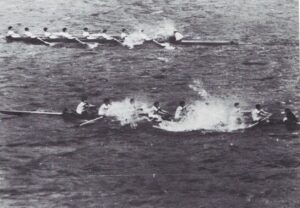
There was further drama in the 1951 race in which family member Jeremy Smith (1928-2021) #14322 was rowing no.2 in the Oxford boat when it sank in rough weather. The umpire declared ‘No Race’ and Cambridge won the re-row.
Sisters Lilli and Mia Freischem from Cologne will make history in the 80th Women’s race this year when Lilli in the no.3 seat in the Oxford boat will race against Mia in the no.7 Cambridge seat.
In a recent survey on the race, albeit of only 20,000 people, just 9% disapproved of this quirky, amateur, and quintessentially British phenomenon.
Long may it survive!
Anthony Cobbold