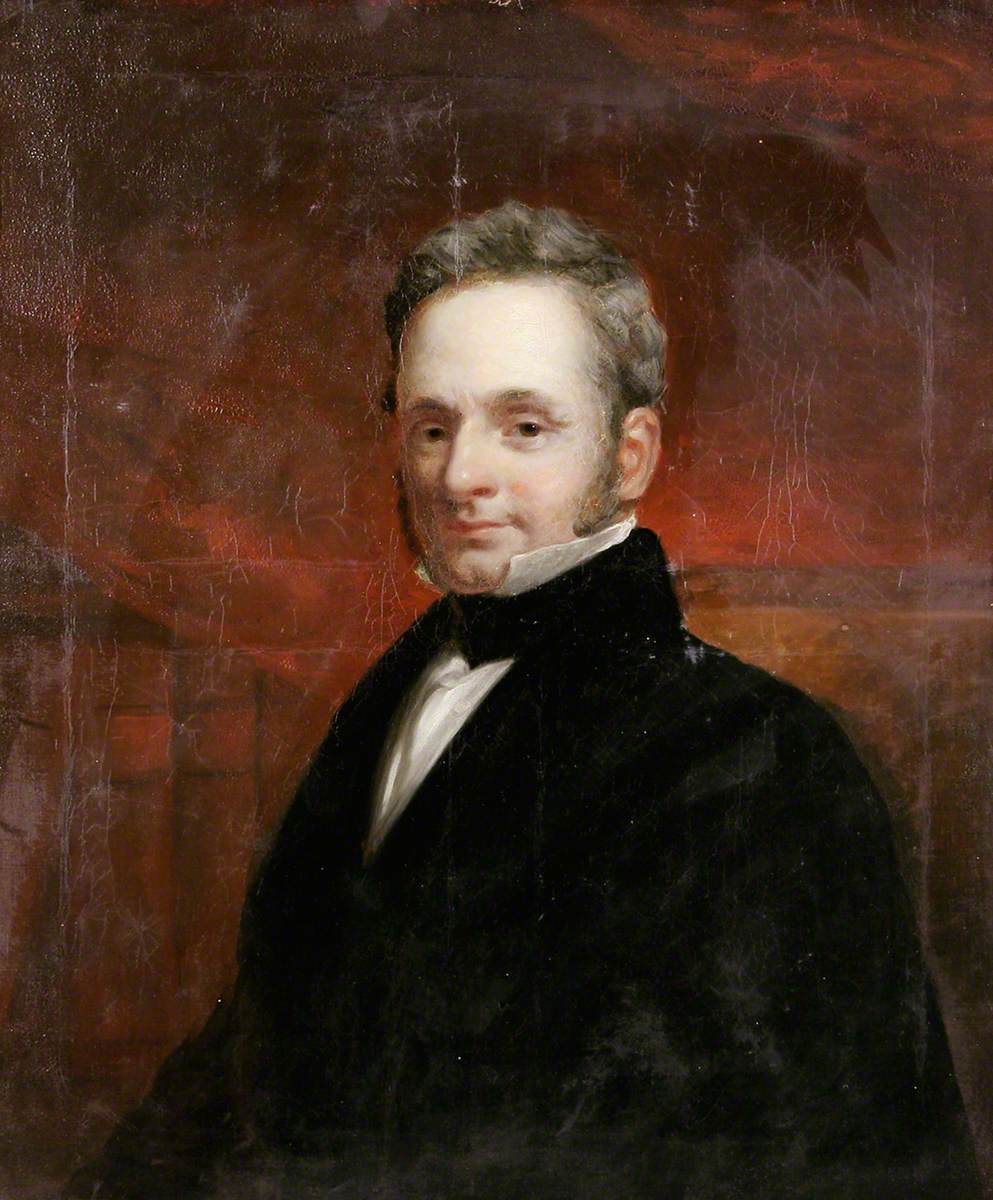
It is idiosyncratic that I should be writing about kidney ‘stones’ at the same time as we are encouraging family members to engrave ‘stones’ to commemorate ancestors in our memorial wall. One of life’s coincidences! Last month we were able to bring back into the family a book which had been presented to Dr Rowland Townshend Cobbold (1821-1895) #150 by the author John Green Crosse FRCS FRS (1790-1850). The inscription read “in token of esteem for his acquirements conjoined with the most steady and amiable Deportment” and was dated 16th May 1845. Rowland studied under John Crosse and is identified elsewhere as going to great pains to interest his children in the love and knowledge of birds, beasts, and flowers and probably of stones and fossils.
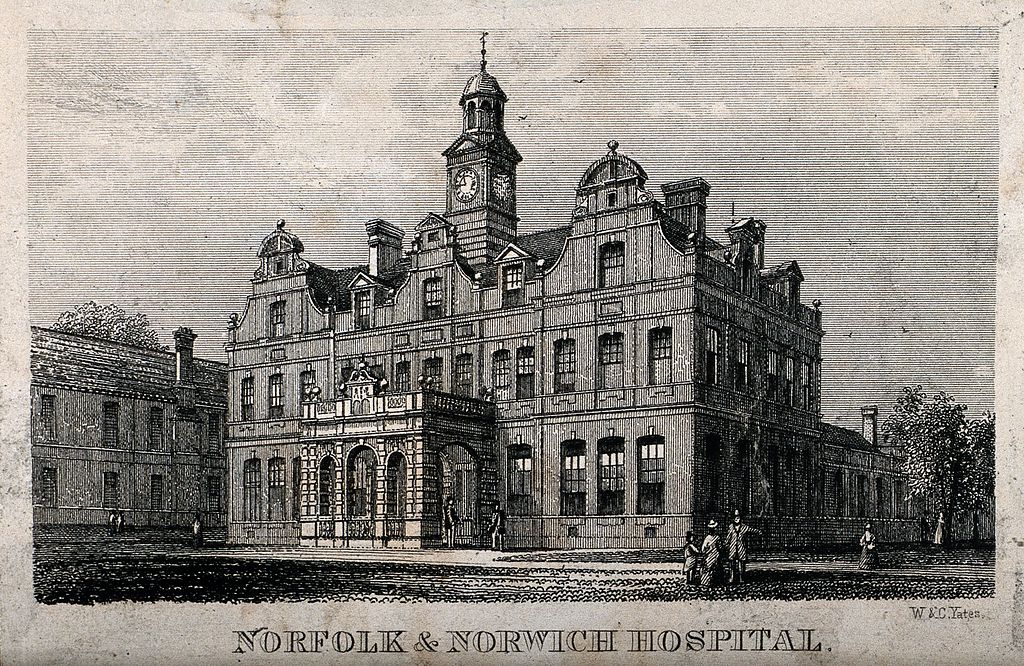
John Crosse was a well-known and highly respected surgeon at the Norfolk and Norwich Hospital and along with many aspiring Suffolk doctors, another of his pupils was Rowland’s first cousin, Thomas Spencer Cobbold (1828-1886) #174, Helminthologist and Parasitologist. The book in question was A Treatise on the Formation, Constituents and Extraction of the Urinary Calculus. To save you rushing to your dictionary (as I did) a calculus is a ‘stone-like concretion which forms in certain parts of the body’ (as well as ‘a system of computation used in the higher branches of mathematics.’) And to complete our education I have learned that Crosse was a lithotomist which is the medical equivalent of a JCB, namely a crusher of stones (to facilitate their removal). The treatise was awarded the Jacksonian prize for the year 1833 by the Royal College of Surgeons in London and was published in 1835 by John Churchill. Our copy turned up in Switzerland and had to be bought with Swiss Francs. Evidently John Crosse was, in his field, like Thomas Spencer in his, a pioneer at a time of enormous medical advancement.
Tucked inside the book, for no perceptible reason, was a manuscript autopsy report on Sir Arthur Chichester 7th Baronet (1790-1842) by a doctor having the initials JT. Sir Arthur lived at Youlston Park, Shirwell, Devon, of which county he was High Sheriff in 1816/17, and where he is probably commemorated in stone, but obviously not of the Calculus variety.
Anthony Cobbold