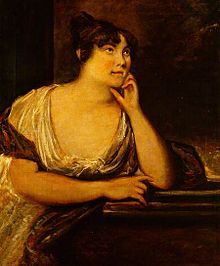
On a mild, cloudy, but fortunately dry, day last week, 30th November 2024, a small assembly outside the stable block at Holywells witnessed the unveiling of an Ipswich Society blue plaque to Elizabeth Cobbold, second wife of ‘Big’ John Cobbold (1745-1835) #56 on the web family tree.
We have understood for a long time that Elizabeth (née Knipe) was ahead of her time in a variety of interests, one of them being Geology. Her findings have been of interest to Geo Suffolk for some time and are recorded by Caroline and Robert Markham in Suffolk Biodiversity Information Service’s journal volume 56 (2020) from which we have abridged the following:
Elizabeth Cobbold of Ipswich collected and identified fossils from Suffolk Crag deposits (for the most part from what is now known as Red Crag) in the early nineteenth century. Her specimens were first published by James Sowerby of London in his Mineral Conchology from 1813. This is more than 200 years ago, 8 years before the first paper on Mary Anning’s specimens was published by the Geological Society of London and 46 years before Charles Darwin’s ‘On the Origin of Species’ was published – she was a contemporary of pioneering palaeontologists Gideon Mantel and Georges Cuvier. Such early scientific endeavour deserves to be recorded and celebrated.
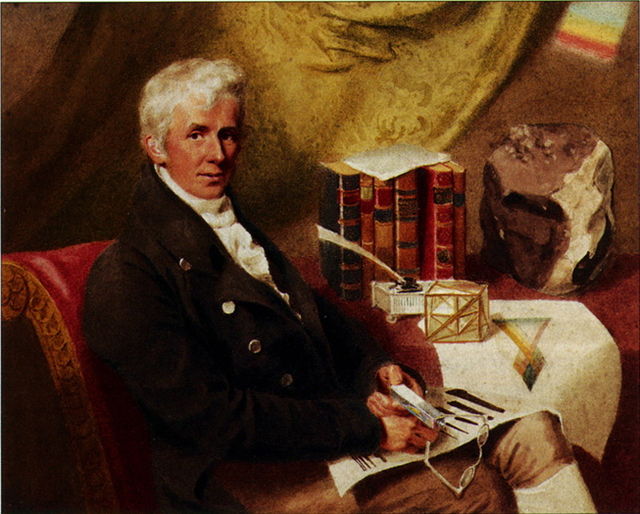
She was introduced to James Edward Smith of Norwich, a founder and first president of the Linnaean Society (in London in 1788) by Nicholas Gwyn (1710-1798) an Ipswich botanist in August 1793. James Smith arranged for ‘Mrs. Cobbold’ (as she would be known in scientific circles) to receive the first part of ‘Flora Anglica.’ This was a new publication by James Smith and the natural history artist and publisher James Sowerby of Lambeth, London. Elizabeth Cobbold contributed records to the ‘Flora’ including the ‘weeds’ summer snowflake and meadow-saffron at Little Stonham. In 1810 (17th April) Elizabeth Cobbold’s paper on ‘On the Fasciola Hepatica’ (concerning liver fluke) was read (but not by her as women were not allowed) to the Linnaean Society.
About half a century later her grandson, Dr Thomas Spencer Cobbold (1828-1886) #174, helminthologist and parasitologist became a member and frequent contributor to the Linnaean Society. He knew all about his grandmother’s early pioneering endeavours; perhaps some of her scientific genes survived?
Anthony Cobbold