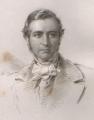
Many readers will know that Bishop John Patteson, the Martyr of Melanesia was cruelly murdered. Those readers will also know that Bishop John was the niece of Lucy Patteson (1800-1879), wife of John Chevallier Cobbold (1797-1882). Readers will not be surprised to know that Bishop John has been chosen as one of the subjects for the Trust’s book, Cobbold & Kin, Life Stories from an East Anglian Family due out in October this year.
Briefly, John was born in London in 1827, the son of a judge who had married the niece of the poet, Samuel Taylor Coleridge, and received his schooling at Eton. Whilst there he went to Windsor Parish Church to hear Bishop Selwyn preach before he set out to be the first Bishop of New Zealand. Hugely impressed by what he heard, he resolved that one day he too would work in New Zealand. Following graduation from Balliol College, Oxford he travelled in Europe learning German, Arabic and Hebrew and was ordained in Exeter Cathedral in 1853, serving his curacy in his mother’s home town of Ottery St Mary in Devon.
Only a few years ago the Brothers and Sister of the Melanesian Mission visited Devon and a good deal of bonding took place amongst Bishop Patteson’s present day devotees from both hemispheres. The Trust was given a leaflet bearing a picture of St. Barnaba’s Patteson Memorial Chapel on Norfolk Island and desirous of using that picture in the book we wrote for permission which was kindly given by the Trustees and Parish Council. News came to us in an email from (Mary and) Bernie Christian-Bailey, part of which I reproduce below. Beautiful little vignettes of life like this are the reward of the family historian and deserve to be shared.
My great grandfather George Bailey came to Norfolk Island from Chudleigh in Devon, England (via New Zealand) to work in the Melanesian Mission as a blacksmith. He was also in charge of the music, and installed the beautiful Willis organ that was donated by Patteson’s cousin the Victorian novelist Charlotte Yonge. About 6 years ago, we acquired the Bishop’s desk, which was made here on Norfolk Island for him from local timbers. After his death, it was sent back to England to Charlotte Yonge, who, we understand, used it until her death. We had the opportunity to bid for the desk at an auction in Itchingstoke, Hampshire (via telephone) and acquired it,and it now has pride of place in the “Patteson Room” in our Parish Centre.
In my own home, we have the Bishop’s dining chairs, also made locally we believe (but maybe in New Zealand). My grandfather had the opportunity to purchase goods from the Mission when it relocated from Norfolk Island in 1920. Our home is named “Devon” because of the historic association, and two of our sons, who live behind us and next door, call their homes “Devon Cottage” and “Devonside”. We still worship at the Patteson Memorial Chapel every Sunday morning.
Charlotte Mary Yonge (1823-1901) was the Bishop’s biographer: ‘Life of John Coleridge Patteson’ published by Macmillan, 1874