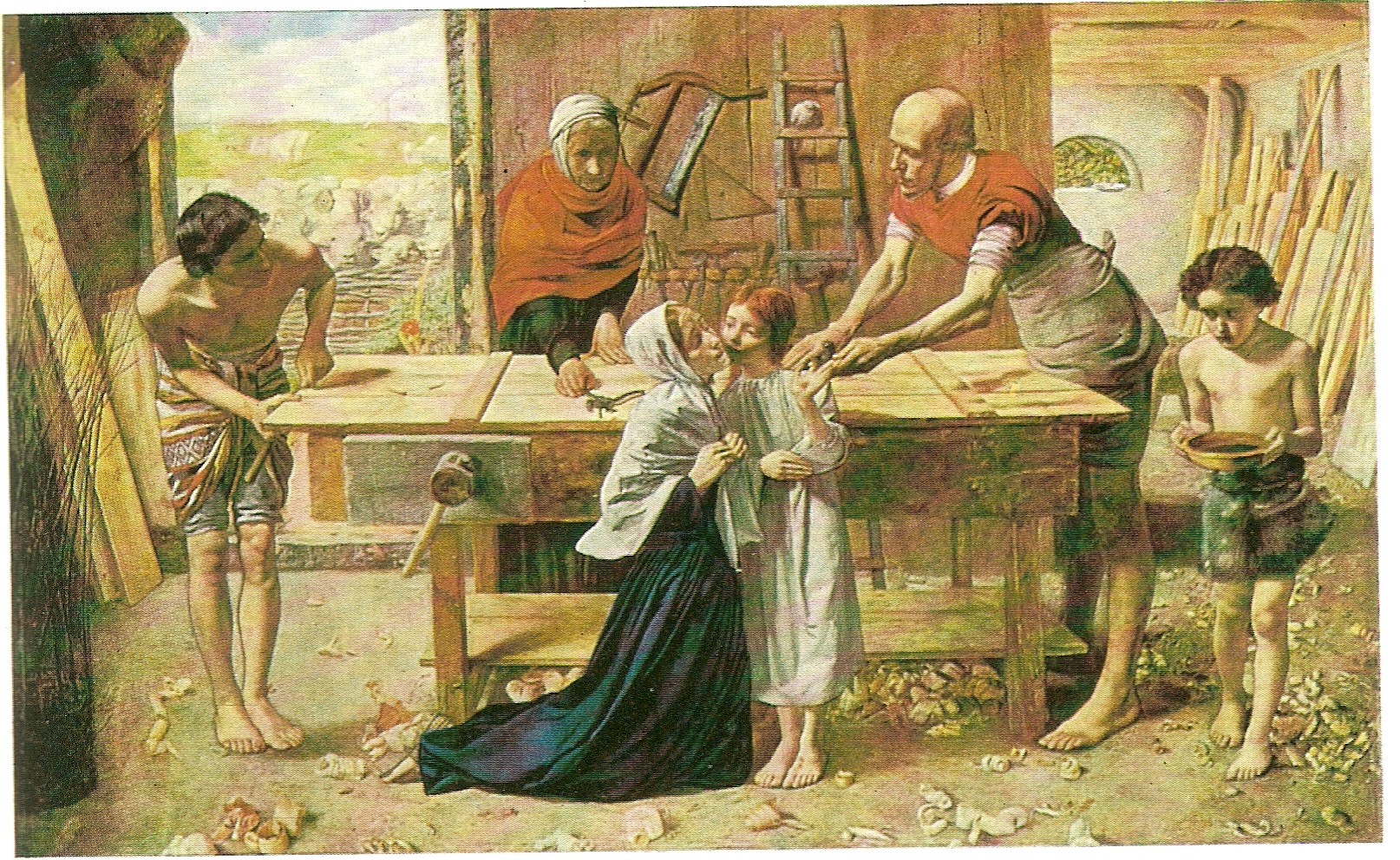
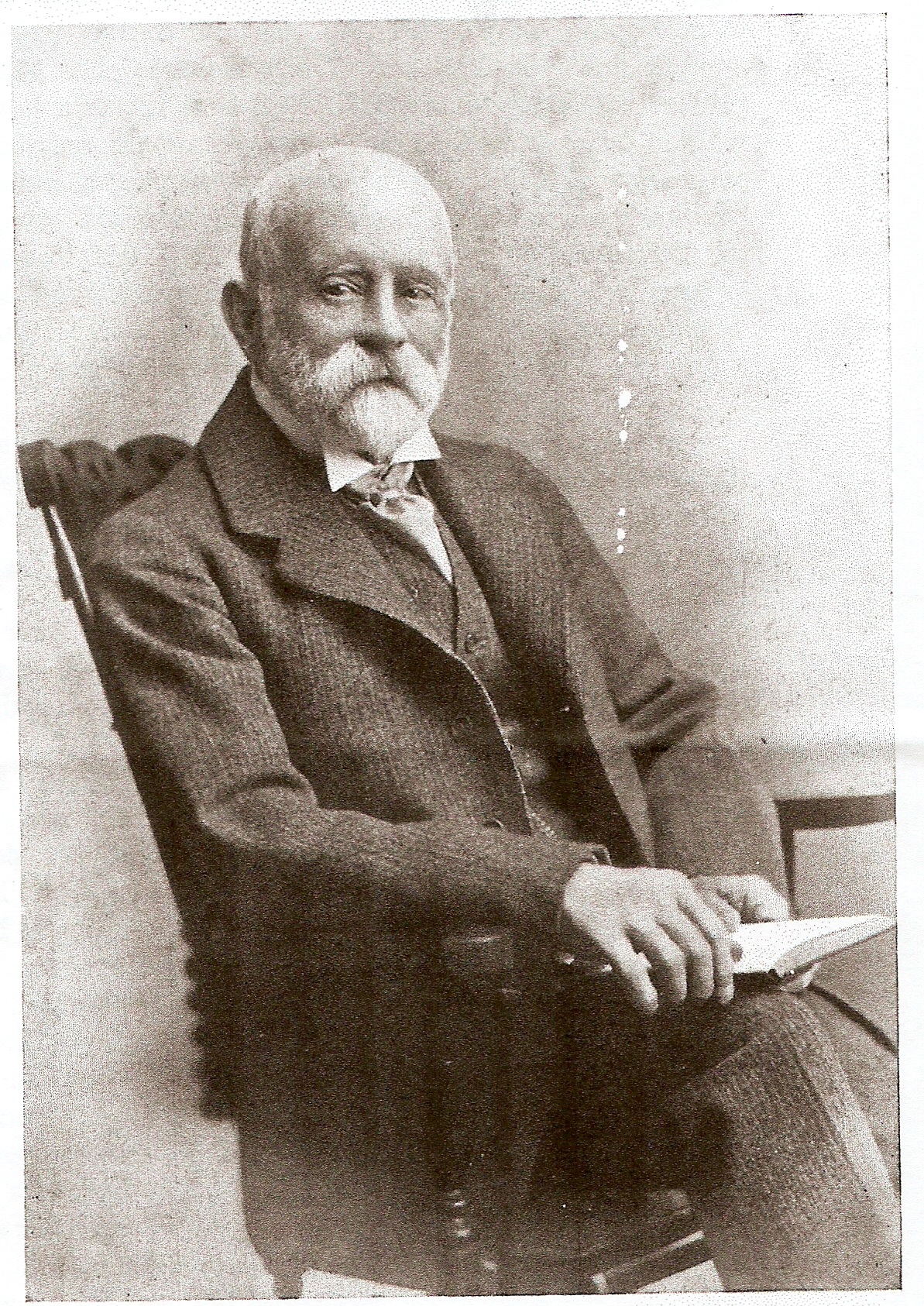
This famous painting, also known as ‘Christ in the House of his Parents’ by Sir John Everett Millais, Bt. showing a scene from the boyhood of Christ who has cut his hand, is packed with symbolism, and caused outrage when first exhibited in 1850 as it sought to show the Holy Family engaged in a working-class occupation. The carpenter’s triangle above the Christ child’s head symbolises the Holy Trinity; the wood and nails prefigure the crucifixion; the young St John fetching a bowl of water to bathe the wound identifies him as John the Baptist. In pursuit of the Pre-Raphaelite credo of truth and accuracy the carpenter’s shop is based on a real one in Oxford Street and the sheep in the background represent the Christian flock. Joseph’s head is a portrait of Millais’ own father, the body being based on an actual carpenter; the Virgin Mary was his sister-in-law, Mary Hodgkinson and Christ is Noel Algernon Humphreys (1837-1923) #301 on our family tree.
Sir John was a very successful artist and became quite rich. There must have been some confusion by a journalist with Jean-Francoise Millet in 1939 (who painted mainly peasant folk), because a print of The Carpenter’s Shop still in the possession of the Humphreys family has pasted on its back the following note from The New Statesman and Nation of 21st January 1939:
“To confuse Jean-Francoise Millet
With our John Millais is silly;
Millet was French and has money troubles,
Quite unlike the painter of ‘Bubbles’”
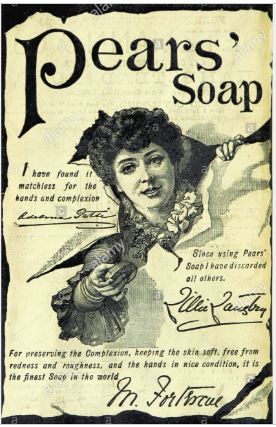
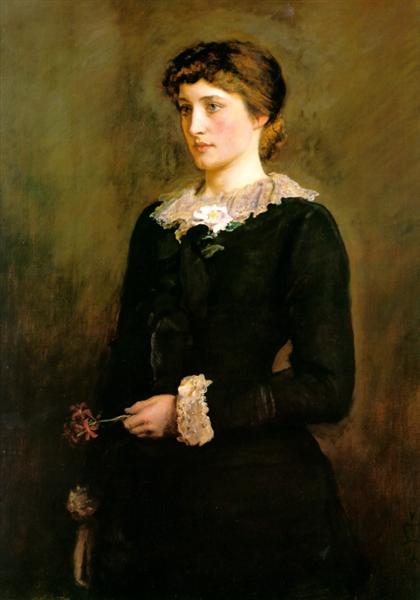
‘Bubbles’ of course was another of Millais’ paintings which caused outrage as it was adopted as the visual in an advertisement for Pears Soap and the press accused him of prostrating his art to achieve sales of soap. Another Pears Soap advertisement featured Lillie Langtry (1853-1929) #1243 who achieved considerable fame as a mistress of King Edward VII when he was Prince of Wales. She too was painted by John Millais; her portrait being titled The Jersey Lily when the flower she holds is in fact a Guernsey Lily.
As the late great Dr John Blatchly intimated in his foreword to Cobbold & Kin, it is fascinating how many great men and women have Cobbold connections.